
Project : Case Study-27 – Lubricants Testing Laboratory | Mumbai, India | 2019
Some laboratory projects are defined not by their size, but by the level of engineering precision they demand.
The Case Study-27 Lubricants Testing Laboratory project at Mahape, Mumbai, delivered in 2019, was one such highly specialized laboratory infrastructure project where safety engineering, ventilation control, and hazardous operational planning became central to the execution strategy.
Although compact in footprint, the facility involved highly complex requirements associated with lubricant testing operations within a flammable and safety-sensitive environment. The laboratory had to support analytical testing activities while maintaining stringent operational safety, controlled ventilation, and engineered exhaust management systems suitable for handling volatile operational conditions.
Executed as a complete Design & Build turnkey solution by Densol, the project demanded extensive coordination between laboratory planning, HVAC engineering, fire safety systems, exhaust integration, and utility management to create a safe and operationally reliable laboratory ecosystem.
The project ultimately evolved into a technically refined industrial laboratory environment where every engineering decision was driven by safety, operational reliability, and long-term maintainability.
Details
Client: Case Study-27
Project Type: Design & Build Turnkey Laboratory Project
Project Year: 2019
Location: Mahape, Mumbai
Project Area: Approximately 1,000 Sq. Ft.
Industry: Lubricants, Energy & Industrial Fluids
Key Highlights
- Specialized lubricants testing laboratory infrastructure
- Complete Design & Build turnkey execution
- Hazard-sensitive laboratory engineering
- Integrated HVAC and controlled exhaust systems
- Fire dampers and motorized airflow control systems
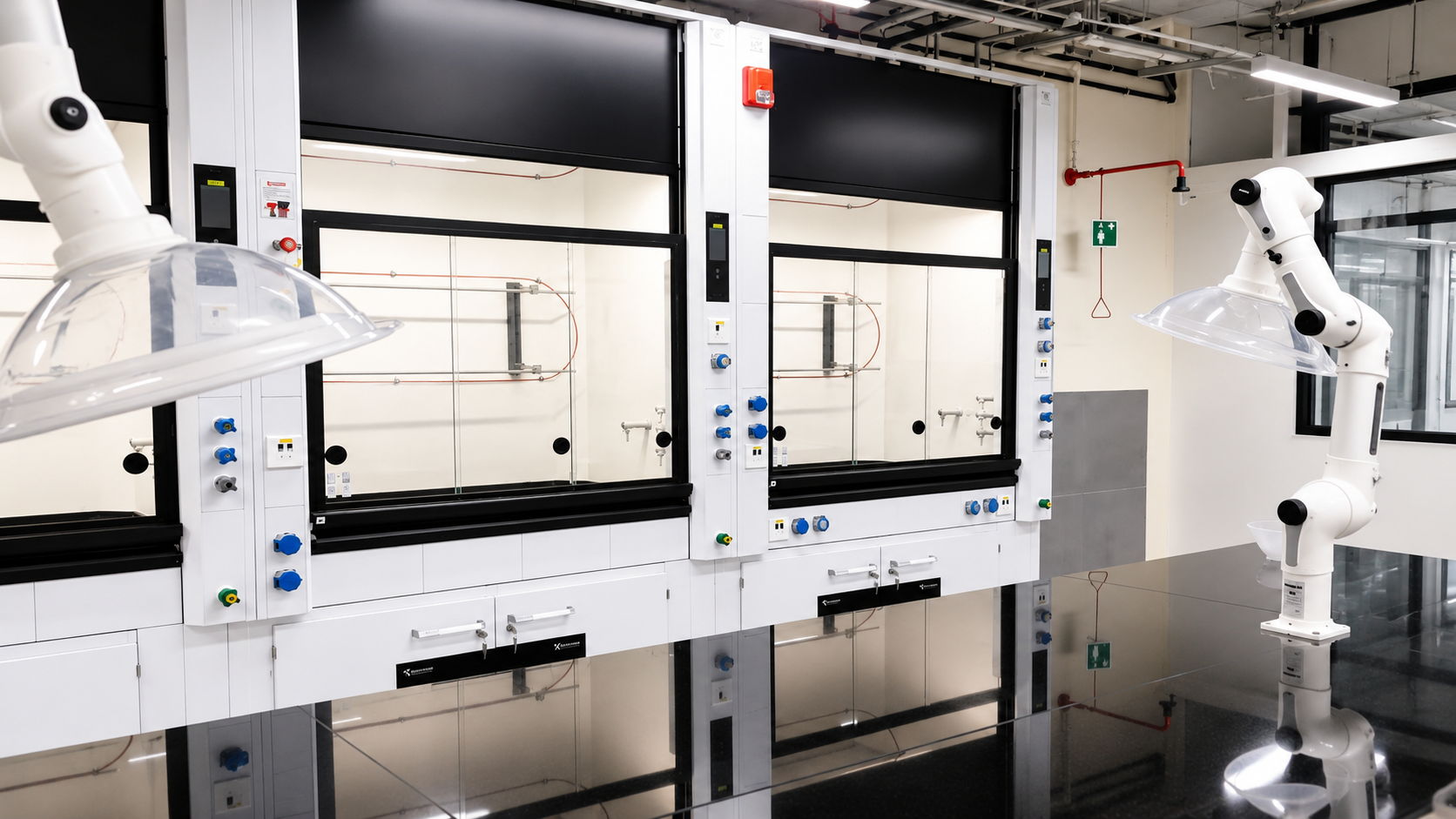
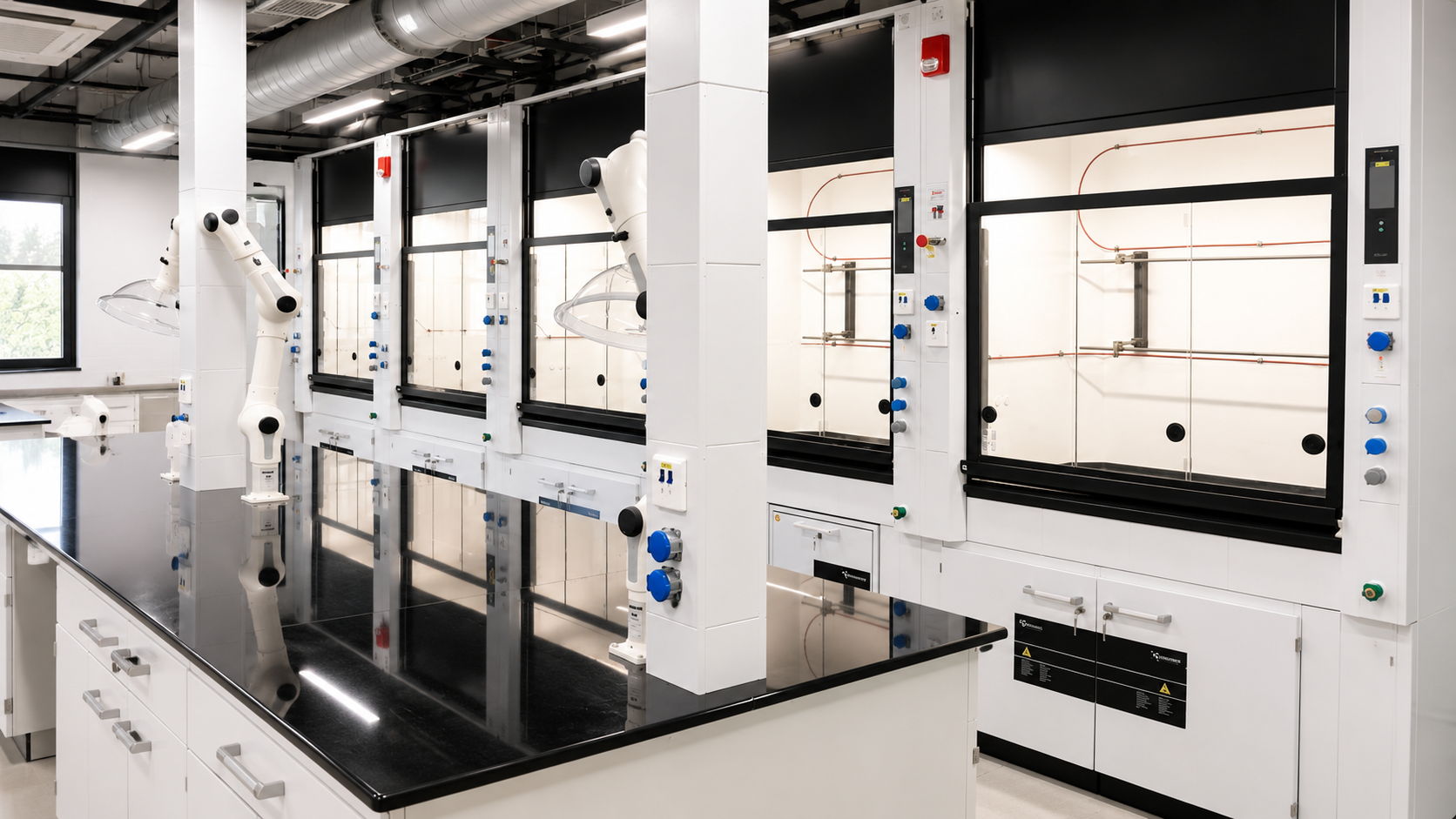
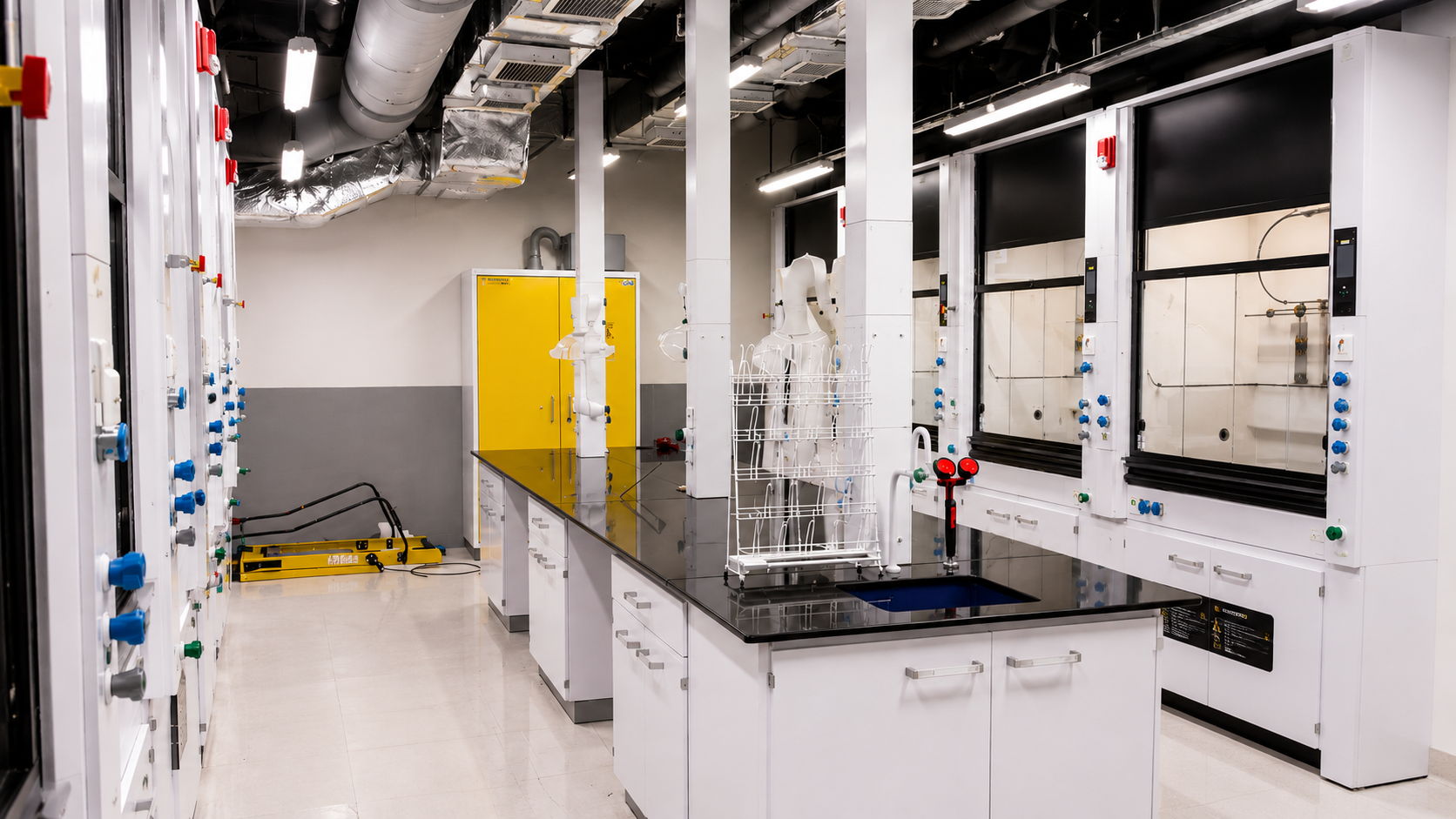
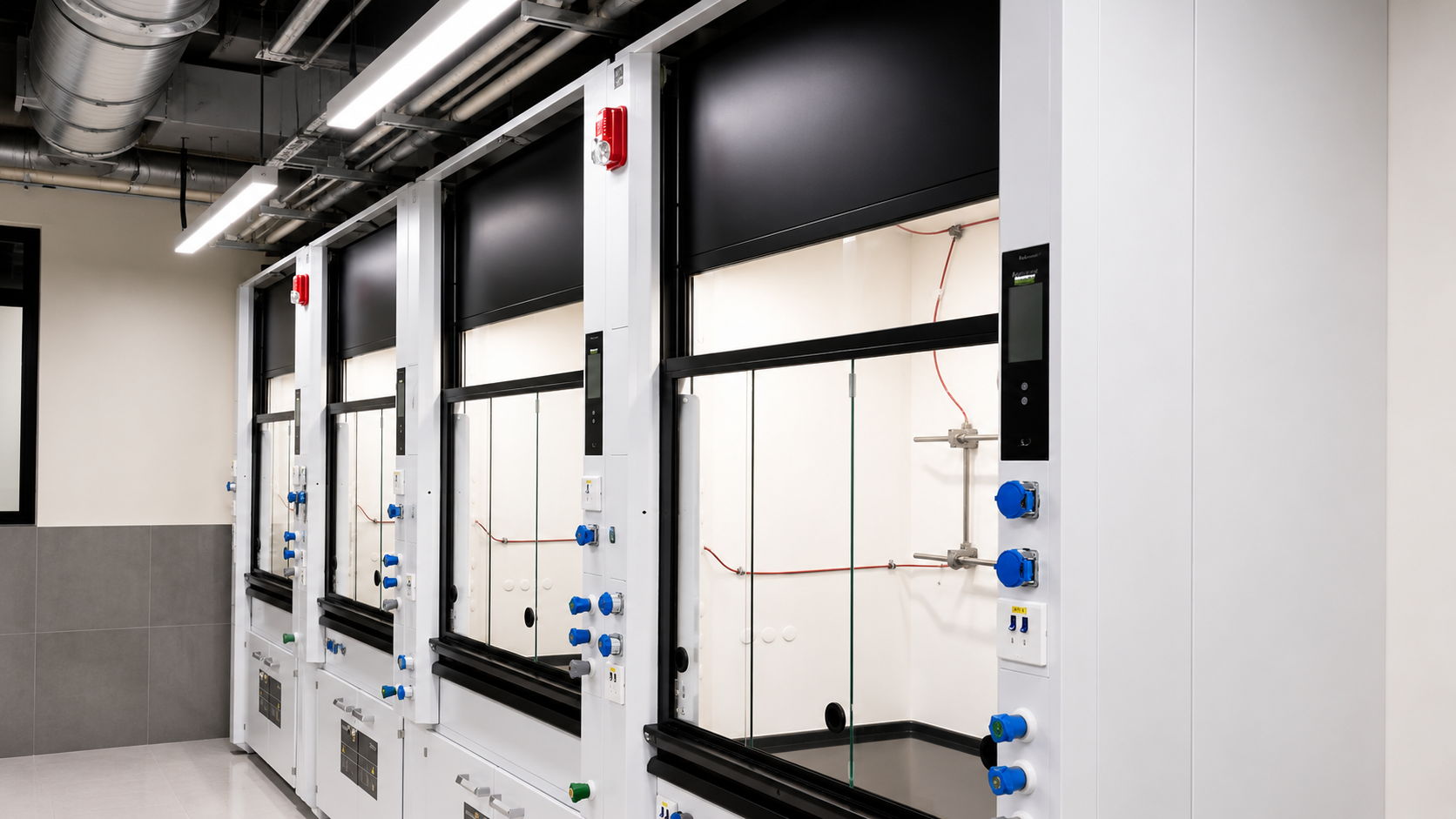
- Walk-in and bench-top fume hood integration
- Fire suppression coordination
- Compact but highly sophisticated laboratory engineering environment
- Successful execution under complex safety-driven requirements
Densol Perspective
Projects like the Case Study-27 laboratory reinforce an important reality in laboratory engineering — complexity is not always defined by scale.
Even compact laboratories can demand extremely sophisticated engineering integration when safety, hazardous operations, and precision environmental control become central to the project requirements.
This project reflected Densol’s capability in combining HVAC engineering, exhaust systems, fire safety integration, and laboratory infrastructure planning into one coordinated turnkey execution model.
The result was not simply a lubricant testing laboratory.
It became a highly engineered operational environment designed around safety, precision, and long-term reliability.
Scope of Work
The planning philosophy focused heavily on hazardous environment management, controlled airflow engineering, and operational safety integration.
The laboratory incorporated:
- Lubricants testing infrastructure
- Analytical workstation planning
- Walk-in fume hood systems
- Bench-top fume hood systems
- Controlled exhaust engineering
- HVAC zoning and airflow management
- Fire safety coordination
- Utility-integrated testing workstations
Since the laboratory environment involved flammable operational conditions, particular attention was given to ensuring:
- Safe exhaust extraction
- Pressure management
- Controlled air circulation
- Fire containment strategies
- Utility isolation planning
- Equipment safety coordination
The engineering design ensured that laboratory operations could function efficiently while maintaining safe environmental conditions throughout the facility.
One of the defining highlights of the project was the rigorous international validation process.
The project incorporated:
- Dedicated laboratory exhaust systems
- Fire dampers integrated within ducting systems
- Motorized dampers for airflow control
- Controlled ventilation strategies
- Fire suppression coordination
- Hazard-specific exhaust routing
- Utility safety integration
- Engineered airflow balancing systems
The HVAC and exhaust strategy was carefully planned to maintain safe operating conditions while ensuring effective extraction and containment within the laboratory environment.
Special engineering attention was also given to integrating fire suppression requirements with mechanical systems to ensure coordinated emergency response functionality.
The project incorporated a combination of:
- Walk-in fume hoods
- Bench-top fume hoods
- Modular laboratory workstations
- Utility-integrated laboratory furniture
- Analytical testing infrastructure
- Safety-driven laboratory layouts
The integration of both walk-in and bench-top fume hood systems allowed operational flexibility for different lubricant testing applications and analytical processes.
Densol executed the project as a complete turnkey solution including:
- Laboratory planning and design development
- HVAC and ventilation engineering
- Specialized exhaust system integration
- Fire damper and motorized damper coordination
- Fire suppression system integration support
- Walk-in and bench-top fume hood installation
- Laboratory furniture and utility coordination
- Electrical and engineering services
- Site execution and implementation management
- Testing, balancing, commissioning, and handover
The project required continuous coordination between laboratory operations, HVAC engineering, fire safety systems, and execution teams throughout the implementation phase
Despite the compact project size, the facility involved highly sophisticated engineering coordination challenges including:
- Designing for flammable operational conditions
- Hazard-specific HVAC and exhaust integration
- Coordination between fire safety and ventilation systems
- Utility isolation and airflow balancing
- Integration of walk-in and bench-top fume hood systems
- Safe laboratory planning within limited space availability
- Precision engineering for controlled extraction environments
The project demanded highly disciplined engineering coordination and detailed execution planning to ensure both operational functionality and safety compliance.
The completed laboratory emerged as a clean, technically sophisticated, and operationally safe lubricant testing environment capable of supporting precision analytical operations under controlled hazardous conditions.
The project demonstrated how advanced laboratory engineering principles can successfully transform compact industrial spaces into highly specialized and safety-driven testing environments.
More importantly, the successful execution and appreciation from the client reflected the project team’s ability to integrate complex safety engineering with practical laboratory functionality.