
Project : Case Study-26 | Bangalore, India | 2022
Project Overview
The Teva Laboratory project at Brigade Senate, Hebbal, was not just another laboratory execution. It was a project delivered during one of the most difficult operational periods following the second lockdown in India.
The project commenced in September 2021, at a time when the industry was still recovering from severe disruptions in manpower availability, material movement, vendor coordination, and supply chain uncertainties. Despite these challenges, the vision remained uncompromised — to create a world-class integrated R&D laboratory environment for one of the world’s leading pharmaceutical companies.
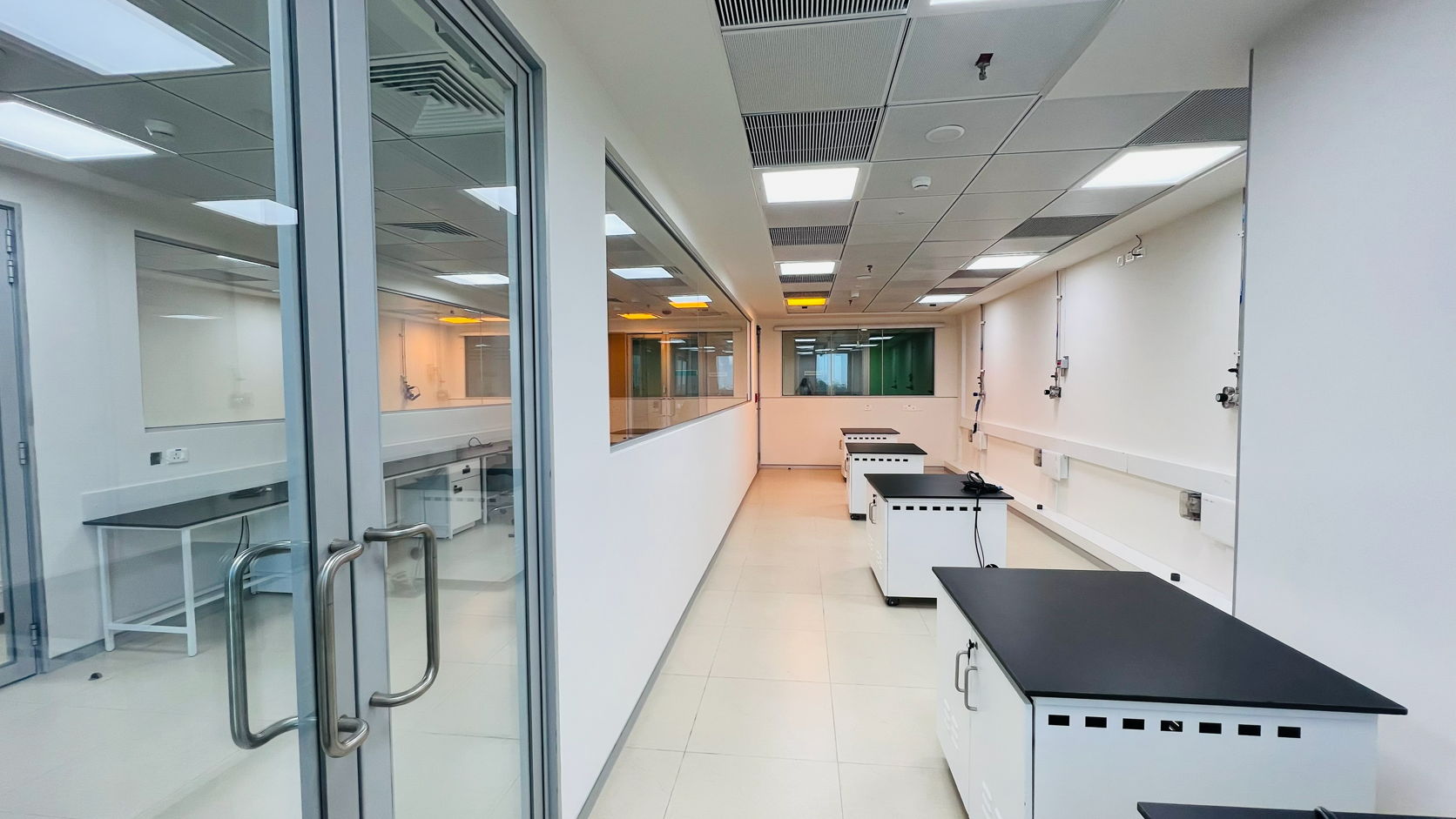
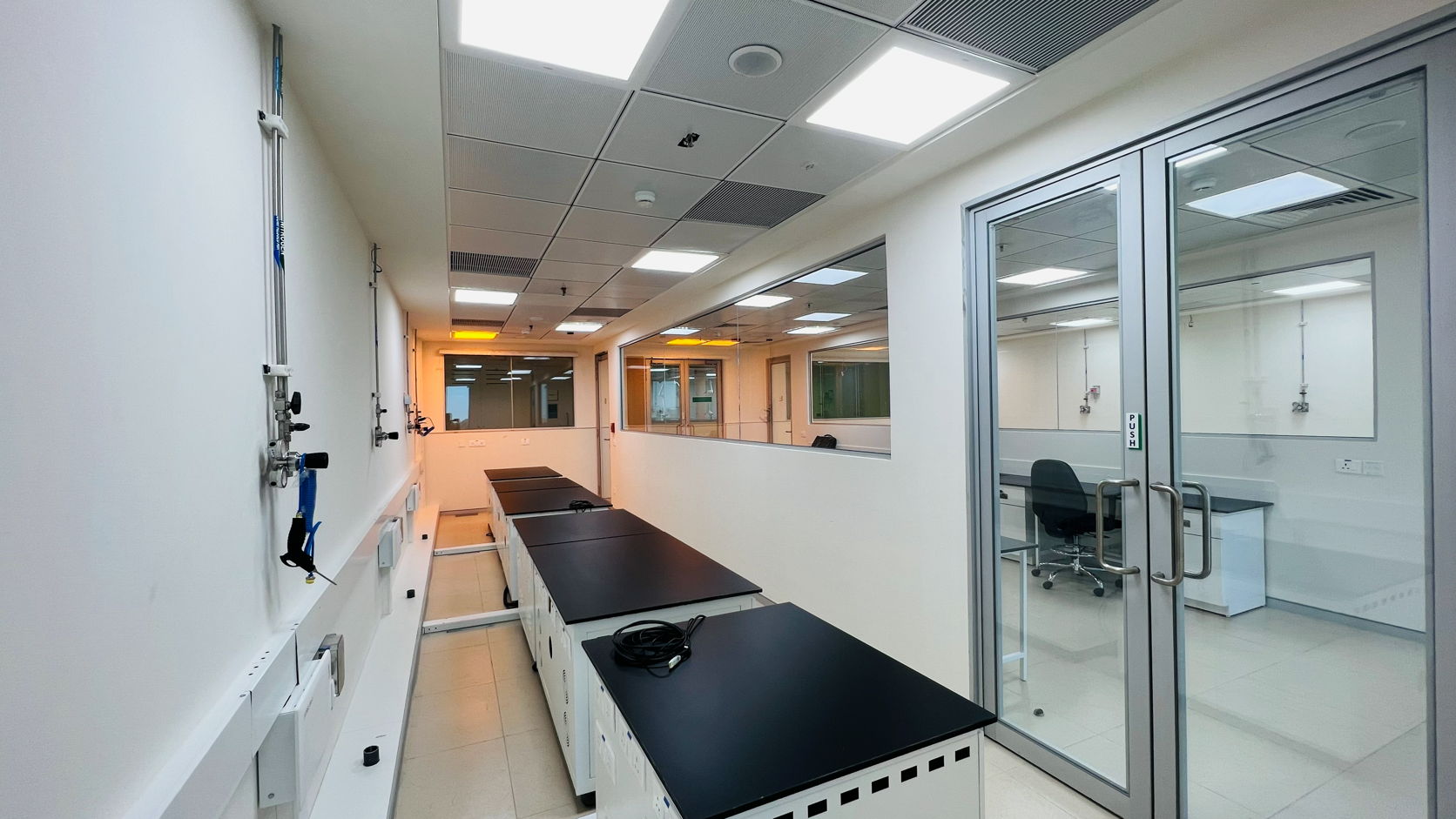
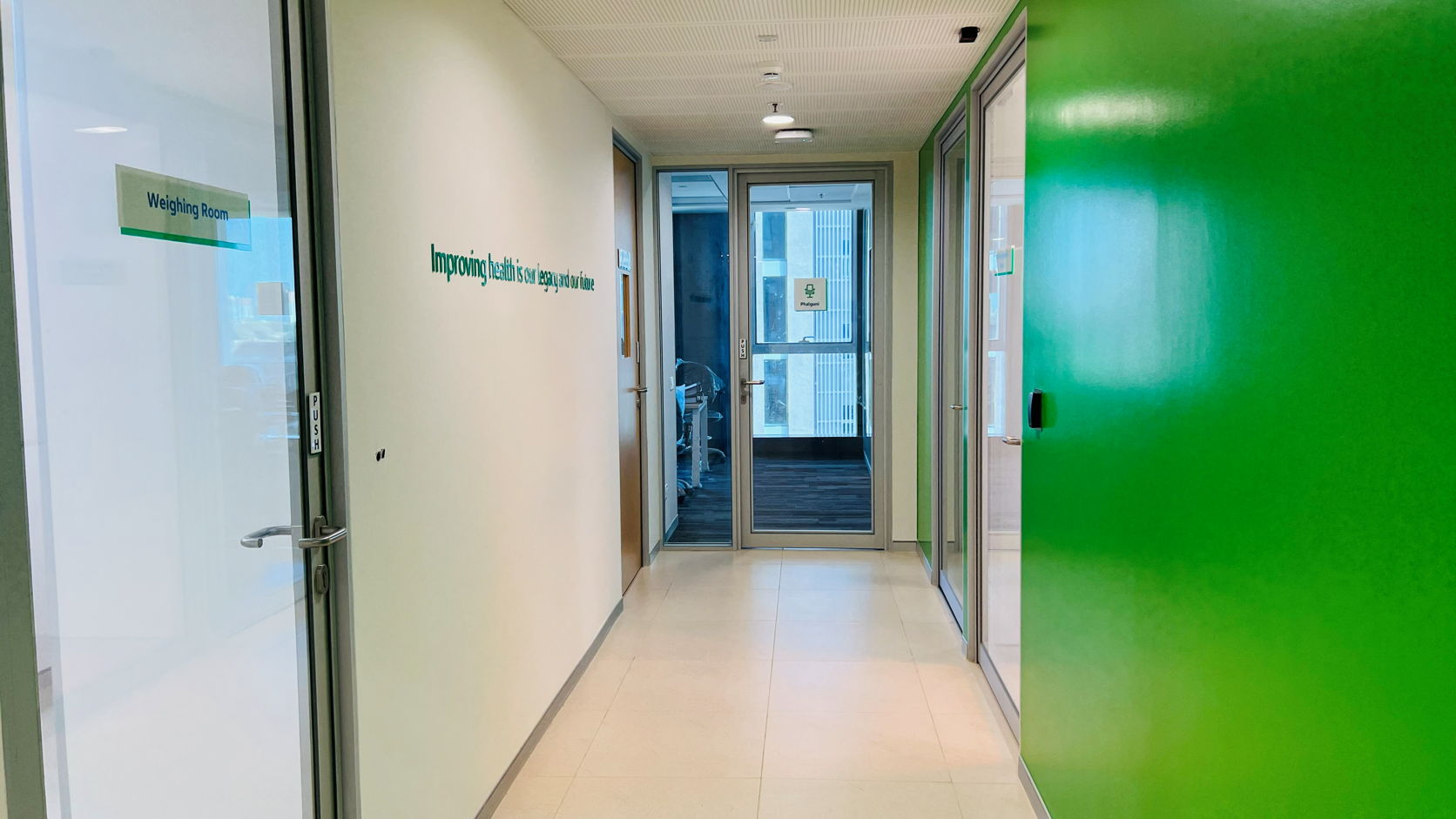
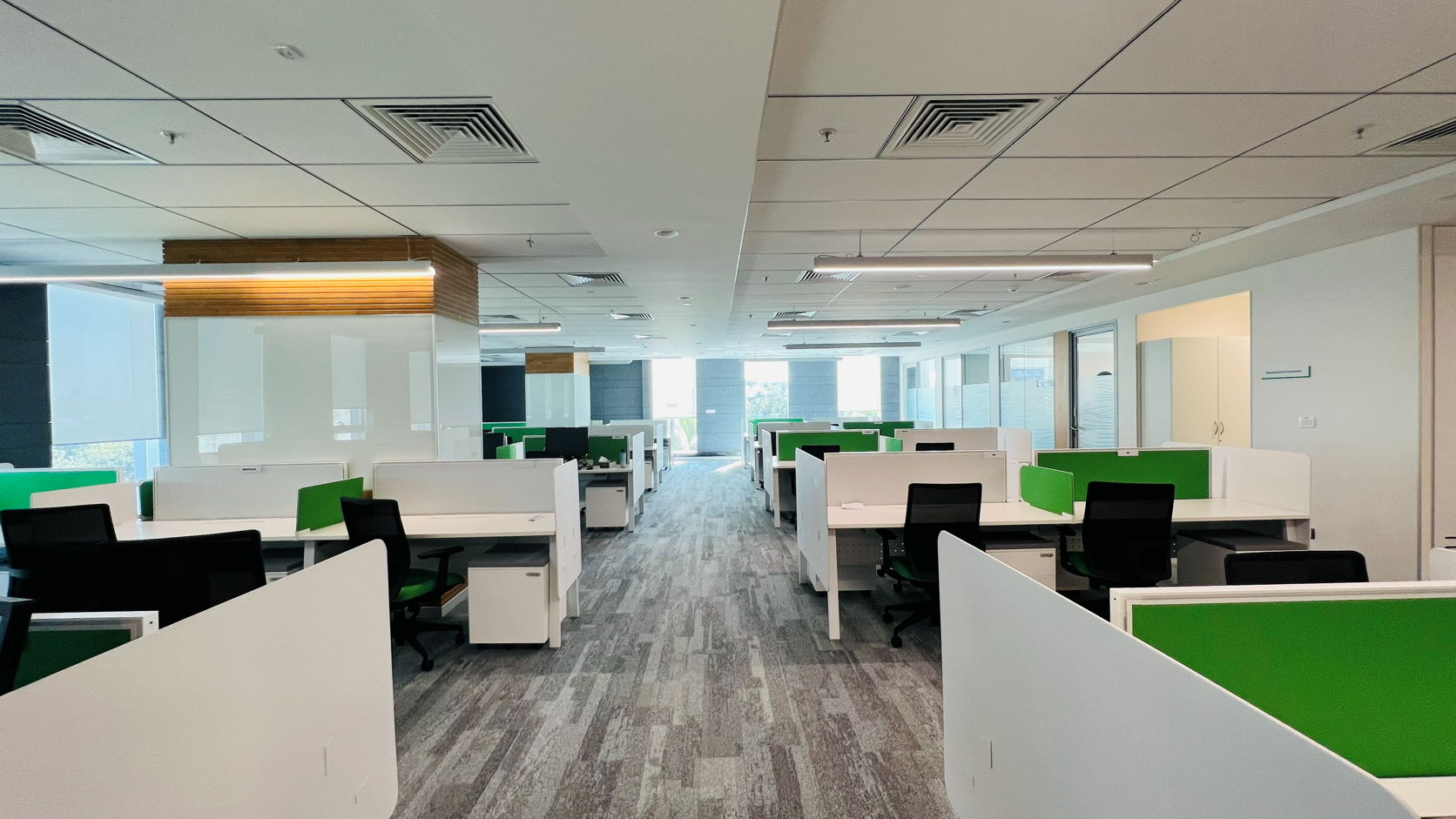
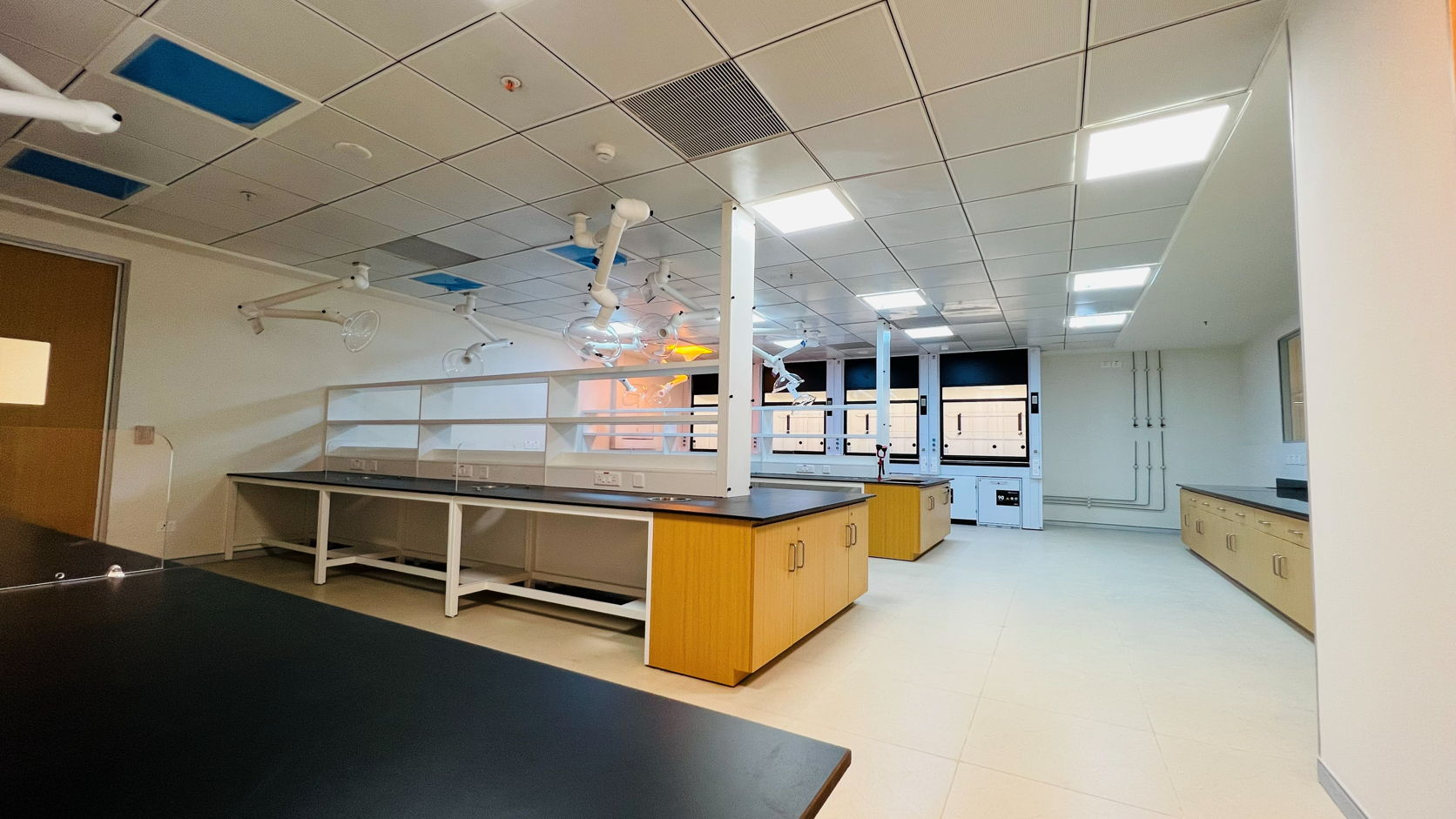
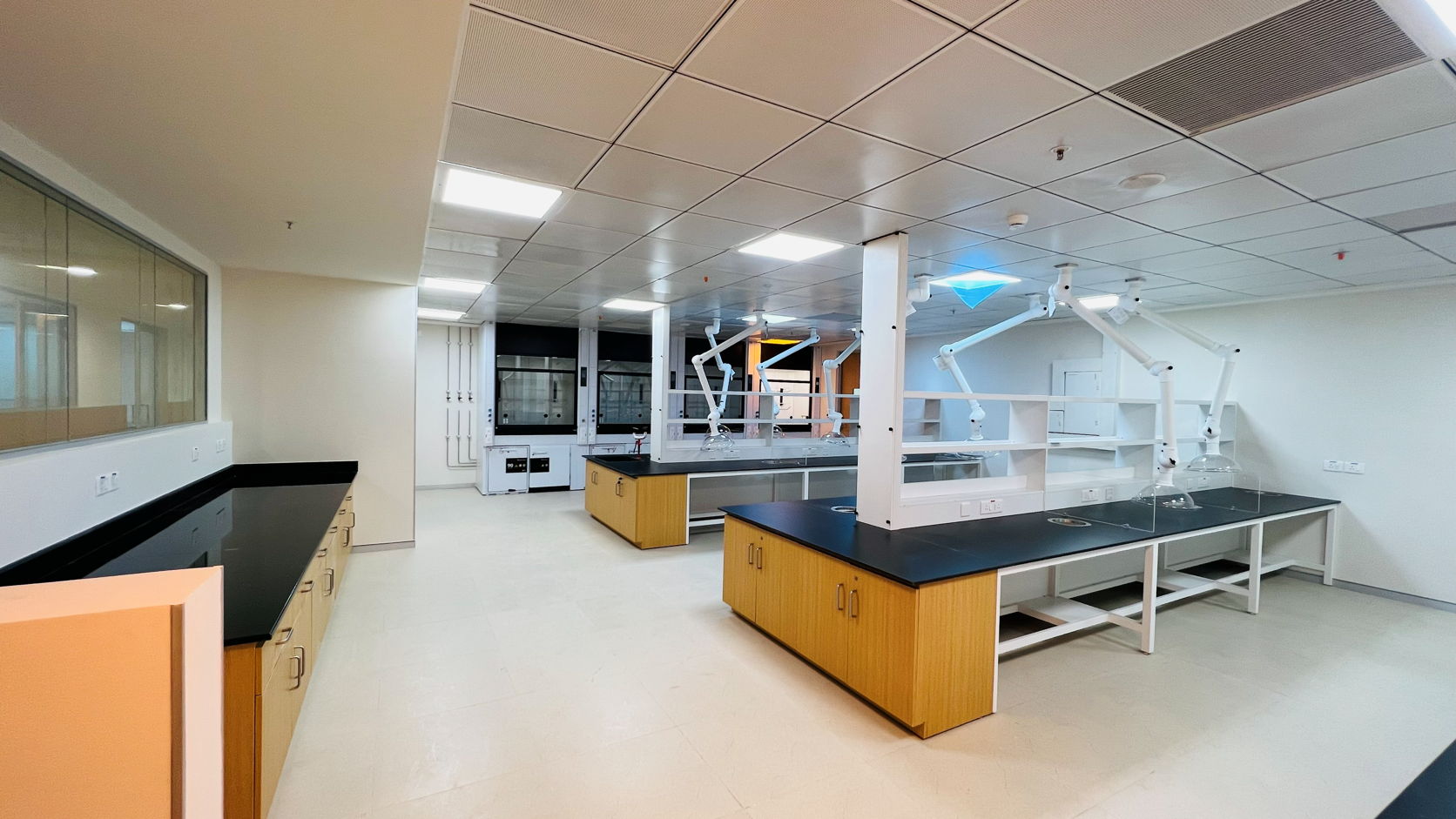
Located on the fourth floor of Brigade Senate, the facility was planned as a sophisticated multi-disciplinary laboratory ecosystem integrating research laboratories, analytical areas, instrumentation spaces, utility infrastructure, support areas, and engineering services into a seamless operational environment.
What made this project particularly challenging was the scale of coordination required within an operational commercial building while simultaneously managing post-pandemic execution constraints.
Details
Client: Case Study-26
Project Type: Complete Turnkey Lab Infra
Project Timeline: September 2021 – 2022
Location: Brigade Senate, Hebbal, Bangalore
Project Size: 30,000 Sq. Ft.
Floor: Fourth Floor
Key Highlights
- Approximately 30,000 Sq. Ft. advanced pharmaceutical laboratory infrastructure
- Fully integrated turnkey execution
- Sophisticated laboratory planning with multiple functional research zones
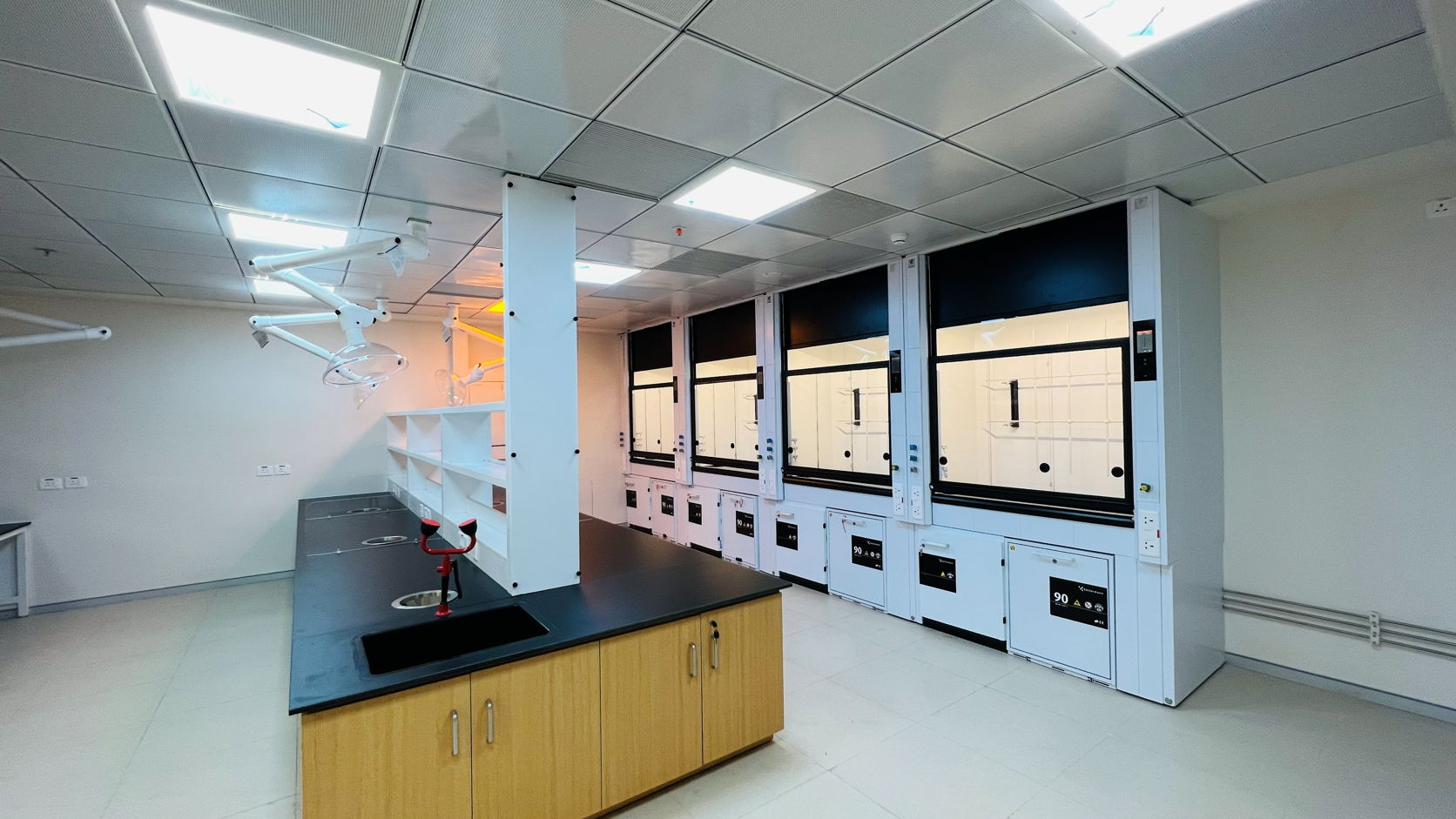
- Elegant combination of wood and metal laboratory systems
- Black Funmax worktops for premium laboratory aesthetics
- Complete BMS and utility integration
- High coordination engineering environment post-pandemic
- Successful delivery within a highly challenging execution period
Densol Perspective
The Teva project remains one of the defining examples of execution under pressure.
At a time when uncertainty affected every aspect of construction and engineering delivery, the project showcased how integrated planning, technical expertise, and committed project management can transform challenges into successful outcomes.
The result was not simply a laboratory.
It was a resilient, future-ready pharmaceutical research environment engineered during one of the most demanding periods in recent industry history.
Scope of Work
From the beginning, the objective was to engineer a laboratory environment that balanced aesthetics, operational functionality, compliance, and engineering precision.
The facility incorporated a combination of:
- Wood laboratory furniture
- Hybrid wood-metal laboratory systems
- Specialized modular systems from Quantum
The design language maintained a modern and elegant research environment while ensuring durability and long-term operational performance.
A distinctive visual identity was created using black Funmax worktops, giving the laboratories a premium and highly contemporary appearance while maintaining high chemical resistance and robustness required for pharmaceutical R&D operations.
The final outcome reflected not only engineering excellence but also a refined architectural and laboratory planning approach.
Densol executed the project under a comprehensive turnkey contract including:
- Laboratory planning and infrastructure development
- Interior fit-outs and laboratory architecture
- HVAC systems and clean environmental engineering
- Electrical systems and power distribution
- Building Management System (BMS) integration
- Plumbing and utility engineering
- Laboratory exhaust systems
- Instrument utility coordination
- Flooring systems
- Lift integration and associated services coordination
- Laboratory furniture and workstation systems
- Testing, commissioning, validation support, and handover
The project execution phase demanded exceptional coordination and adaptability due to:
- Post-lockdown manpower shortages
- Restricted material movement across regions
- Delayed vendor manufacturing timelines
- Supply chain instability
- Execution inside a premium commercial facility with strict operational controls
- Simultaneous coordination between multiple engineering agencies
Despite these conditions, Densol successfully maintained execution momentum through integrated project management, engineering coordination, and proactive site planning.
The completed facility emerged as a highly refined and technically advanced research environment aligned with global pharmaceutical infrastructure standards.
The project demonstrated Densol’s ability to execute large-scale, engineering-intensive laboratory environments even during periods of extreme industry disruption.
More importantly, it reinforced a key philosophy:
complex laboratory environments are not delivered by products alone — they are delivered through engineering integration, coordination discipline, and execution resilience.