
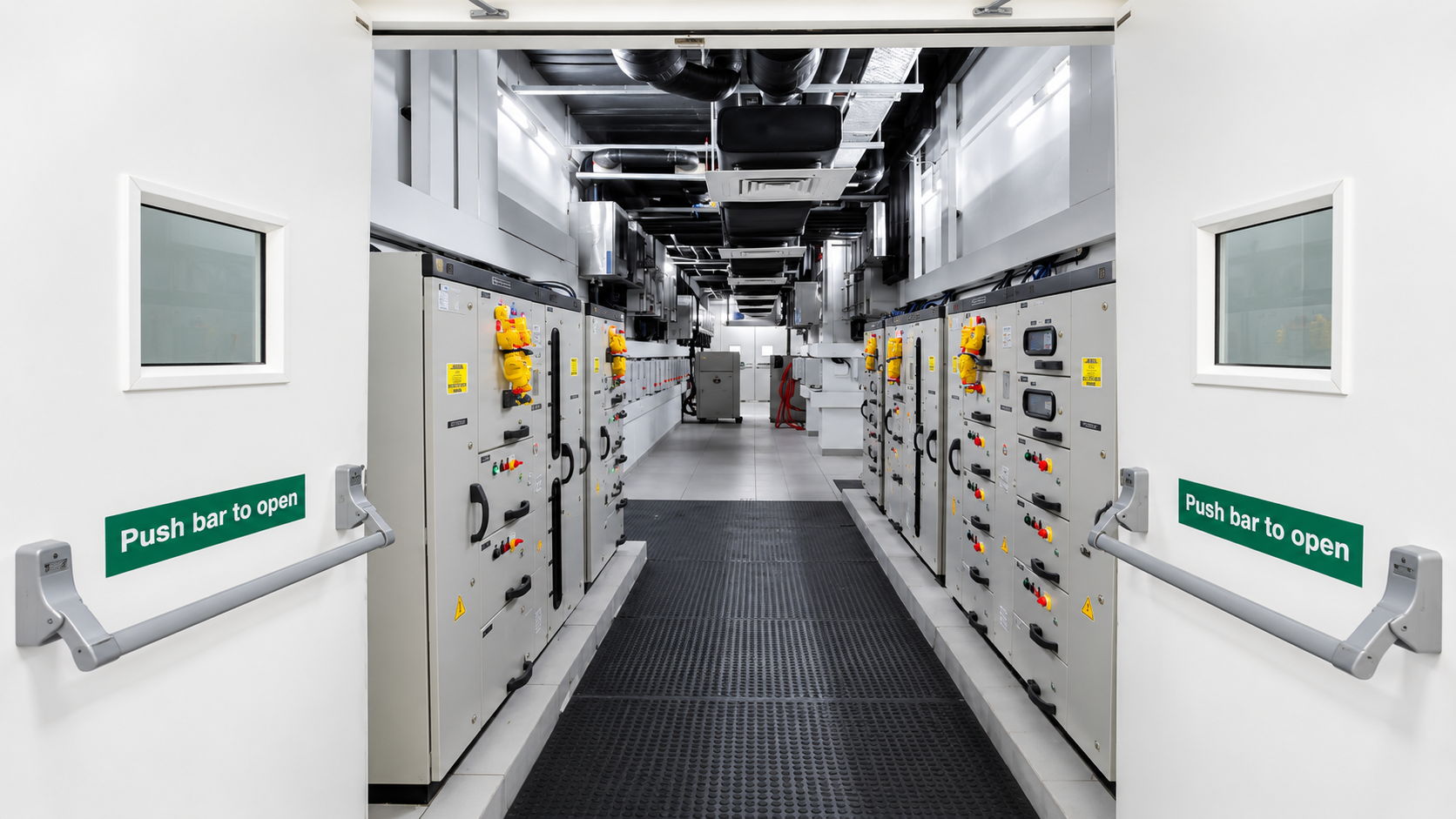
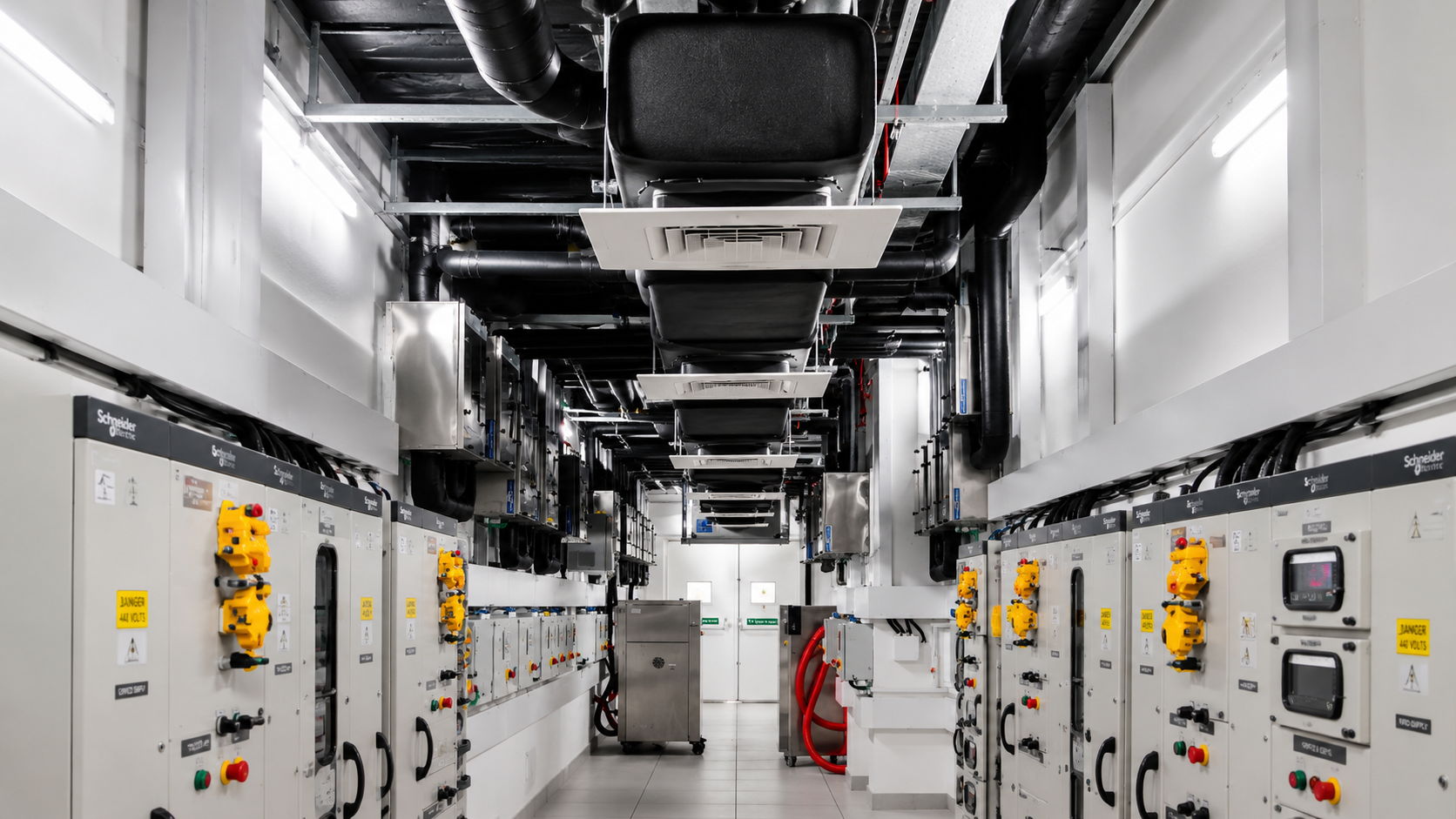
Project : Case Study-25 – Kilo Laboratory Facility | Goa, India | 2026
Advanced kilo laboratories are among the most demanding scientific environments within research infrastructure.
These facilities operate at the intersection of chemistry, process engineering, containment science, and safety-critical operations, where every engineering system directly influences operational reliability and personnel safety.
The Kilo Laboratory project at the Case Study-25 in Goa, completed in 2026, became one such highly specialized and technically intensive laboratory infrastructure project executed by Densol under extremely challenging operational conditions.
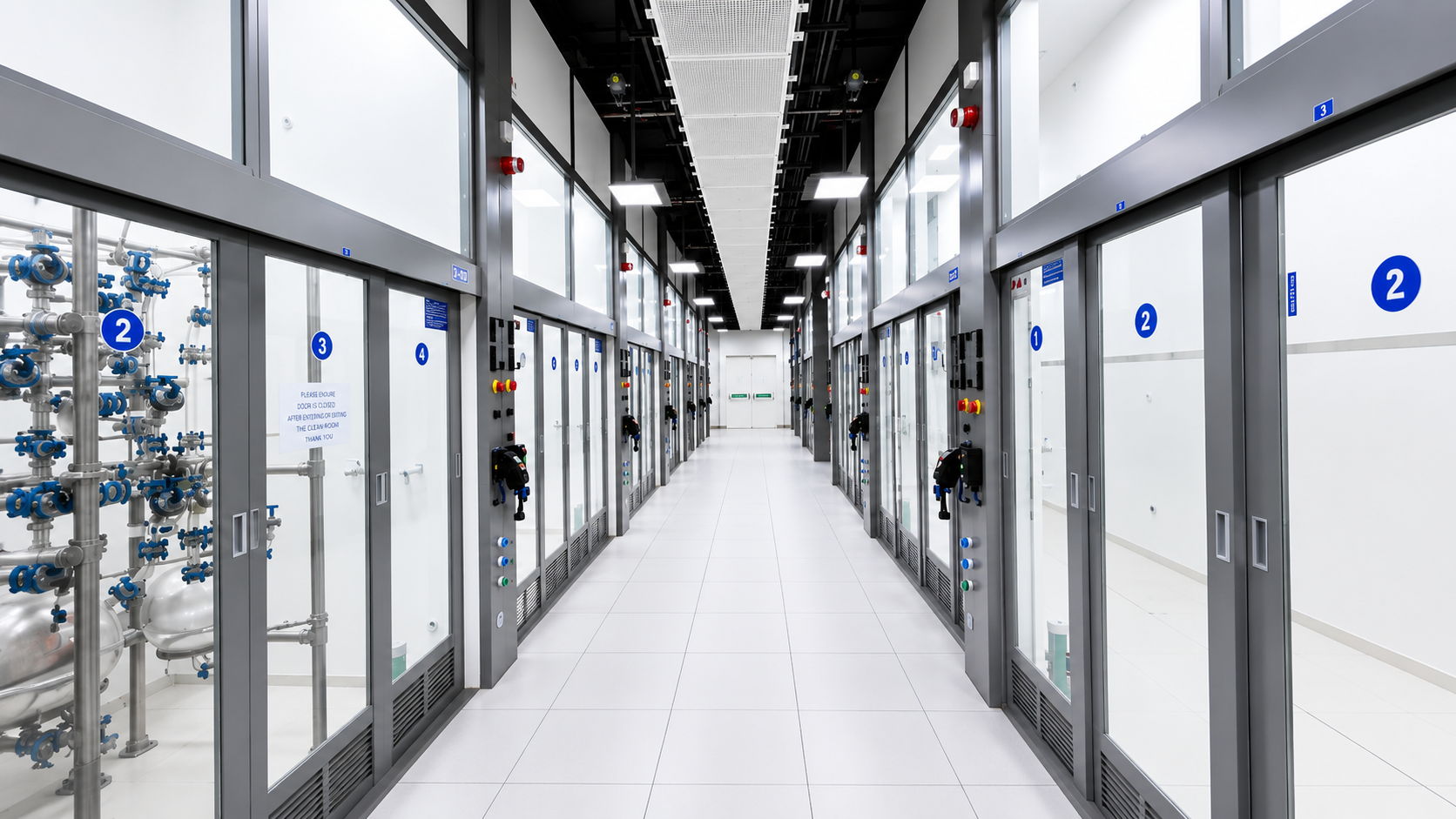
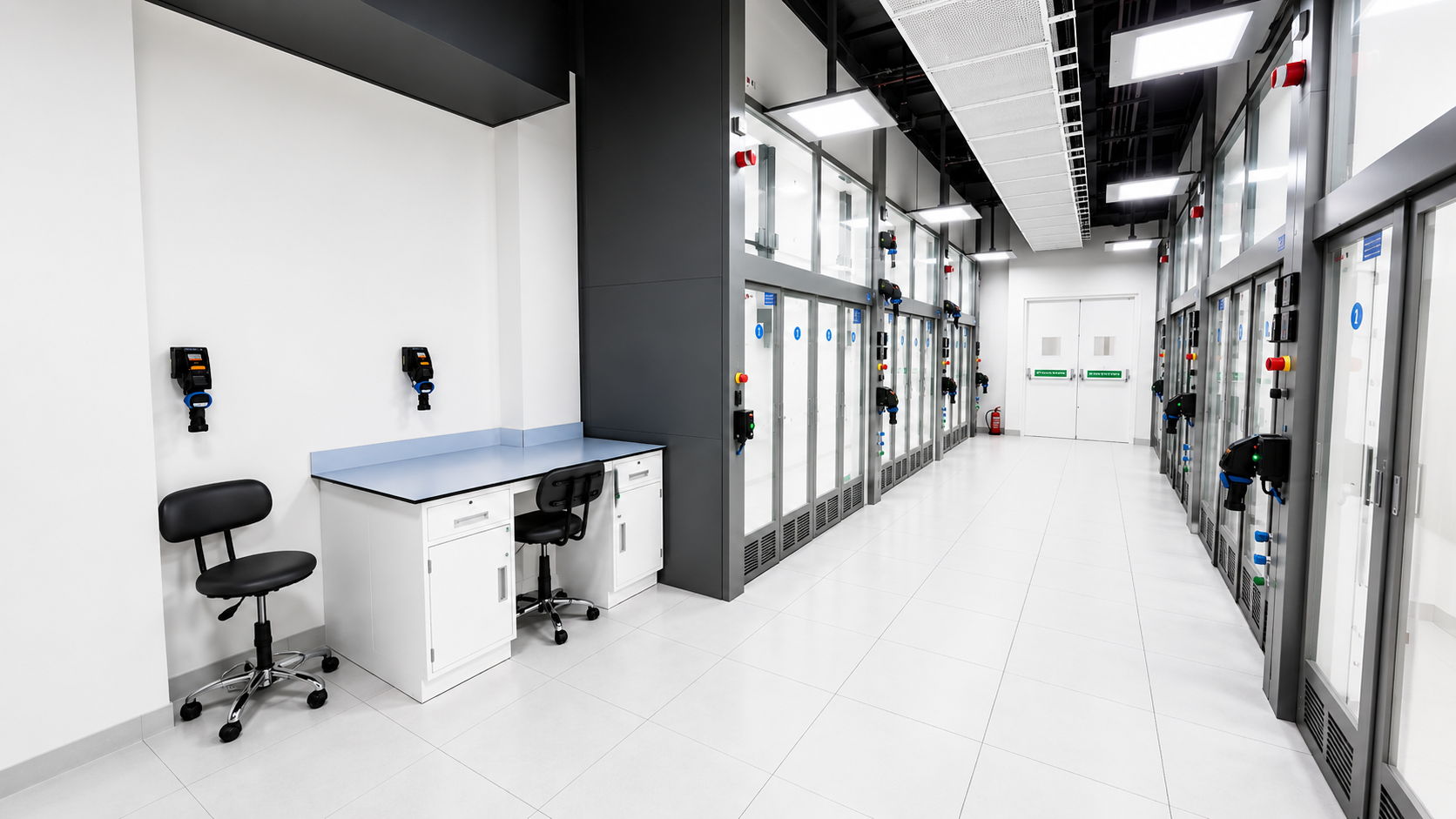
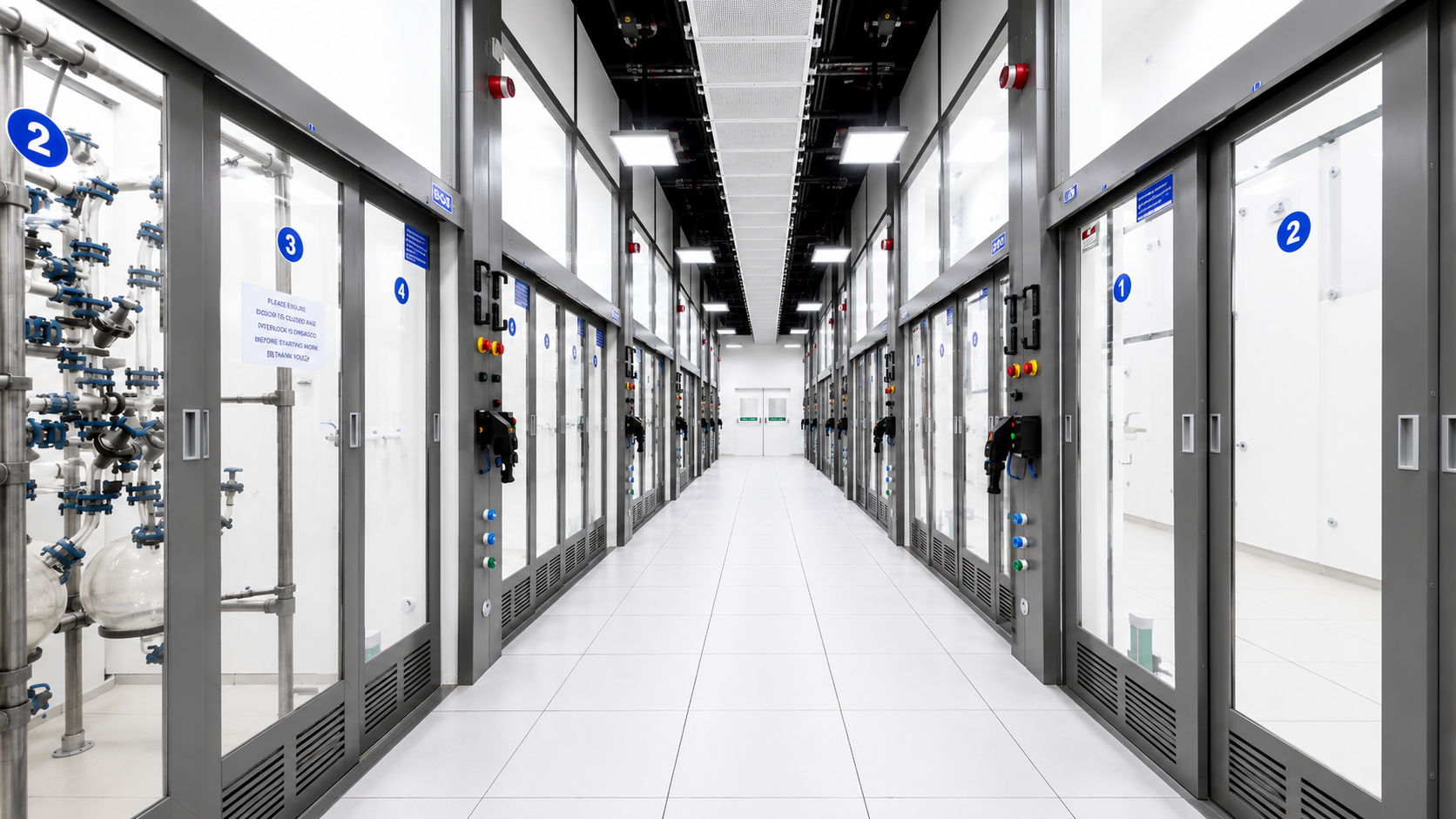
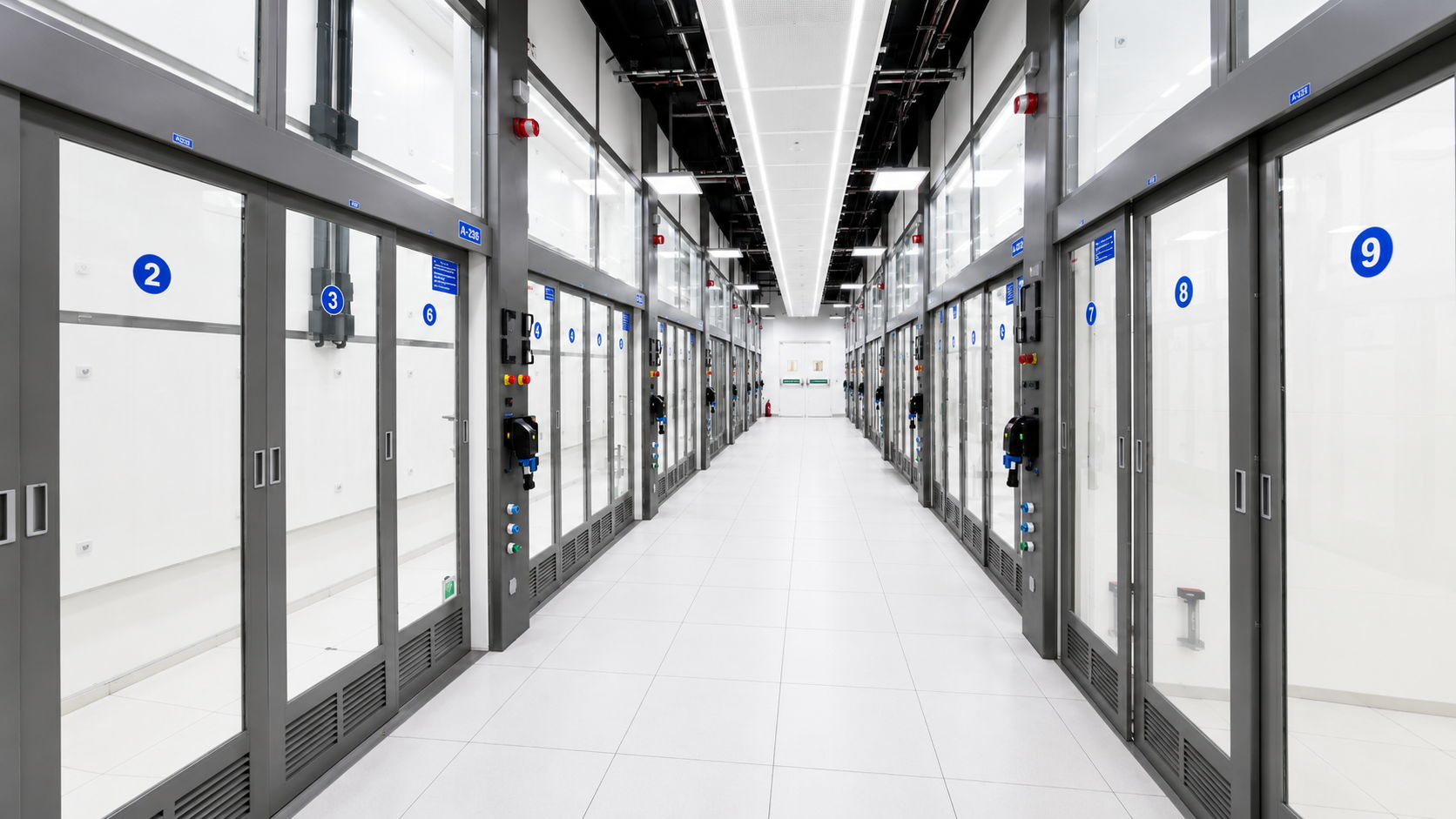
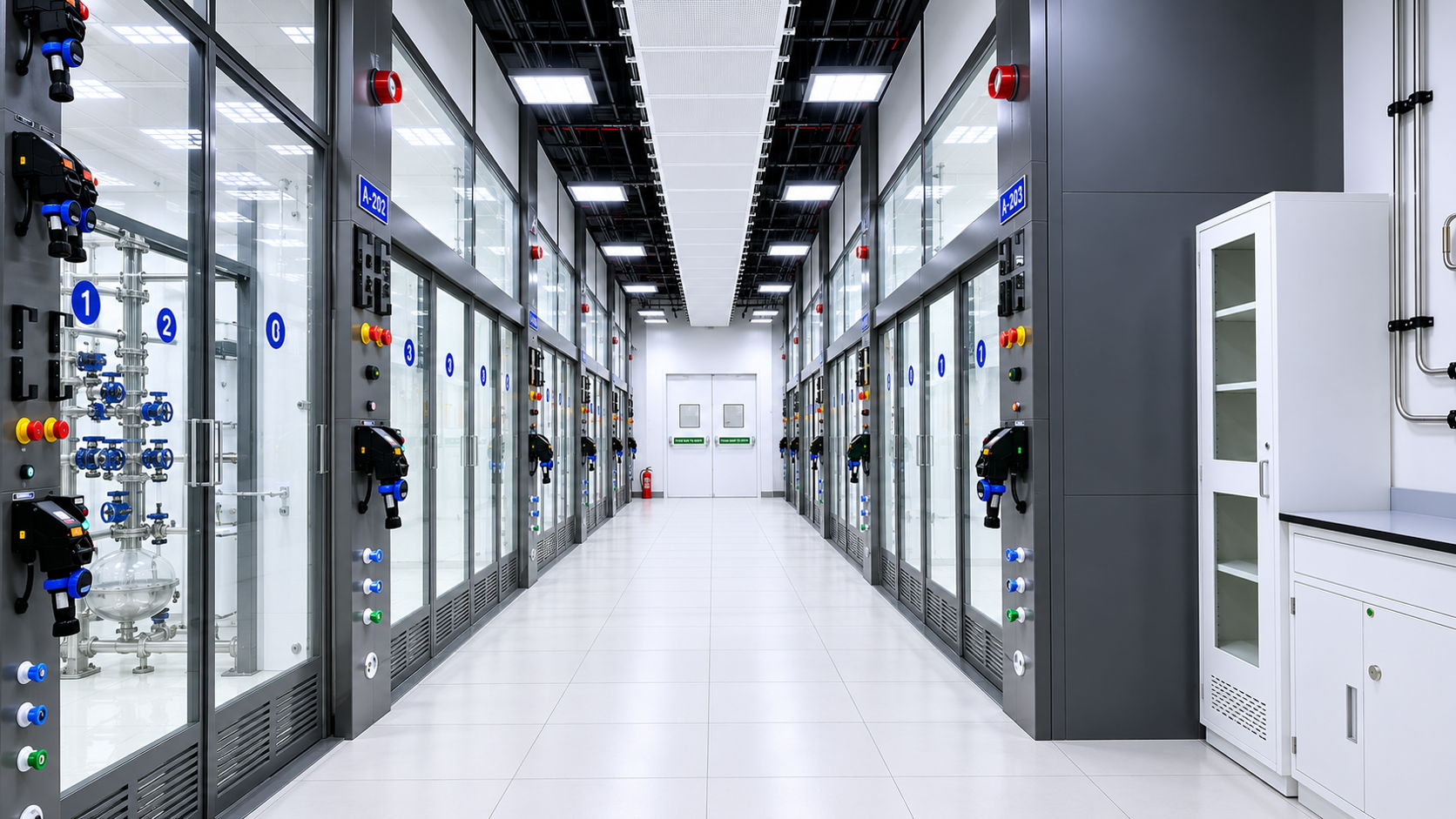
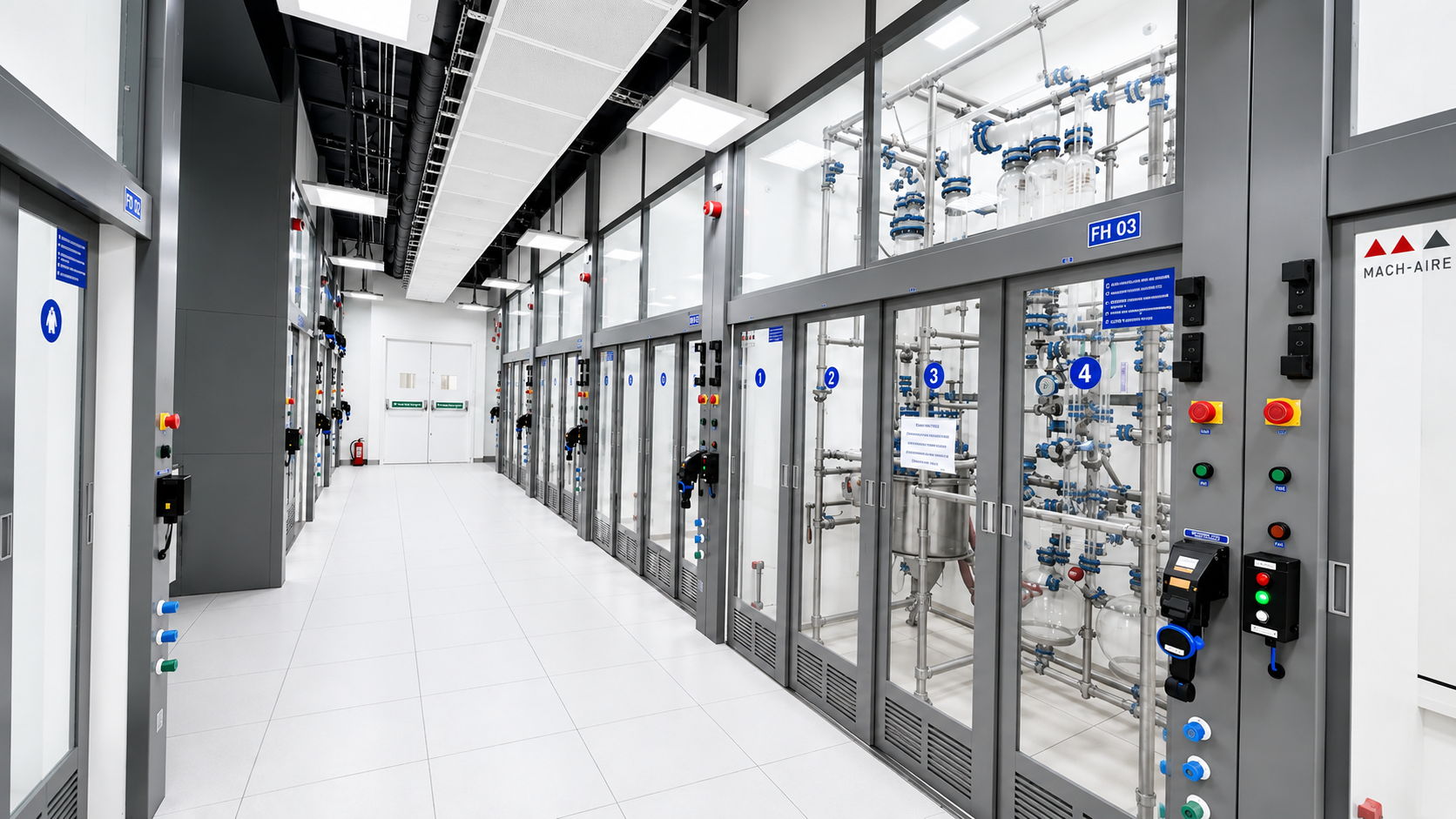
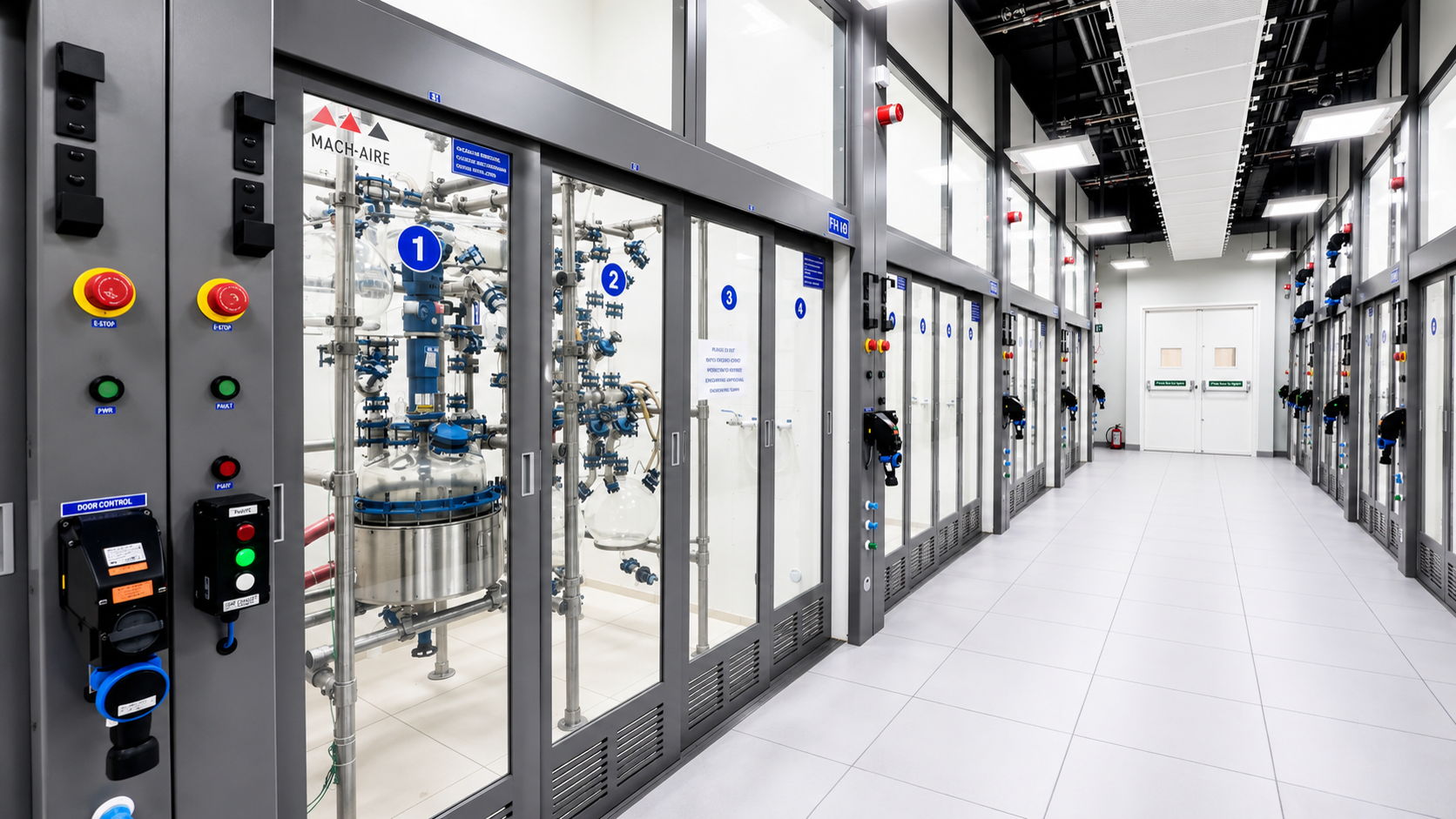
Developed within an active brownfield environment surrounded by operational laboratories, the project involved the installation and integration of 24 high-performance walk-in fume hoods of varying dimensions, including large-format units extending up to 3 meters by 4 meters.
The scale, containment requirements, and airflow engineering complexity of the project made it one of the most specialized kilo laboratory executions undertaken by the team.
A major milestone of the project was the international mock-up validation and Factory Acceptance Testing process carried out at Mech-Air’s manufacturing facility in China.
Given the critical containment and airflow performance requirements of the laboratory, the complete mock-up underwent extensive ASHRAE testing and validation before final approval for production was granted.
Only after successful airflow verification and client approval were the systems released for manufacturing, shipment, installation, and final commissioning at the Goa facility.
The project eventually evolved into a highly coordinated engineering exercise involving international manufacturing collaboration, precision containment engineering, advanced exhaust systems, brownfield execution planning, and post-installation ASHRAE certification.
Details
Client: Syngenta
Project Type: High-Performance Kilo Laboratory Infrastructure – Brownfield Execution
Project Year: 2026
Location: Goa
Project Area: Approximately 3,500 Sq. Ft.
Facility: Research & Technology Centre
Key Highlights
- Approximately 3,500 Sq. Ft. kilo laboratory infrastructure
- Executed within Case Study-25, Goa
- 24 high-performance walk-in fume hoods
- Large-format containment systems up to 3m × 4m
- Mock-up and FAT conducted in China
- ASHRAE-certified containment performance
- Brownfield execution within operational laboratory environment
- Precision airflow and exhaust engineering
- International engineering coordination and validation process
Densol Perspective
Projects like the Case Study-25 highlight the true depth of specialized laboratory engineering.
Facilities involving hazardous synthesis and kilo-scale operations demand far more than conventional laboratory execution.
They require integration between containment science, airflow engineering, operational safety, international validation standards, and highly disciplined project coordination.
This project reflected Densol’s capability in delivering highly specialized research environments where precision engineering, safety performance, and operational reliability become mission-critical.
The result was not simply a kilo laboratory.
It became a globally validated high-performance containment environment engineered for safety, precision, and long-term operational excellence.
Scope of Work
The design philosophy focused heavily on:
- High-performance containment engineering
- Safe kilo laboratory operations
- Controlled airflow management
- Precision exhaust engineering
- Hazardous chemical handling safety
- Operational reliability and maintainability
- Brownfield execution discipline
The facility incorporated:
- 24 walk-in fume hoods of multiple configurations
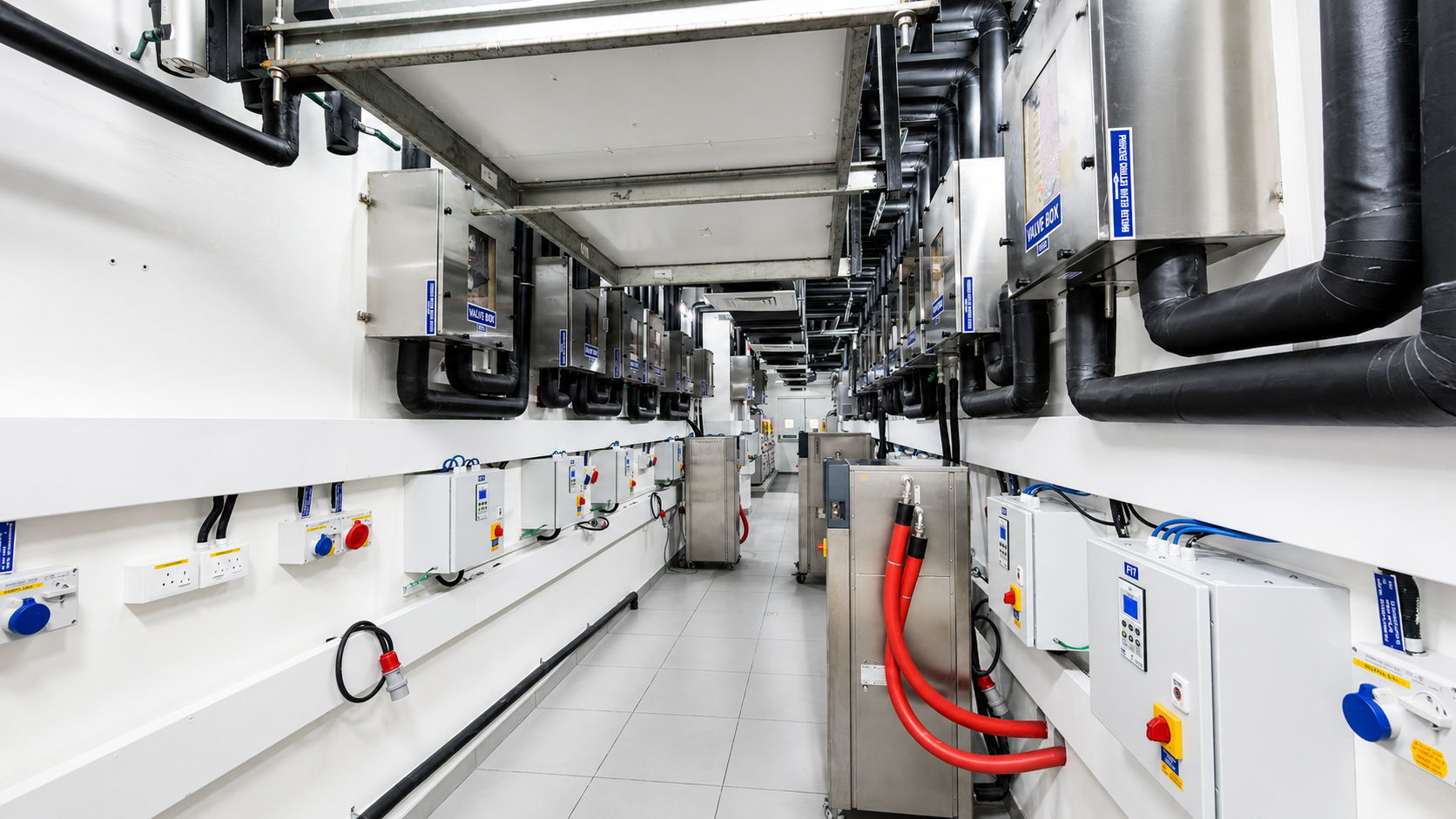
- High-capacity exhaust infrastructure
- Precision airflow balancing systems
- Utility-integrated laboratory infrastructure
- Hazard-specific ventilation engineering
- Operator-safe workflow planning
- Engineering-friendly service accessibility
Since kilo laboratories involve large-scale synthesis activities and aggressive chemical operations, the engineering systems were designed to maintain stable containment performance under varying process loads and operational conditions.
Particular attention was given to:
- Face velocity stability
- Containment efficiency
- Exhaust balancing
- Utility coordination
- Operator safety
- Long-term maintainability
One of the defining highlights of the project was the rigorous international validation process.
The execution involved:
- Full-scale mock-up development at Mech-Air’s manufacturing facility in China
- Factory Acceptance Testing (FAT)
- ASHRAE airflow testing and containment validation
- Client inspection and approval processes
- Production release after successful certification
Once approved, the systems were manufactured, shipped to India, installed at the Goa facility, and again subjected to ASHRAE certification after installation.
This dual-stage testing approach ensured that both manufacturing quality and final installed performance met the stringent operational and safety standards required for kilo laboratory environments.
The execution became particularly challenging because the project was delivered:
- Within an operational brownfield research environment
- Around active laboratories and scientific operations
- Under strict operational safety controls
- With carefully coordinated execution windows
- Under complex installation logistics conditions
The movement and installation of large-format walk-in fume hoods within a live laboratory environment required highly disciplined planning, phased execution strategies, and precise material handling coordination.
Every installation activity had to be synchronized carefully to ensure uninterrupted laboratory operations while maintaining safety and execution precision.
Densol executed the project including:
- Kilo laboratory engineering coordination
- Walk-in fume hood integration
- International mock-up and FAT coordination
- ASHRAE testing and certification support
- Exhaust and airflow engineering
- Utility and laboratory services integration
- Brownfield installation planning
- Site execution and heavy equipment coordination
- Final testing, balancing, commissioning, and validation
The project required continuous coordination between international manufacturing teams, client stakeholders, laboratory users, HVAC specialists, and execution personnel throughout the project lifecycle.
The project involved several highly specialized engineering and execution challenges including:
- Installation of 24 large walk-in fume hoods
- nternational FAT and mock-up validation
- Stringent ASHRAE containment testing requirements
- Brownfield execution around active laboratory operations
- Heavy equipment installation logistics
- High-performance exhaust coordination
- Precision airflow balancing and certification
- Utility integration for kilo-scale research operations
The success of the project depended heavily on engineering precision, international coordination, execution discipline, and containment performance validation.
The completed kilo laboratory emerged as a highly sophisticated and operationally secure process research environment capable of supporting demanding synthesis and kilo-scale scientific operations.
The project demonstrated how precision containment engineering, international validation standards, and disciplined brownfield execution can successfully deliver world-class laboratory infrastructure under highly challenging operational conditions.
More importantly, the successful completion and appreciation from the client reflected the project team’s ability to execute technically critical laboratory environments with high levels of engineering precision and operational control.