
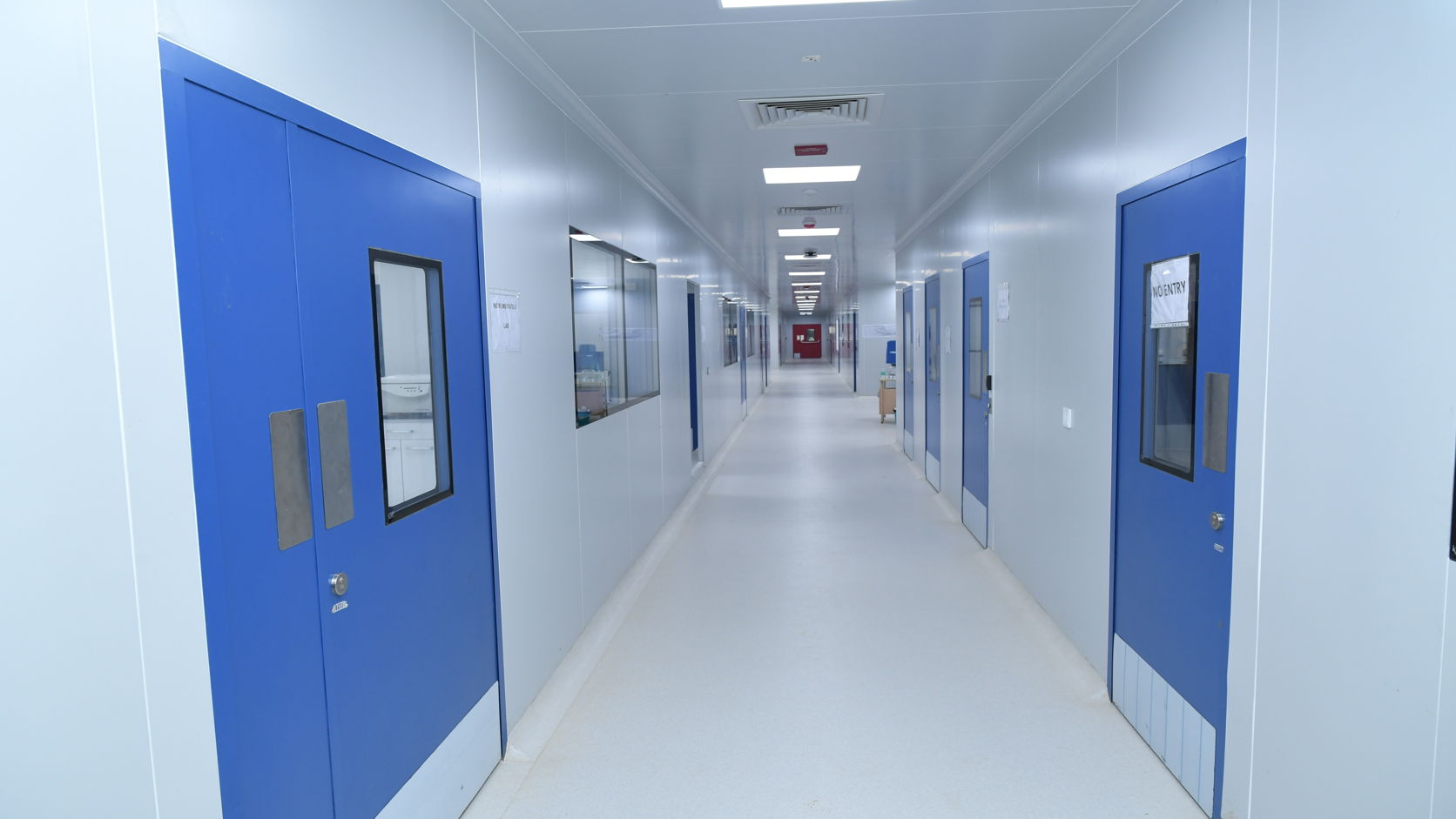
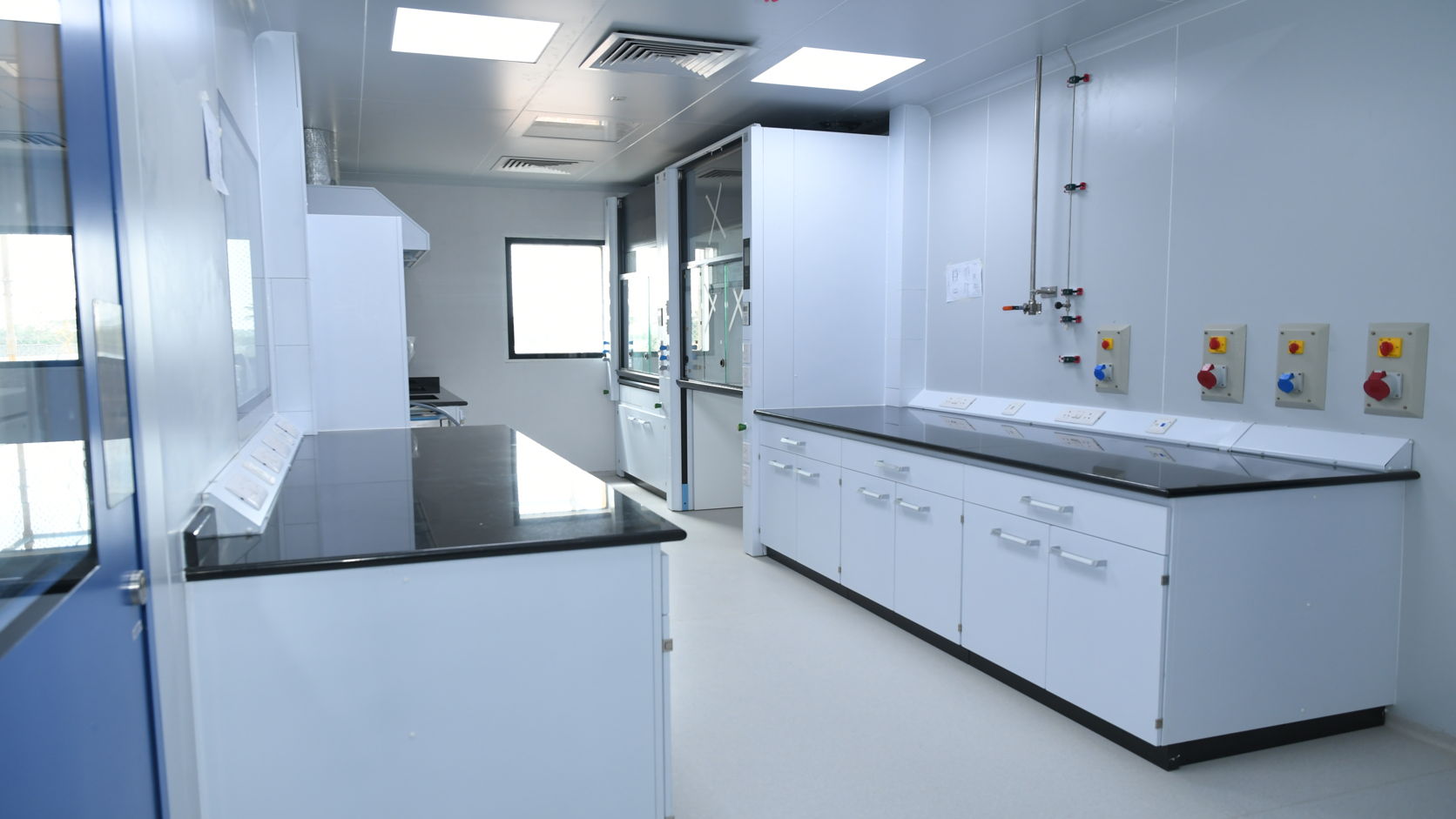
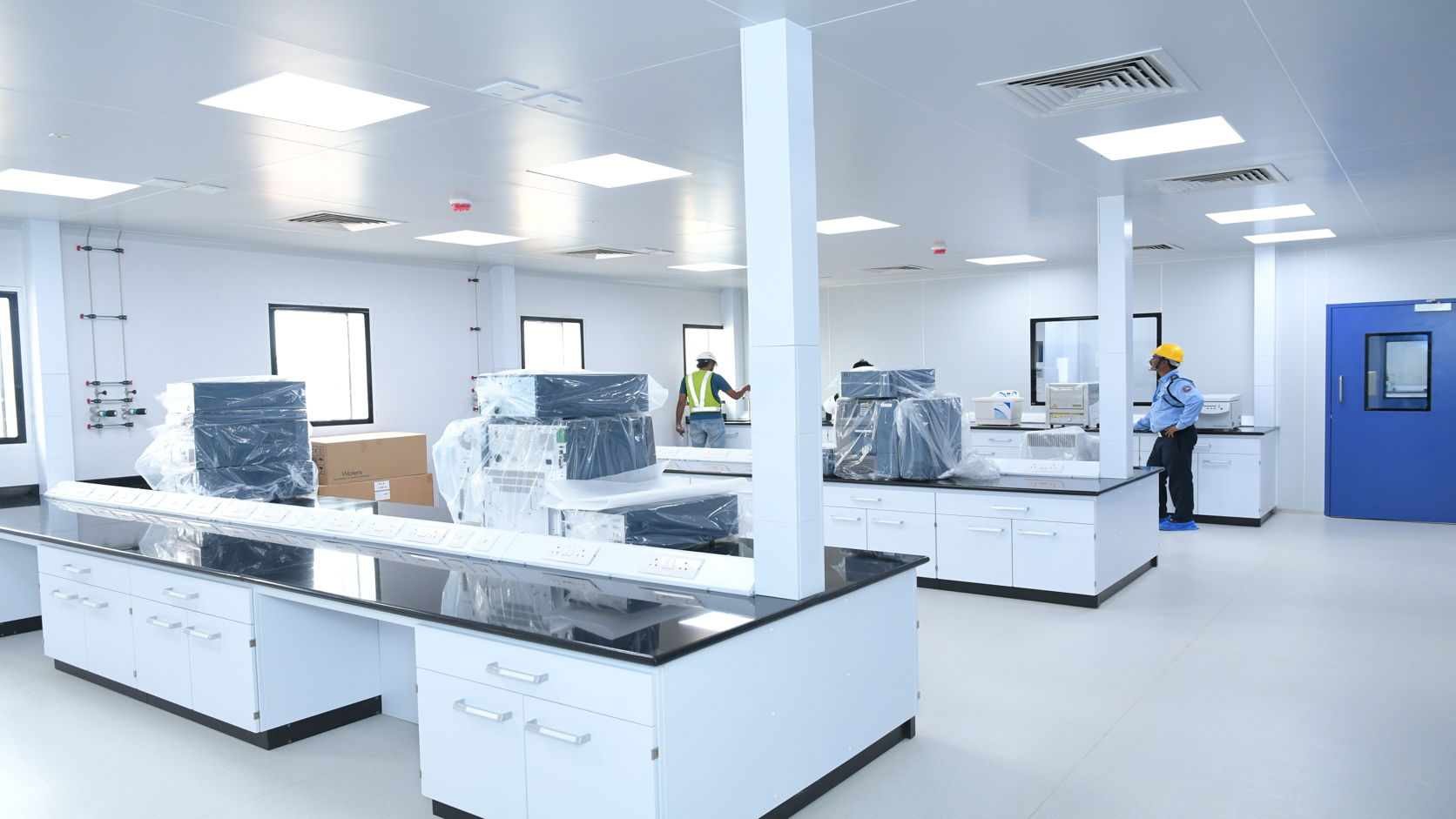
Project : Case Study-21 – Injectable Antibiotics Manufacturing Facility – QC Laboratory| Bangalore, India | 2016
In pharmaceutical manufacturing, the quality control laboratory is far more than a support function.
It becomes the analytical backbone of the entire manufacturing ecosystem.
This QC Laboratory project for Case Study-21 at Doddaballapur, Bangalore, was developed as part of a larger greenfield injectable antibiotics manufacturing facility comprising Drug Product (DP) and Drug Substance (DS) manufacturing blocks along with utility infrastructure and administrative facilities.
While the overall campus development was managed under Project Management Consultancy services, Densol successfully executed the complete QC laboratory infrastructure as a turnkey solution including all engineering services.
Designed to support both DP and DS manufacturing operations, the laboratory had to accommodate a wide range of analytical activities, testing workflows, instrumentation requirements, and utility integrations within a highly controlled pharmaceutical environment.
Spread across approximately 10,000 square feet, the project was envisioned as a modern analytical facility capable of supporting the stringent operational and quality expectations associated with injectable antibiotic manufacturing.
Being part of a greenfield development, the project demanded intensive coordination between civil infrastructure, manufacturing utilities, clean engineering systems, laboratory operations, and future scalability requirements.
Details
Client: Case Study-21
Project Type: Greenfield Pharmaceutical Manufacturing Facility – QC Laboratory
Project Year: 2016
Location: Doddaballapur, Bangalore
Project Area: Approximately 10,000 Sq. Ft.
Key Highlights
- Greenfield injectable antibiotics manufacturing QC laboratory
- Approximately 10,000 Sq. Ft. analytical infrastructure
- Designed to support both DP and DS manufacturing operations
- Complete turnkey laboratory execution
- Integrated HVAC and utility engineering systems
- Analytical laboratory infrastructure aligned with pharmaceutical manufacturing operations
- Coordinated engineering integration within a large-scale manufacturing campus
- Flexible laboratory planning for future operational expansion
Densol Perspective
QC laboratories within pharmaceutical manufacturing facilities demand a very different level of engineering integration compared to standalone research environments.
This project reflected Densol’s ability to understand the relationship between manufacturing operations, analytical workflows, utility infrastructure, and laboratory engineering as one connected ecosystem.
The result was not simply a laboratory space.
It became a critical analytical environment supporting the quality backbone of a large-scale injectable pharmaceutical manufacturing facility.
Scope of Work
From the beginning, the QC laboratory was planned not as an isolated department, but as an integrated operational component of the larger manufacturing facility.
The design philosophy focused on creating:
- Efficient analytical workflows
- Clean and organized laboratory circulation
- Flexible instrumentation planning
- Reliable utility accessibility
- Stable environmental conditions
- Safety-driven laboratory operations
- Future-ready laboratory infrastructure
Special attention was given to the coordination between laboratory spaces and manufacturing support utilities to ensure uninterrupted analytical operations for both Drug Product and Drug Substance activities.
The planning also emphasized long-term maintainability, operational ergonomics, and adaptability for evolving analytical requirements.
Every engineering layer, from HVAC systems to electrical routing and utility integration, was carefully coordinated to support high-performance laboratory functionality within a regulated pharmaceutical manufacturing environment.
Densol’s turnkey execution scope included:
- QC laboratory planning and infrastructure development
- Architectural interiors and laboratory layouts
- Laboratory furniture and analytical workstations
- HVAC systems and environmental engineering
- Electrical systems and clean utility integration
- Laboratory exhaust systems
- Instrument utility coordination
- Plumbing and process utility services
- Safety systems integration
- MEP coordination and engineering support
- Testing, commissioning, and project handover
The project also required continuous coordination with the broader manufacturing development teams to ensure seamless integration with overall plant infrastructure and project schedules.
The scale of the larger manufacturing development itself became one of the defining challenges of the project.
The QC laboratory execution had to align with:
- Simultaneous DP and DS facility development
- Central utility infrastructure coordination
- Manufacturing-driven timelines
- Multi-agency engineering interfaces
- Compliance-focused pharmaceutical infrastructure standards
- Future operational scalability requirements
As the laboratory supported injectable antibiotic manufacturing operations, precision in utility coordination, environmental control, and analytical infrastructure planning became critical throughout the project lifecycle.
The success of the project depended heavily on disciplined project coordination, structured execution planning, and proactive engineering integration.
The completed QC laboratory emerged as a highly organized and technically integrated analytical environment capable of supporting complex pharmaceutical quality operations.
The facility successfully aligned laboratory infrastructure with manufacturing requirements while maintaining operational efficiency, engineering reliability, and long-term maintainability.
More importantly, the project demonstrated how well-integrated QC laboratory environments contribute directly to the overall success and operational readiness of pharmaceutical manufacturing facilities.