
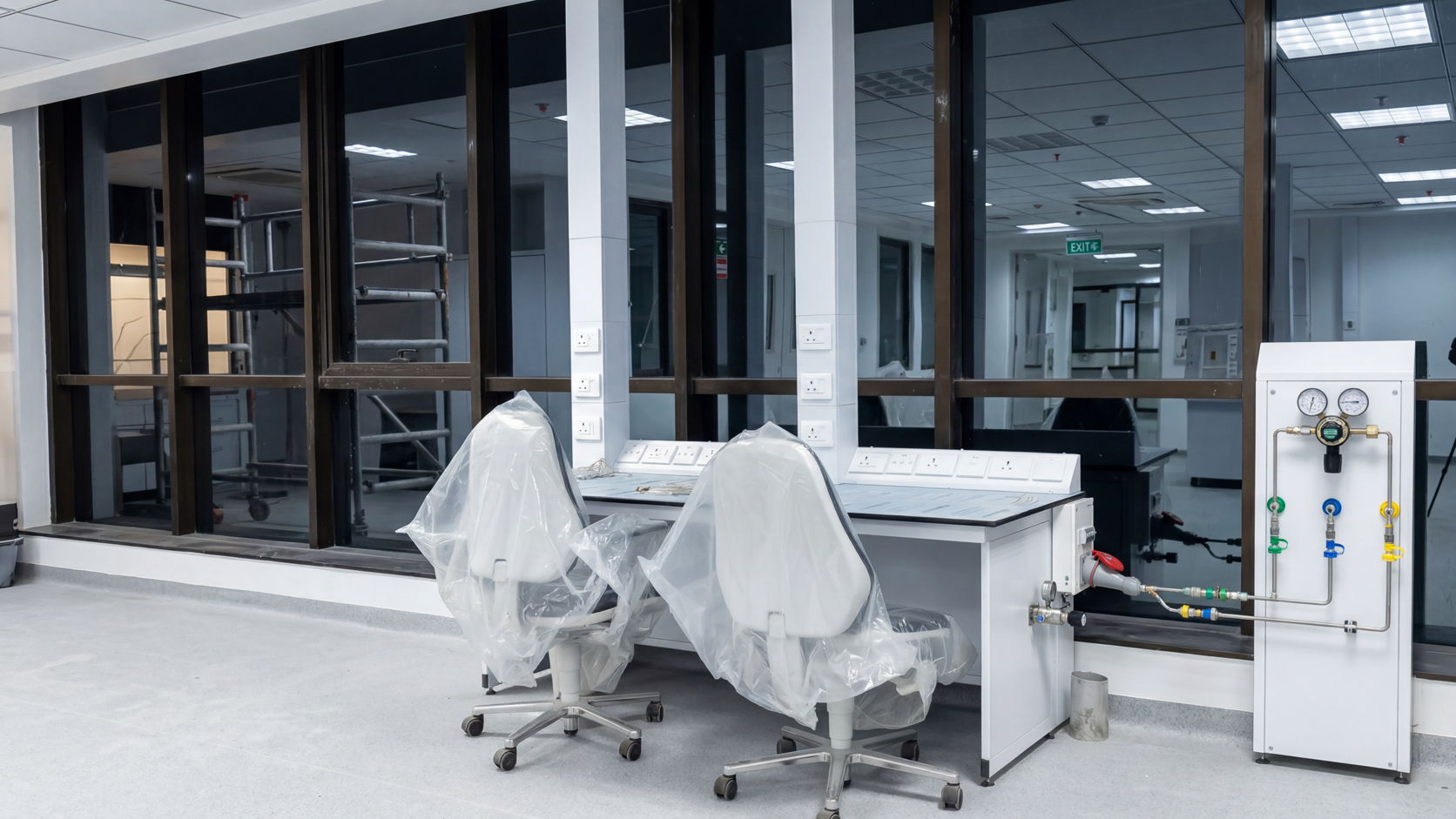
Project : Case Study-29 | Pune, India | 2021
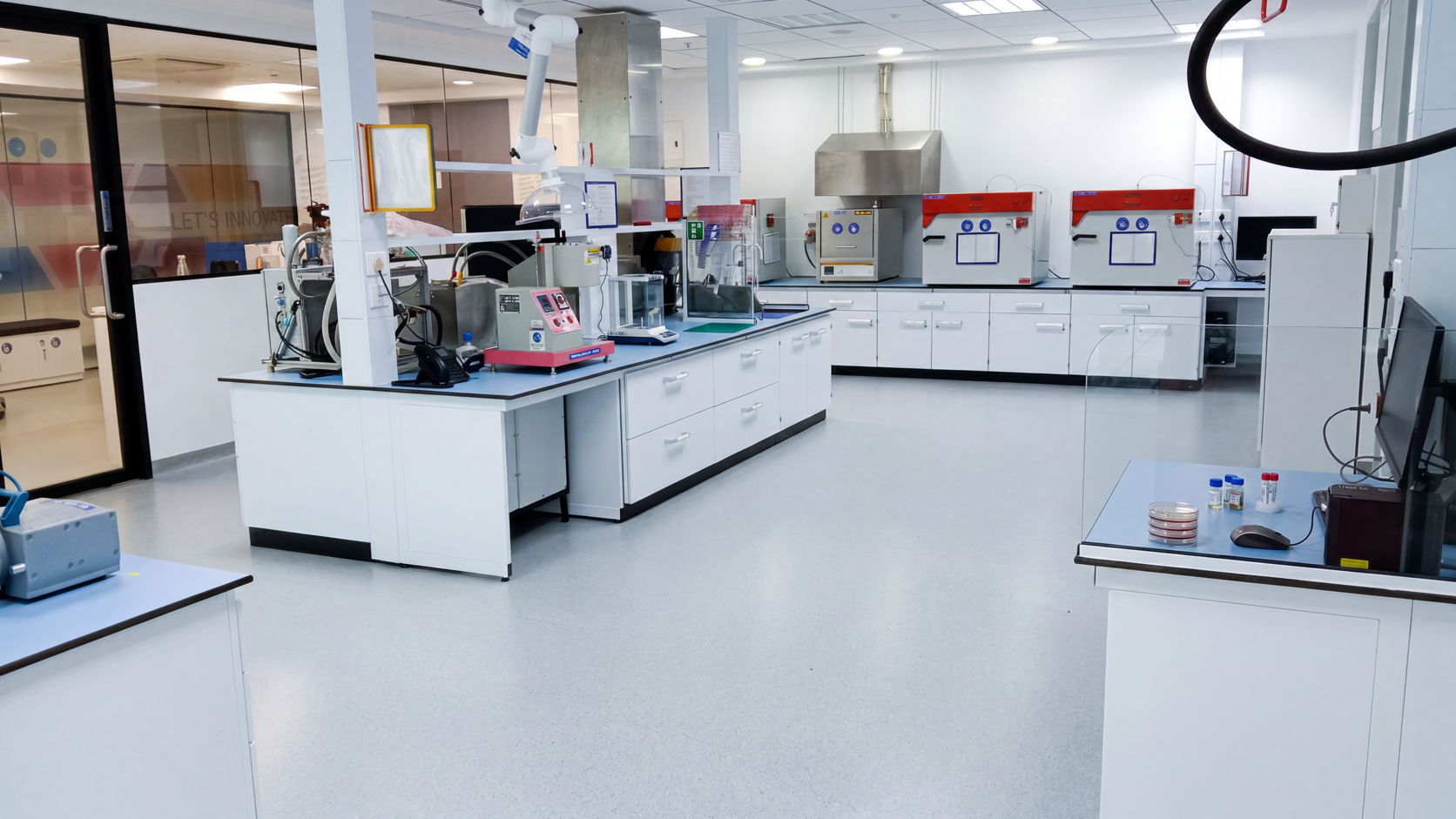
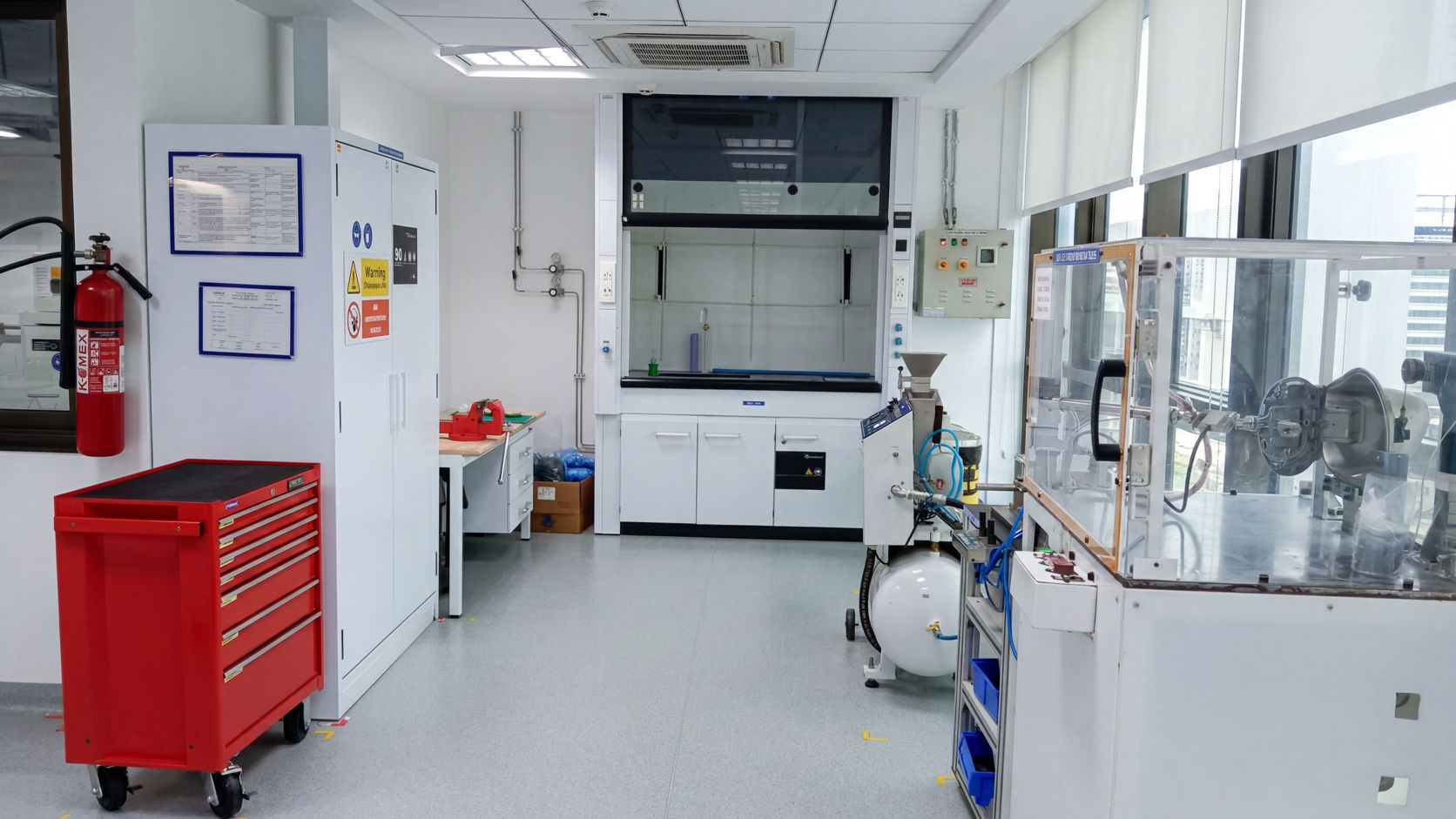
The V&R Laboratory project for Case Study-29 in Pune was developed as a highly specialized testing and validation environment designed to support advanced product development, material testing, and reliability analysis operations.
Delivered in 2021 as a complete Design & Build turnkey project by Densol, the facility was envisioned as a technically sophisticated laboratory ecosystem integrating testing infrastructure, analytical workspaces, safety systems, engineering utilities, and operational office functions into a single coordinated environment.
The project was developed in close coordination with JLL as the Project Management Consultant and involved extensive engineering integration to support vibration testing, mechanical testing, ATEX operations, environmental simulations, conductivity testing, and precision laboratory workflows.
Unlike conventional pharmaceutical laboratories, this project demanded a unique combination of industrial testing infrastructure and precision laboratory engineering, where heavy-duty testing systems had to coexist within controlled and highly organized technical spaces.
The final outcome was a refined engineering and testing environment capable of supporting advanced validation and product reliability operations for A Raymond’s manufacturing and R&D ecosystem.
Details
Client: Case Study-29
Project Type: Design & Build Turnkey Laboratory Project
Project Year: 2010
Location: : Pune, Maharashtra
Project Area: 4,000 Sq. Ft.
Project Management Consultant: JLL
Key Highlights
- Complete Design & Build turnkey execution
- Advanced V&R laboratory infrastructure
- Integrated shaker room and mechanical testing environments
- ATEX oven and environmental chamber coordination
- Kottermann modular laboratory systems integration
- Trespa TopLab Plus workstations
- Specialized vibration isolation planning
- Integrated office, meeting, and testing ecosystem
- Industrial testing and analytical workflow coordination
Densol Perspective
Projects like the Case Study-29 highlight the expanding role of integrated laboratory engineering within advanced industrial and manufacturing sectors.
The project required balancing industrial robustness with laboratory precision, ensuring that testing infrastructure, engineering systems, utilities, and workspace functionality operated together seamlessly.
The result was not simply a testing laboratory.
It became a highly coordinated engineering environment designed around performance validation, operational efficiency, and long-term technical reliability.
Scope of Work
The laboratory planning was developed around operational workflow efficiency, testing safety, equipment integration, and long-term flexibility.
The layout incorporated:
- LCT / Shaker Room infrastructure
- Mechanical Testing Room
- ATEX Oven Room
- Environmental and Climatic Chamber integration
- Conductivity and Impact Testing workstations
- IRHD, GM, and CM testing zones
- Vacuum testing tables
- Operation office and collaborative workspace
- Meeting areas and HOD cabins
- Pantry and support utilities
- Specialized exhaust and utility systems
The facility also included dedicated provisions for:
- Vibration testing equipment with isolated footing systems
- Forced ventilation systems
- Heat decapitation zones
- RH-controlled AC systems
- Exhaust routing and utility coordination
- Safety station integration
- Specialized flammable storage cabinets
- Integrated drainage and water supply points
A strong focus was placed on maintaining operational separation between testing activities and office functions while ensuring seamless circulation and utility accessibility throughout the facility.
The project incorporated premium laboratory systems and industrial-grade engineering materials to support both durability and technical performance.
Key infrastructure elements included:
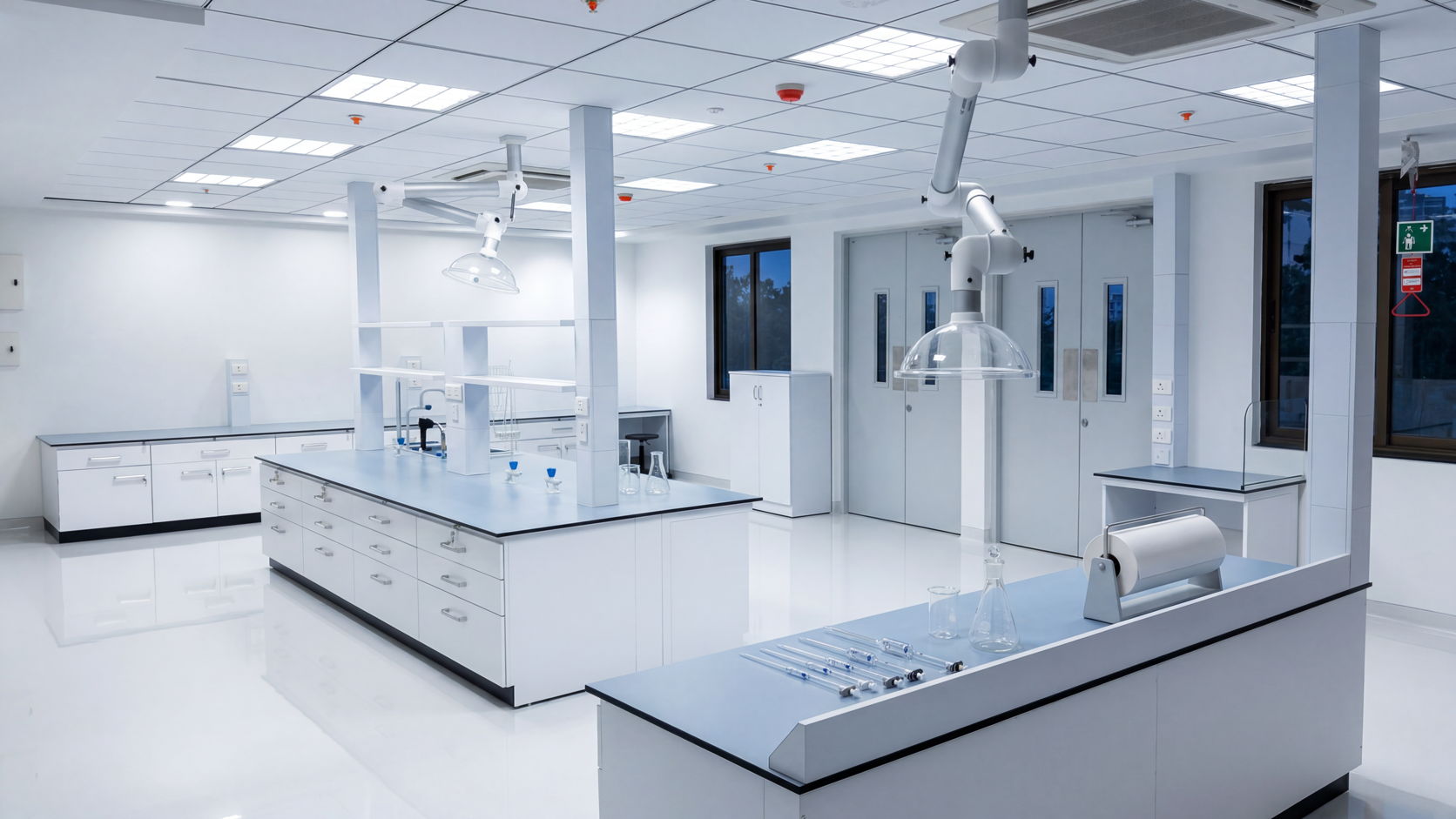
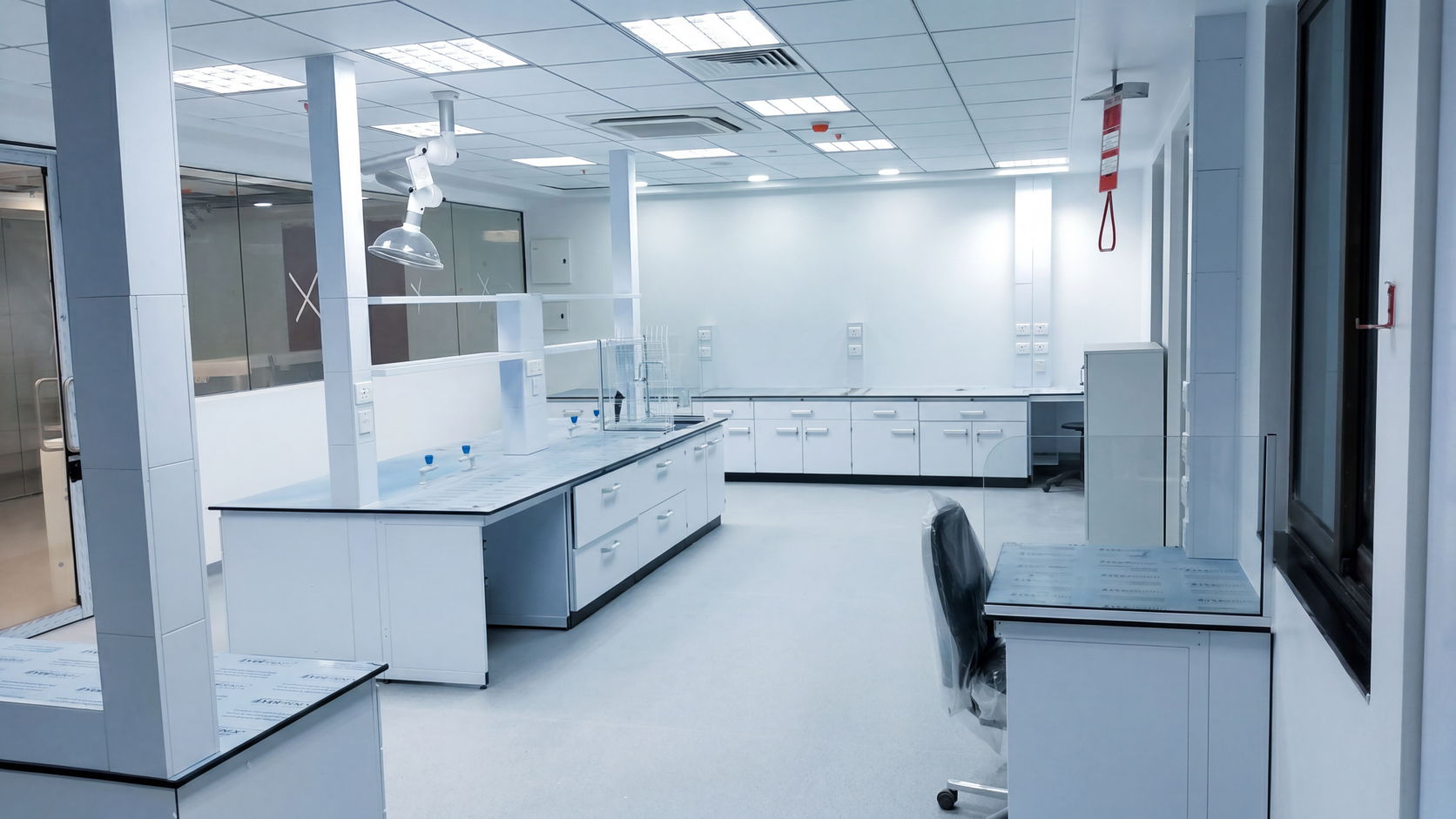
- Kottermann laboratory systems and modular furniture
- Trespa TopLab Plus worktops across testing and laboratory workstations
- Standard and wall-supported fume cupboards
- Flammable storage cabinets
- Specialized workshop and island tables
- Mechanical testing integration infrastructure
- Laboratory exhaust systems and ventilation engineering
The combination of industrial engineering functionality and modular laboratory systems created a technically robust yet highly organized working environment.
Densol executed the project as a complete turnkey solution including:
- Laboratory planning and detailed engineering
- Architectural interiors and laboratory layouts
- Modular laboratory furniture systems
- Fume hood and exhaust system integration
- HVAC and ventilation coordination
- Electrical systems and utility integration
- Mechanical testing infrastructure coordination
- Safety systems integration
- Specialized workstation and equipment planning
- Installation, testing, commissioning, and handover
The project also required continuous coordination between testing equipment vendors, consultants, utility agencies, and client engineering teams throughout the execution phase.
The complexity of the project was driven by the diversity of testing operations integrated within a relatively compact footprint.
Key execution and engineering challenges included:
- Coordination of heavy testing infrastructure with laboratory environments
- Specialized vibration isolation requirements
- Exhaust and ventilation integration for ATEX operations
- Utility coordination for environmental chambers and testing systems
- Integration of industrial testing workflows with office infrastructure
- Precision planning for equipment accessibility and maintainability
The success of the project depended heavily on engineering coordination, accurate equipment planning, and disciplined turnkey execution.
The completed V&R Laboratory emerged as a technically advanced and highly organized testing environment capable of supporting sophisticated validation and product reliability operations.
The project successfully integrated industrial testing systems, laboratory engineering, utilities, and operational infrastructure into a unified and efficient workspace.
More importantly, the facility demonstrated how laboratory engineering principles can be adapted beyond pharmaceutical environments into advanced industrial R&D and testing applications requiring precision, safety, and operational flexibility.