
Project : Case Study-9 – CRO & CDMO Research Infrastructure | Hederabad, India | 2025
Modern pharmaceutical innovation demands far more than conventional laboratory infrastructure.
Today’s CRO and CDMO ecosystems operate as highly integrated scientific environments where chemistry, analytical development, process engineering, collaboration, digital systems, and manufacturing readiness must function together seamlessly under one roof.
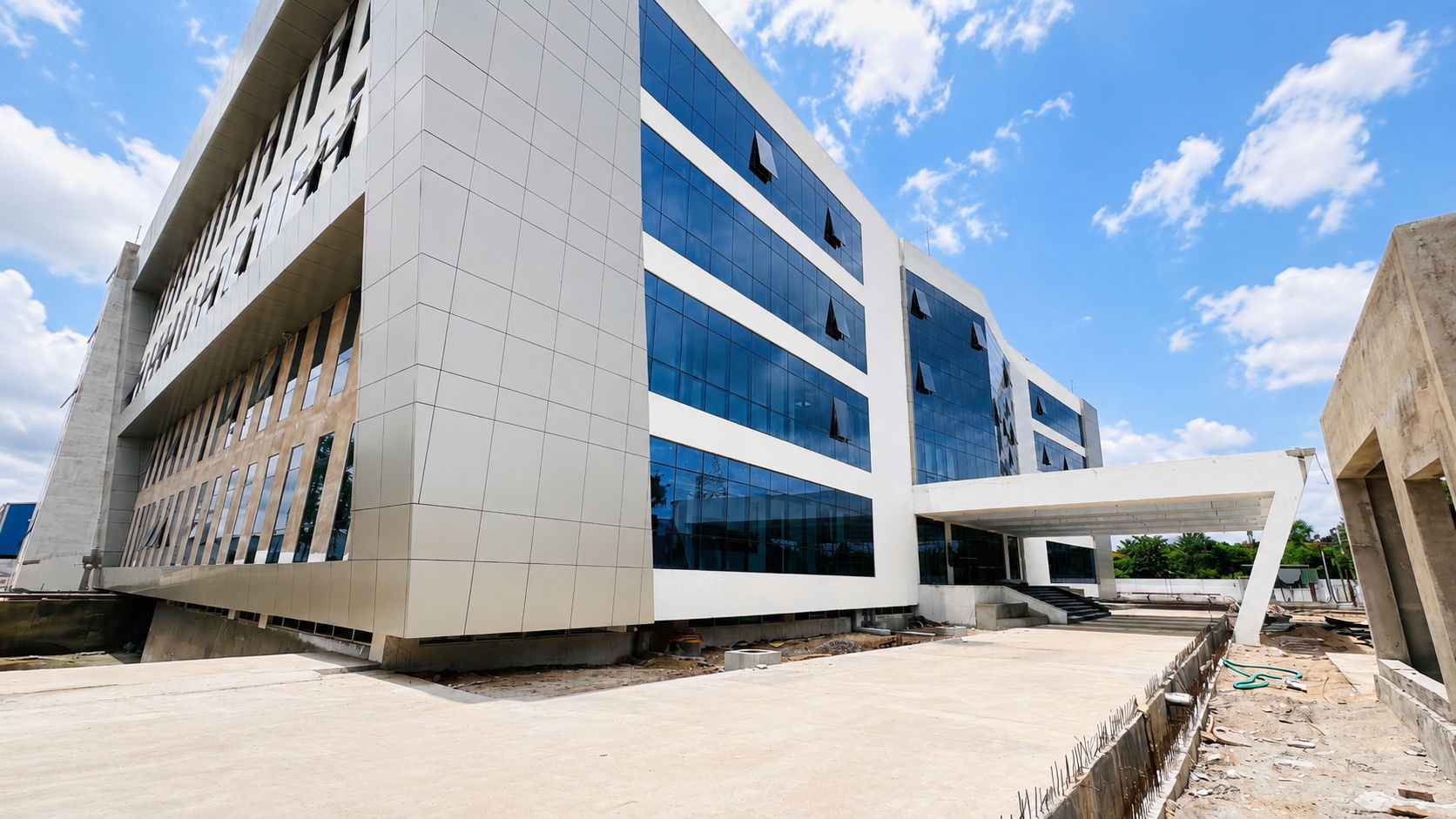
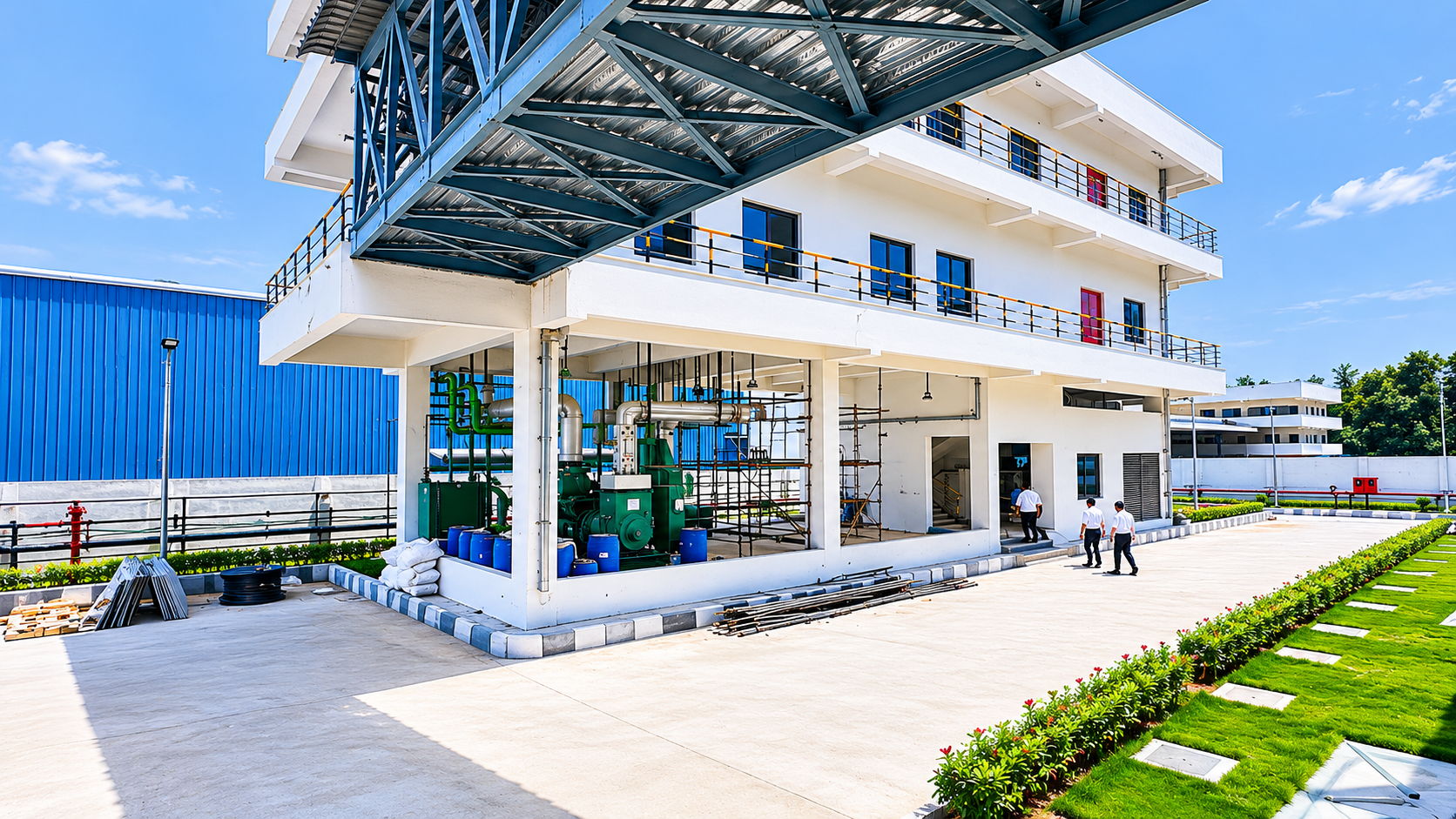
The Case Study-9 project at Pashamylaram, Hyderabad, delivered as Phase 1 in May 2025, became one such large-scale research infrastructure project designed around next-generation pharmaceutical development and scientific collaboration.
Case Study-9 positions itself as an integrated CRO, CDMO, and CMO organization supporting end-to-end pharmaceutical development services ranging from drug discovery and process development to manufacturing support and commercialization. The organization focuses heavily on advanced chemistry, analytical sciences, high-potent molecules, and scalable development infrastructure.
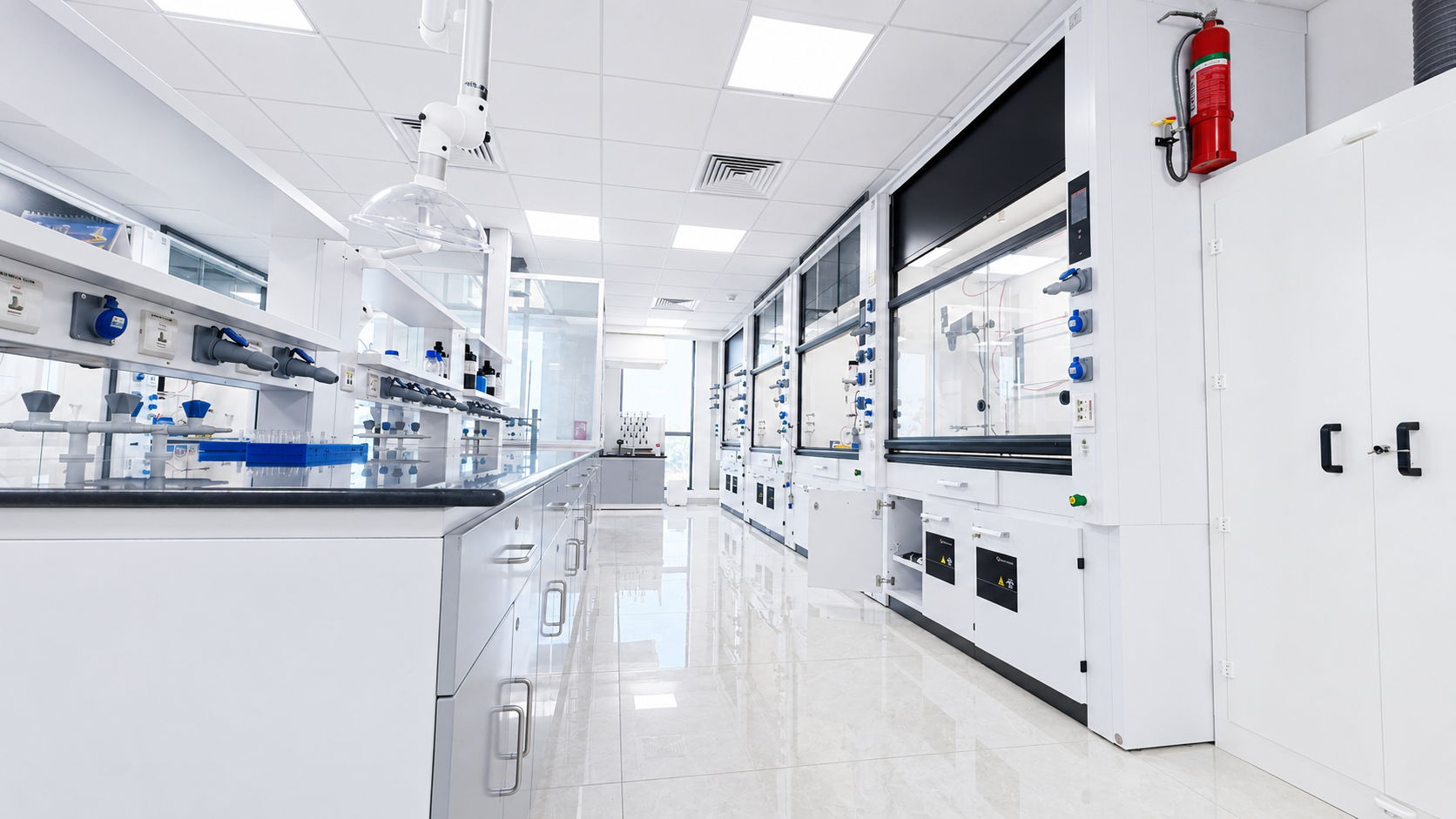
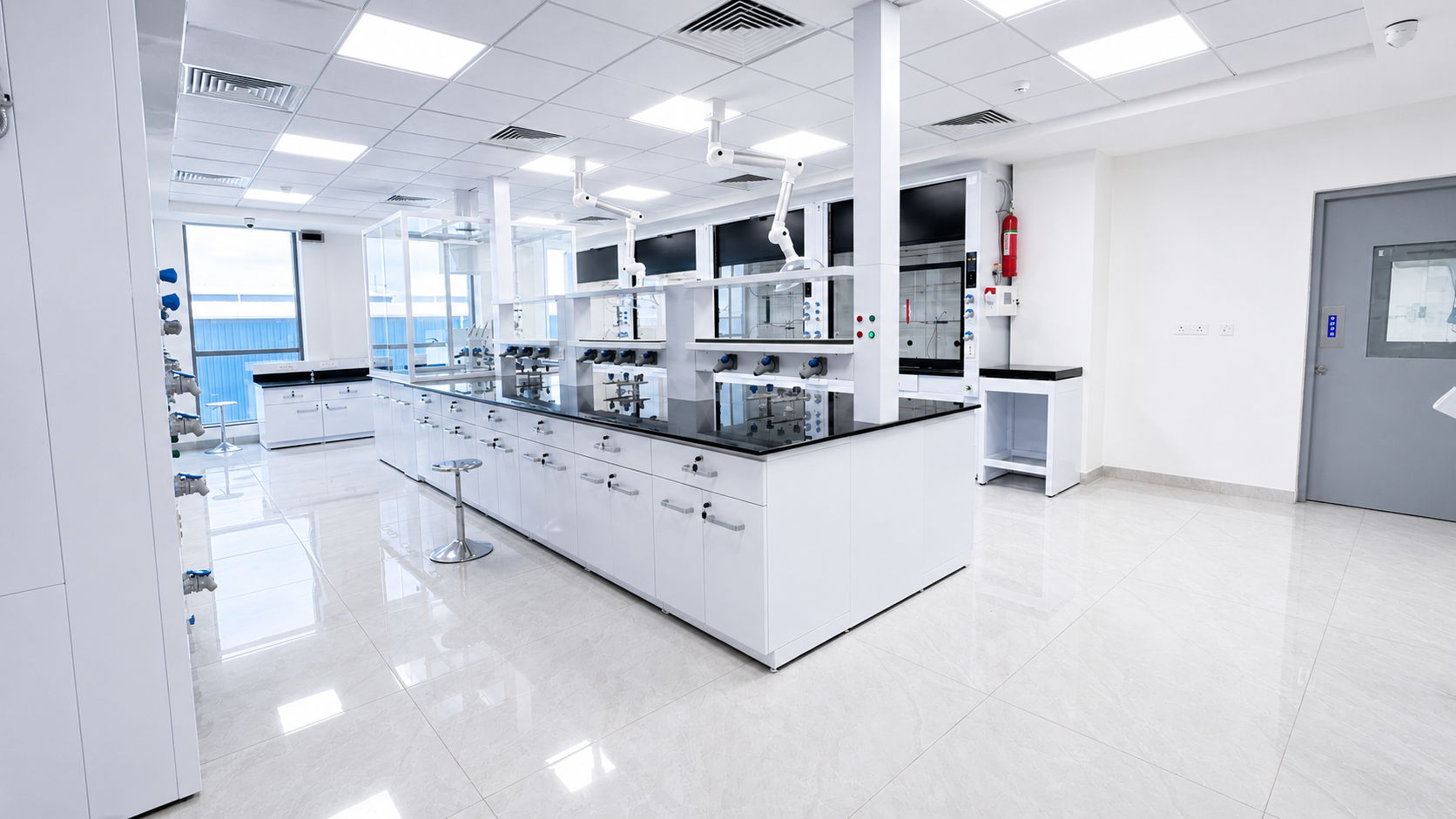
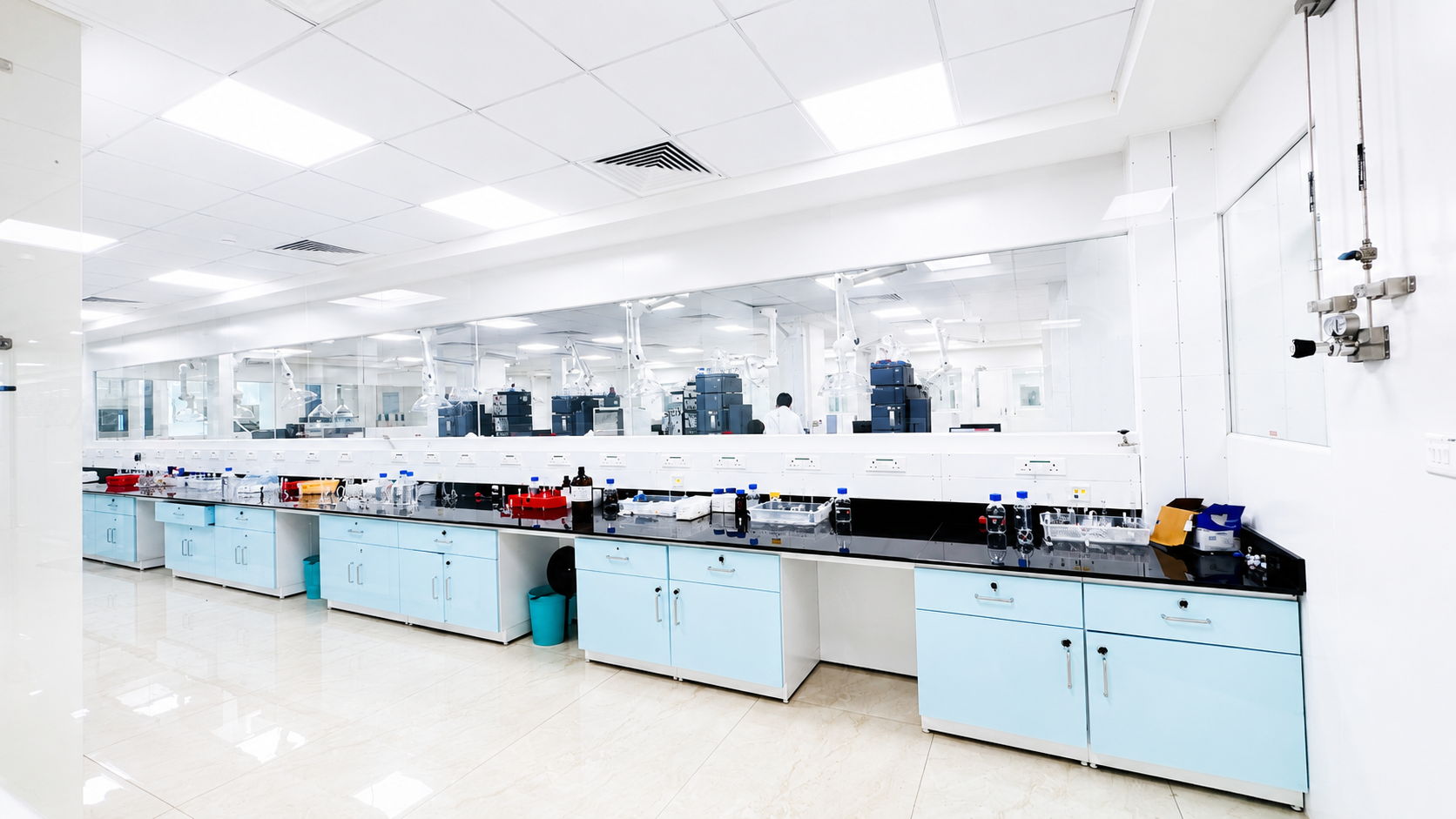
The Phase 1 facility, spread across approximately 1 lakh square feet, was envisioned as a high-performance scientific ecosystem supporting CRO and CDMO operations through integrated analytical laboratories, process development laboratories, collaborative workspaces, operational support infrastructure, and engineering-driven laboratory environments.
Executed under an extremely aggressive timeline, the project demanded continuous coordination between architecture, laboratory planning, utilities, engineering systems, execution sequencing, and operational readiness.
Despite the scale and execution pressure, the project was successfully delivered within the committed schedule, transforming the facility into a highly organized and technically advanced research environment.
Today, the success of Phase 1 has seamlessly transitioned into Phase 2 execution, involving an additional 1 lakh square feet across the third and fourth floors of the same building, which is now approaching the handover stage.
Details
Client: Case Study-9
Project Type: Integrated CRO & CDMO Research Infra
Project Year: Phase 1 Delivered – May 2025
Location: Pashamylaram, Hyderabad
Project Area – Phase 1: Approximately 100,000 Sq. Ft.
Project Status: Phase 2 execution nearing handover
Key Highlights
- Brownfield revamp of QC & Analytical Laboratory
- Integrated analytical and instrumentation planning
- Two-phase execution strategy for operational continuity
- Dedicated LCMS, balance room, wash area, sampling, and instrument zones
- Integrated safety and emergency planning
- Functional zoning for efficient analytical workflows
- Execution during highly challenging post-pandemic conditions
- Coordinated engineering and phased implementation approach
Densol Perspective
Projects like Case Study-9 represent the evolving future of pharmaceutical research infrastructure.
Modern CRO and CDMO facilities are no longer isolated laboratory buildings. They are integrated innovation ecosystems where science, engineering, process development, analytical capabilities, operational coordination, and collaborative interaction must function together seamlessly.
This project reflected Densol’s capability in delivering large-scale, fast-track scientific infrastructure through coordinated turnkey execution, engineering discipline, and operationally driven laboratory planning.
The result was not simply a research facility.
It became a future-ready pharmaceutical innovation ecosystem engineered for scalability, collaboration, precision, and accelerated scientific development.
Scope of Work
The planning philosophy focused heavily on:
- Integrated CRO and CDMO workflow planning
- Collaborative scientific ecosystems
- Flexible laboratory infrastructure
- Future scalability and operational adaptability
- Efficient circulation and user movement
- Clean engineering coordination
- High-density analytical and process laboratory integration
The facility was carefully organized to balance scientific operations with collaborative interaction and administrative efficiency.
The ground floor infrastructure incorporated:
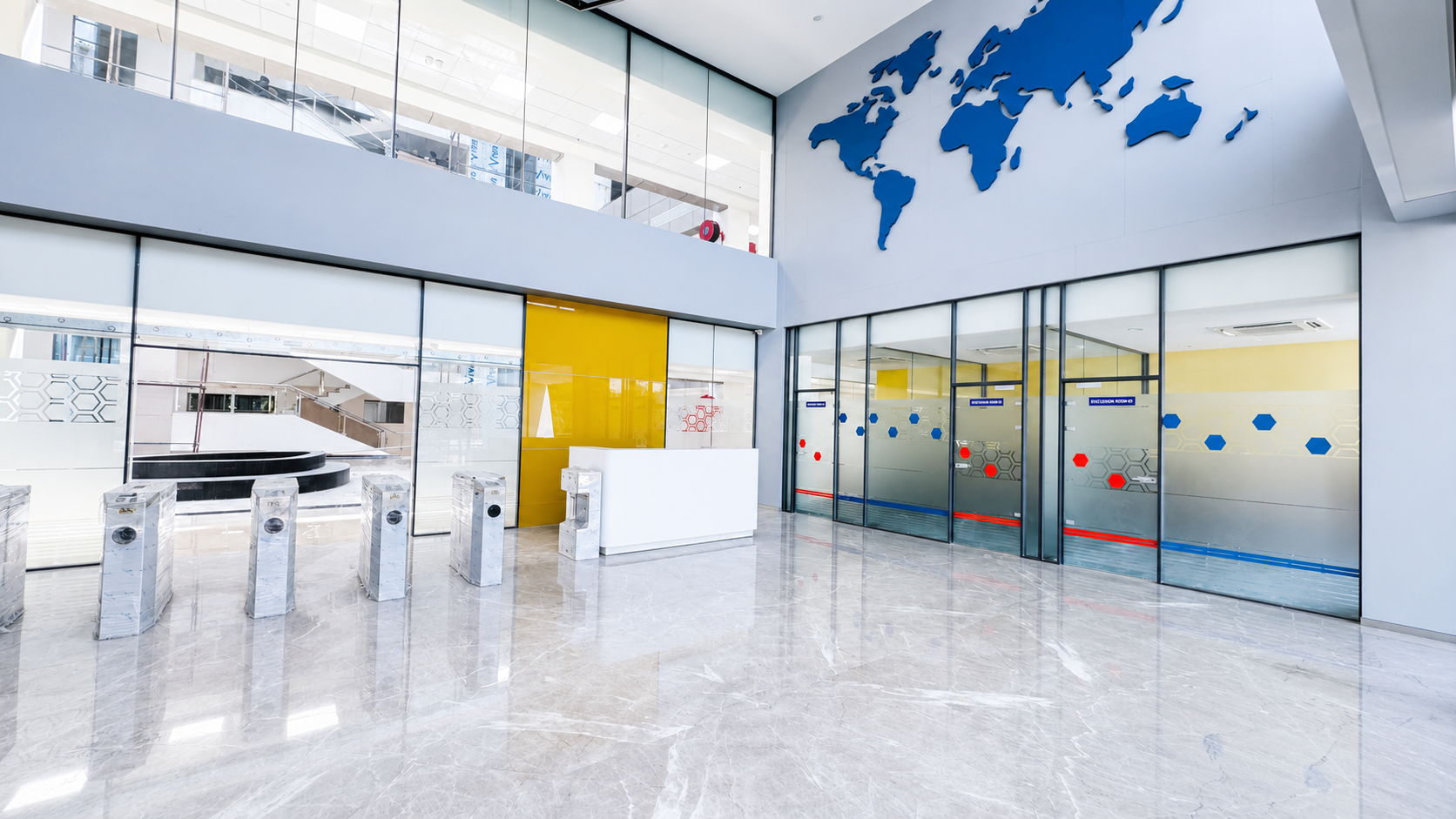
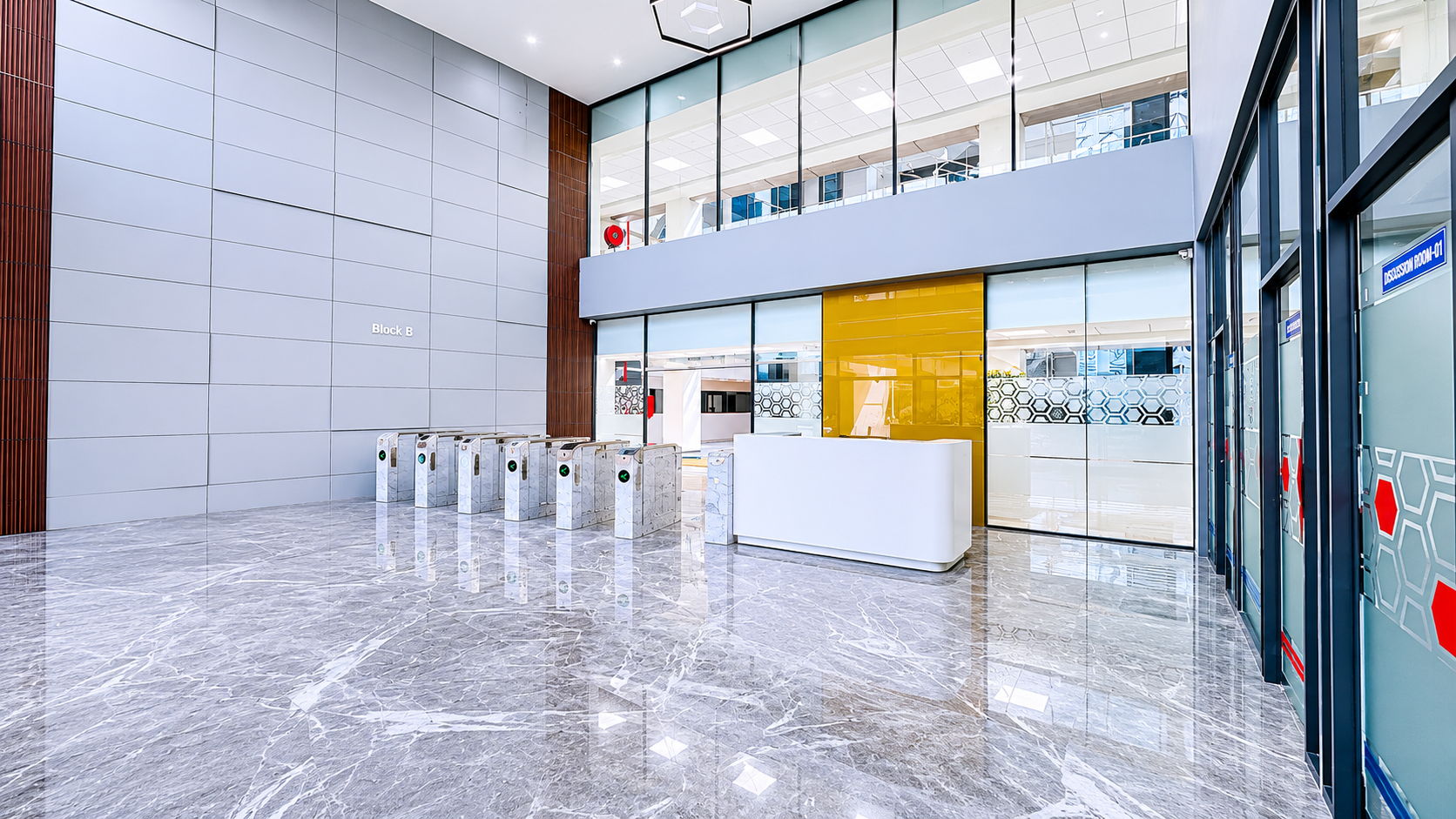
- Reception and visitor management areas
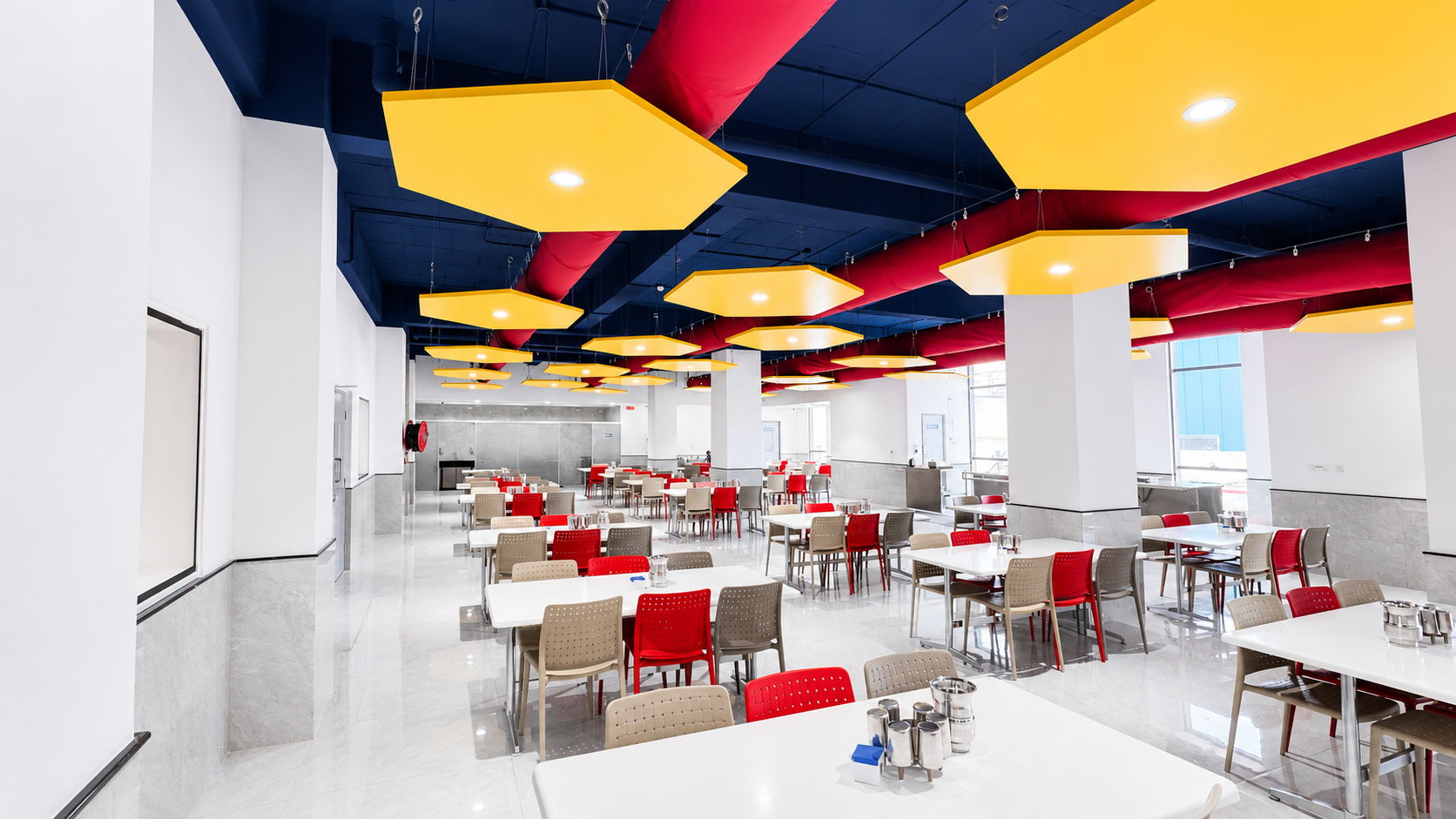
- Large collaborative atrium spaces
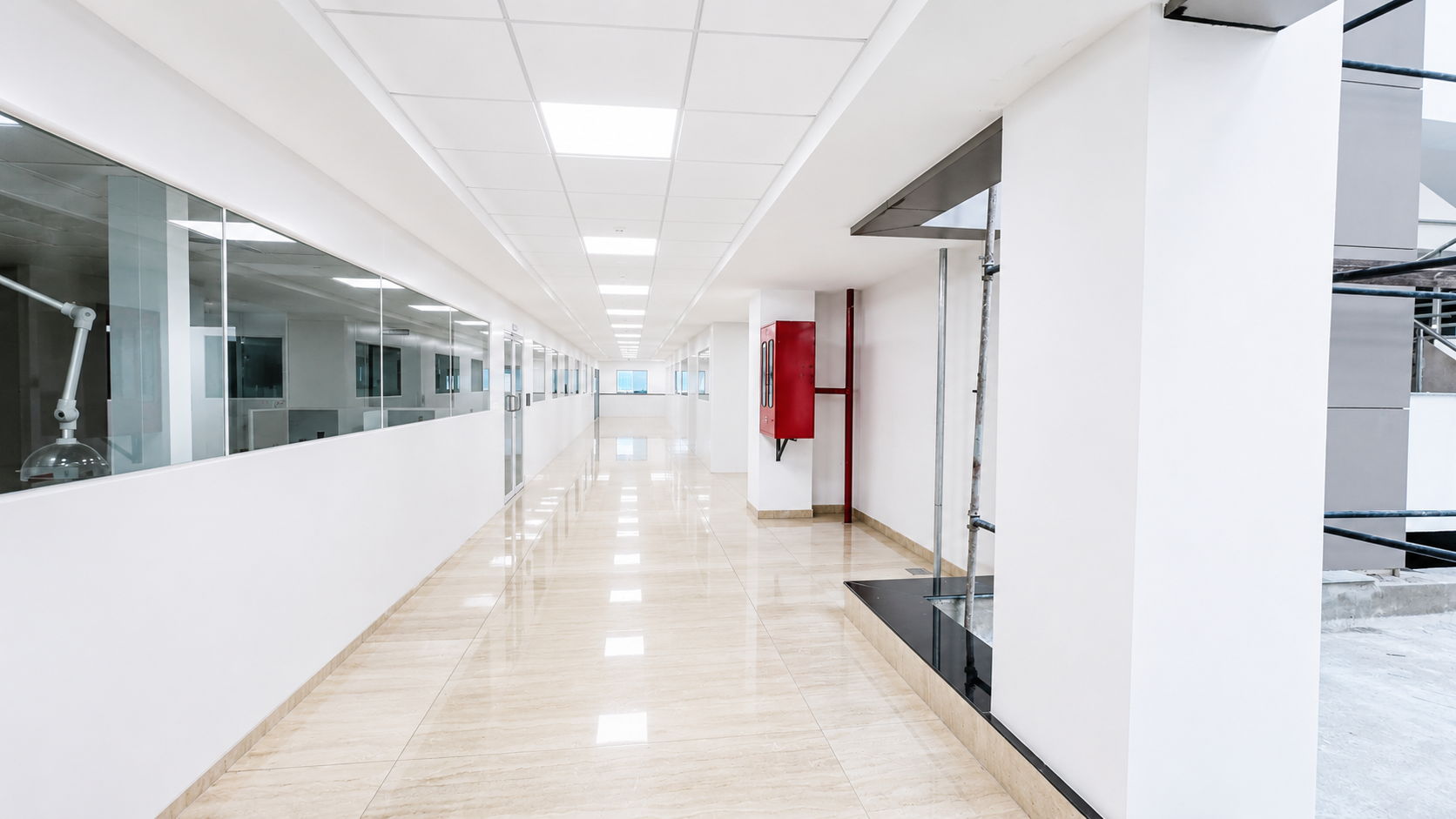
- Lobby and circulation zones
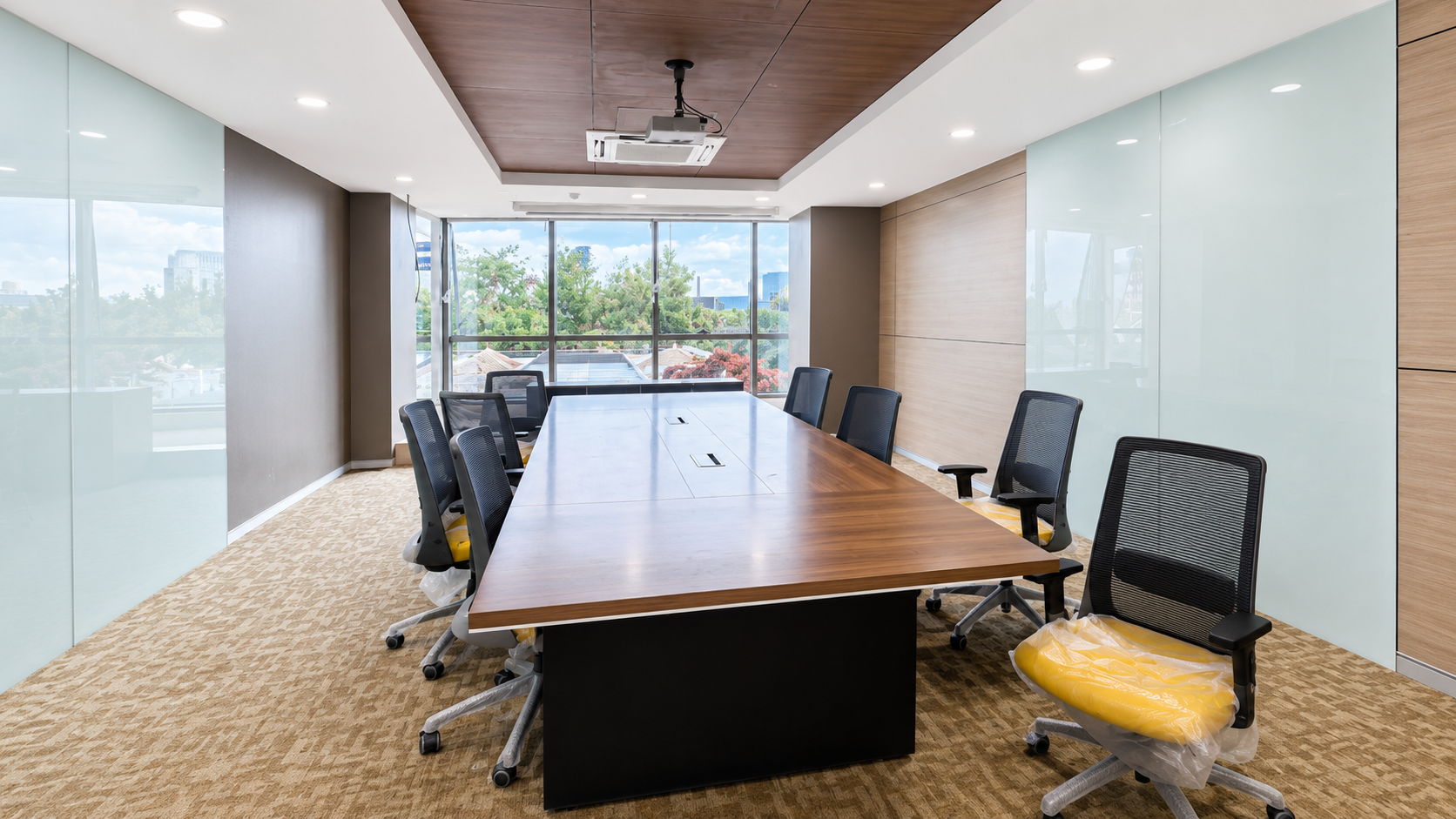
- Meeting rooms and conference rooms
- Cabin and management areas
- Hub rooms and operational coordination spaces
- Analytical laboratories
- Process development laboratories
- Integrated scientific workspaces
The planning strategy emphasized creating an environment where scientific research, technical collaboration, operational coordination, and business interaction could coexist seamlessly within one integrated infrastructure platform.
The facility was developed to support advanced CRO and CDMO activities involving:
- Analytical research
- Process chemistry
- Method development
- Process optimization
- Scientific collaboration
- Development-stage laboratory operations
- Flexible research infrastructure
Case Study-9’s broader infrastructure philosophy itself emphasizes advanced chemistry labs, analytical capabilities, high-potent molecule handling, scalable process development, and integrated pharmaceutical R&D ecosystems.
The laboratory infrastructure was therefore designed with:
- Flexible engineering integration
- Utility accessibility
- Future expansion capability
- Adaptable laboratory layouts
- Coordinated MEP systems
- High-performance scientific workflows
Particular attention was given to ensuring that analytical and process development spaces remained operationally efficient while supporting future scalability.
Densol executed the integrated laboratory infrastructure project including:
- Architectural and laboratory planning
- Turnkey laboratory execution
- Process and analytical laboratory infrastructure
- Interior and collaborative workspace development
- Utility and engineering coordination
- HVAC and MEP integration
- Scientific workspace planning
- Site execution and fast-track coordination
- Operational readiness management
- Testing, commissioning, and handover support
The project required highly coordinated multidisciplinary execution due to the scale, timeline sensitivity, and operational complexity of the facility.
The project involved several major execution and engineering challenges including:
- Fast-track delivery for a 1 lakh Sq. Ft. facility
- Simultaneous coordination between multiple disciplines
- Integration of analytical and process laboratory ecosystems
- Large-scale utility and MEP coordination
- High-density laboratory planning
- Timeline-driven execution management
- Coordination between scientific and collaborative workspaces
- Managing scalability for future expansion phases
The success of the project depended heavily on structured execution planning, engineering coordination, procurement synchronization, and disciplined project management.
The completed Phase 1 facility emerged as a highly sophisticated and operationally refined pharmaceutical research environment capable of supporting advanced CRO and CDMO operations efficiently.
The project successfully integrated scientific infrastructure, collaborative workspaces, analytical environments, process laboratories, engineering systems, and operational planning into one seamless research ecosystem.
More importantly, the successful delivery within the committed timeline established the foundation for continued trust and expansion into the ongoing Phase 2 development.