
Project : Case Study-5 – QC & Analytical Laboratory Revamp | Ahmedabad, India | 2021
The Case Study-5 QC & Analytical Laboratory project in Ahmedabad was developed during a period when the industry was still navigating the after-effects of the COVID era. Material movement was unpredictable, skilled resources were limited, and project execution required a completely different level of planning discipline compared to normal operating conditions.
Despite these challenges, the vision for the project was clear from the beginning — transform an existing laboratory space into a highly functional, modern analytical environment capable of supporting precision-driven QC operations while working within the constraints of an active brownfield facility.
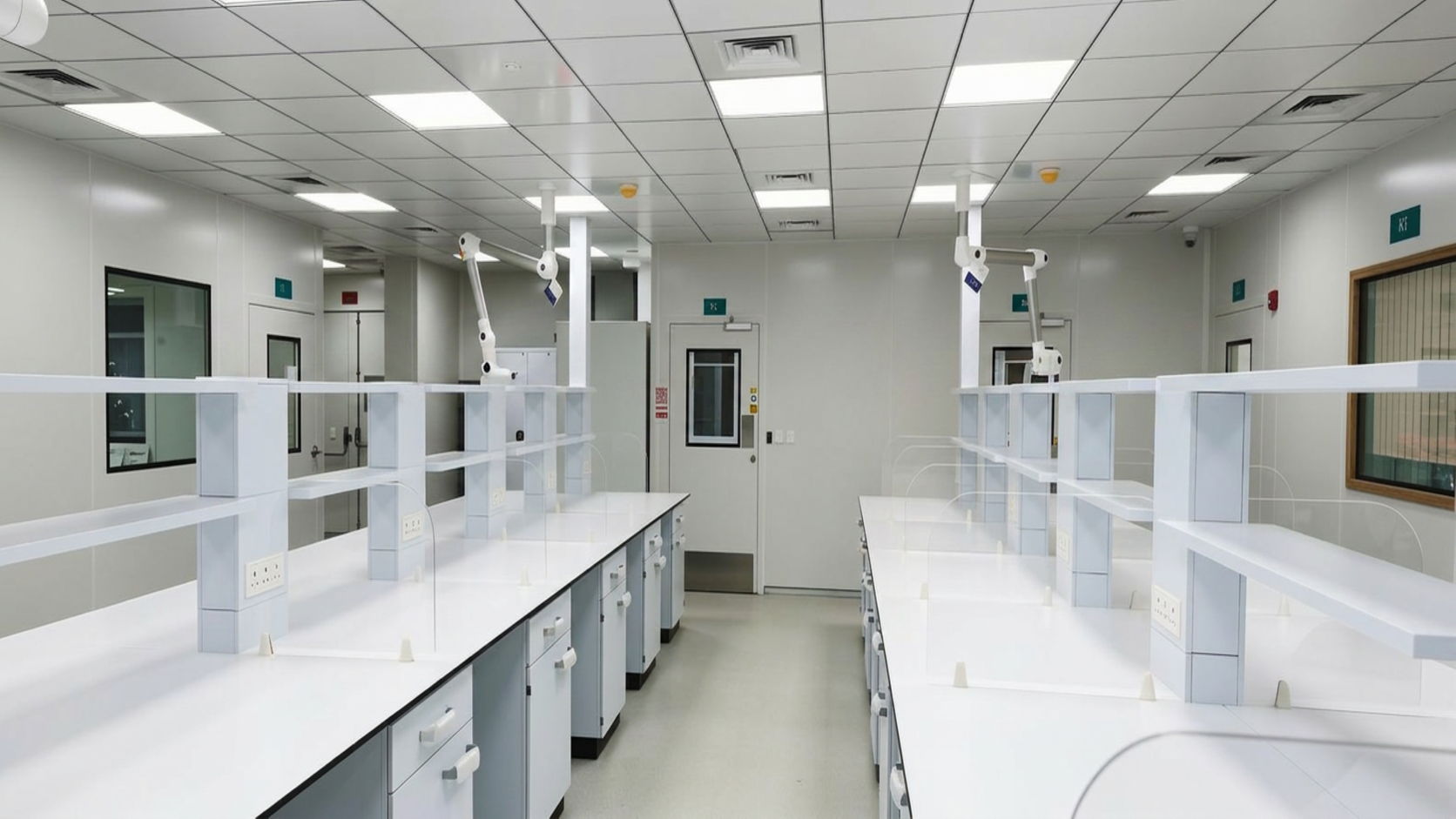
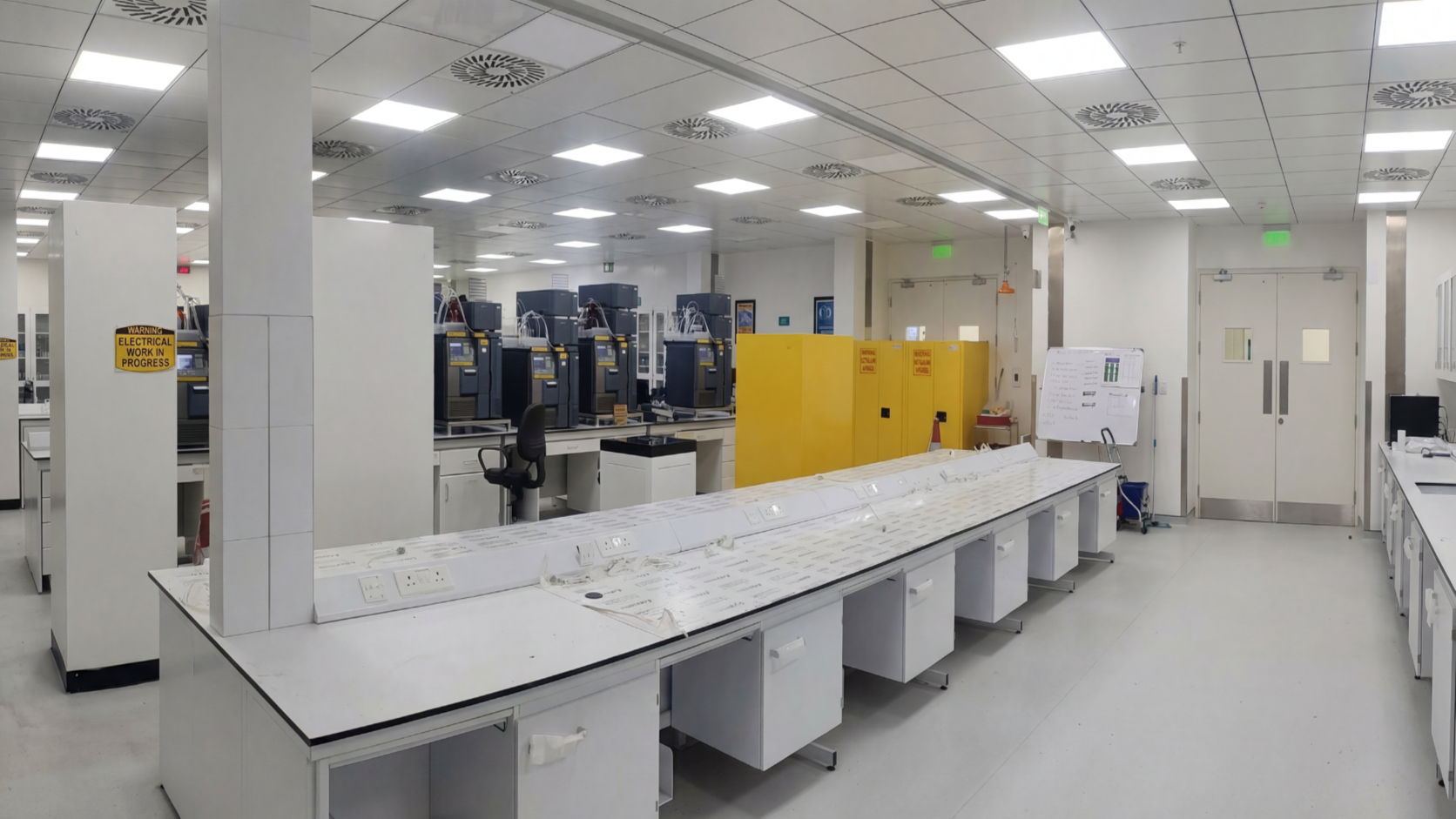
Located within Case Study-5’s Ahmedabad facility, the project involved the redevelopment of approximately 21 meters by 14 meters of laboratory infrastructure. The space was planned as an integrated QC and analytical laboratory environment incorporating multiple specialized functional areas including analytical workspaces, instrument rooms, LCMS areas, fume hood zones, wash areas, balance rooms, hot rooms, sampling rooms, storage spaces, and supporting utility functions.
The project was executed in two carefully planned phases to ensure operational continuity and minimize disruption to ongoing facility activities.
Details
Client: Case Study-5 l
Project Type: Brownfield QC & Analytical Laboratory Revamp
Project Timeline: October 2021
Location: Ahmedabad, Gujarat
Project Area: Approximately 21 m × 14 m
Key Highlights
- Brownfield revamp of QC & Analytical Laboratory
- Integrated analytical and instrumentation planning
- Two-phase execution strategy for operational continuity
- Dedicated LCMS, balance room, wash area, sampling, and instrument zones
- Integrated safety and emergency planning
- Functional zoning for efficient analytical workflows
- Execution during highly challenging post-pandemic conditions
- Coordinated engineering and phased implementation approach
Densol Perspective
Projects like Case Study-5 reinforce an important reality about laboratory engineering — successful brownfield revamps are never just about replacing infrastructure.
They require understanding how people work, how operations move, how utilities interact, and how engineering systems can be upgraded without disturbing the larger ecosystem around them.
This project reflected Densol’s strength in delivering integrated laboratory transformations where architecture, utilities, operational flow, and execution strategy come together as one coordinated solution.
The result was not simply a renovated laboratory.
It became a refined analytical environment engineered for performance, safety, and long-term operational reliability.
Scope of Work
Brownfield laboratory projects demand a very different design mindset.
Unlike greenfield facilities where systems are developed from scratch, this project required the integration of new laboratory infrastructure within an existing operational environment while working around site limitations, utility constraints, and phased execution requirements.
The planning strategy focused heavily on:
- Optimizing analytical workflow movement
- Improving functional zoning between QC and analytical operations
- Enhancing safety and emergency accessibility
- Creating better utility integration for instrumentation areas
- Improving operator movement and laboratory ergonomics
- Supporting future flexibility for evolving analytical equipment requirements
Particular attention was given to circulation planning, ensuring that operational movement between analytical zones, instrument spaces, sampling areas, and support functions remained clean, efficient, and compliant with laboratory safety standards:
The design also incorporated emergency safety integration including strategically planned emergency exits, safety shower provisions, controlled access movement, and dedicated service coordination for critical laboratory operations.
Densol executed the project as a comprehensive laboratory revamp including:
- QC and analytical laboratory planning
- Architectural interiors and laboratory infrastructure
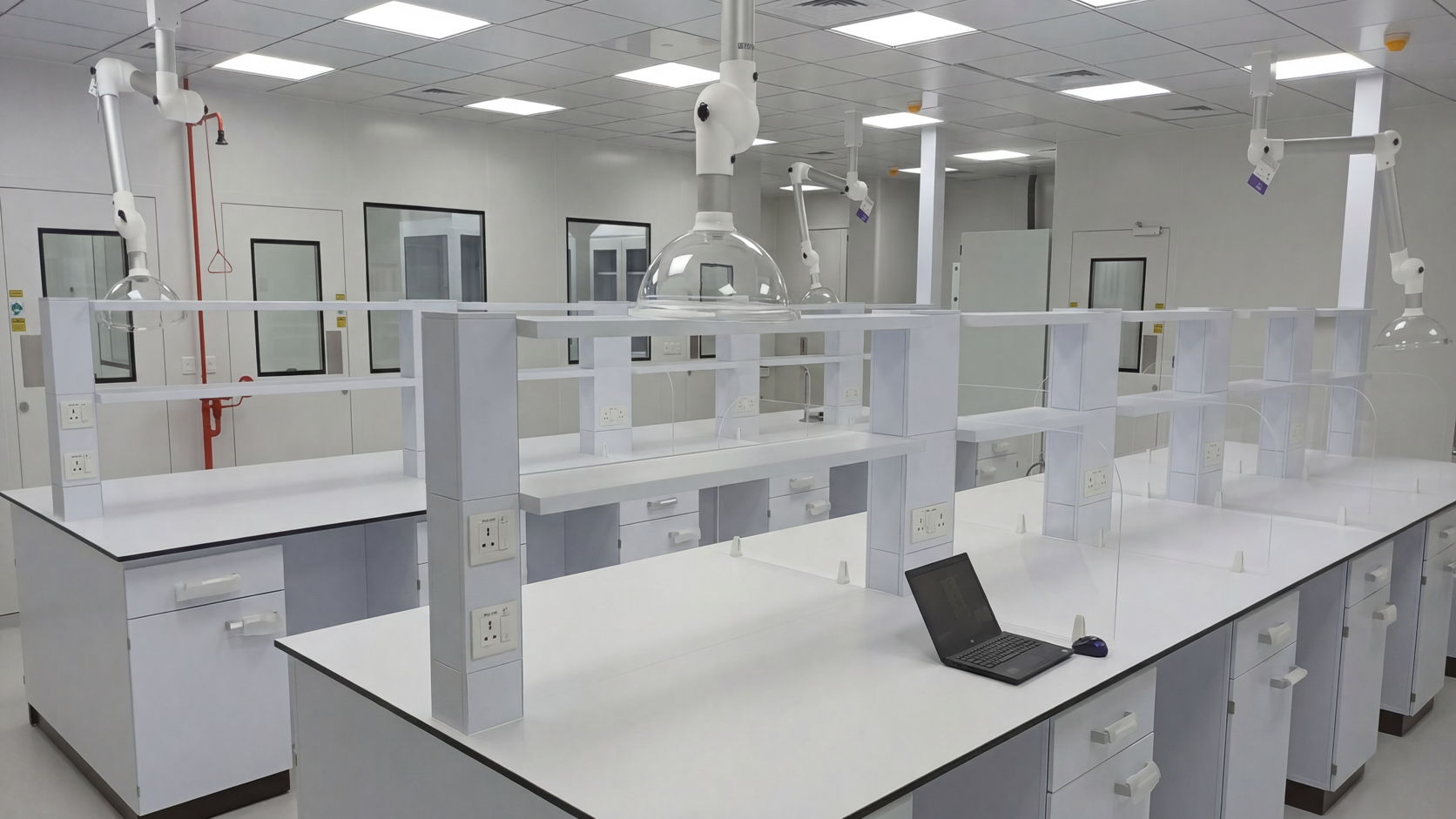
- Laboratory furniture and worktable systems
- Instrument room coordination
- Fume hood integration
- HVAC coordination and utility planning
- Electrical and laboratory service integration
- Wash area and support utility infrastructure
- Balance room and sampling room planning
- Safety systems coordination
- Phased execution planning and implementation support
The project required continuous coordination between design, engineering, execution teams, and client stakeholders throughout both execution phases.
The timing of the project itself became one of its biggest challenges.
The execution phase coincided with:
- Post-COVID resource shortages
- Material procurement delays
- Skilled manpower limitations
- Restricted logistics and vendor movement
- Brownfield execution constraints within an operational facility
- Phased shutdown and execution coordination requirements
Every activity required careful sequencing and planning to ensure project progress without impacting operational continuity within the existing facility.
What made the project successful was the ability of the team to remain flexible and solution-oriented throughout the execution cycle.
The completed facility emerged as a clean, highly functional, and operationally efficient laboratory environment aligned with Case Study-5’s quality and analytical standards.
The upgraded laboratory significantly improved workflow organization, infrastructure integration, and overall user experience within the facility.
Most importantly, the project demonstrated how careful engineering coordination and phased execution planning can successfully transform existing laboratory environments without disrupting ongoing operations.
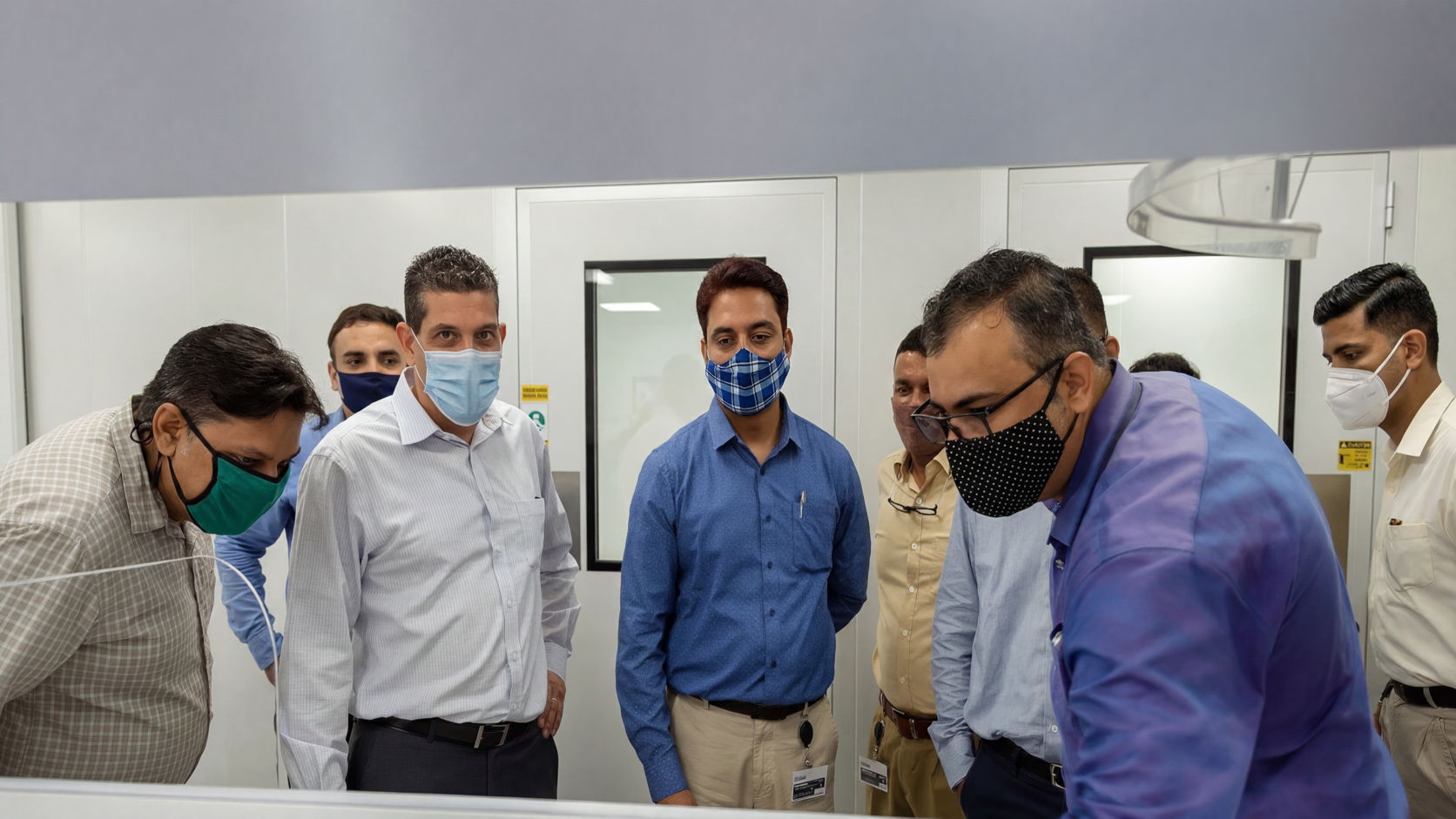
The successful completion of the project and the positive appreciation received from the client became a strong reflection of the project team’s commitment, adaptability, and execution discipline under challenging conditions.