
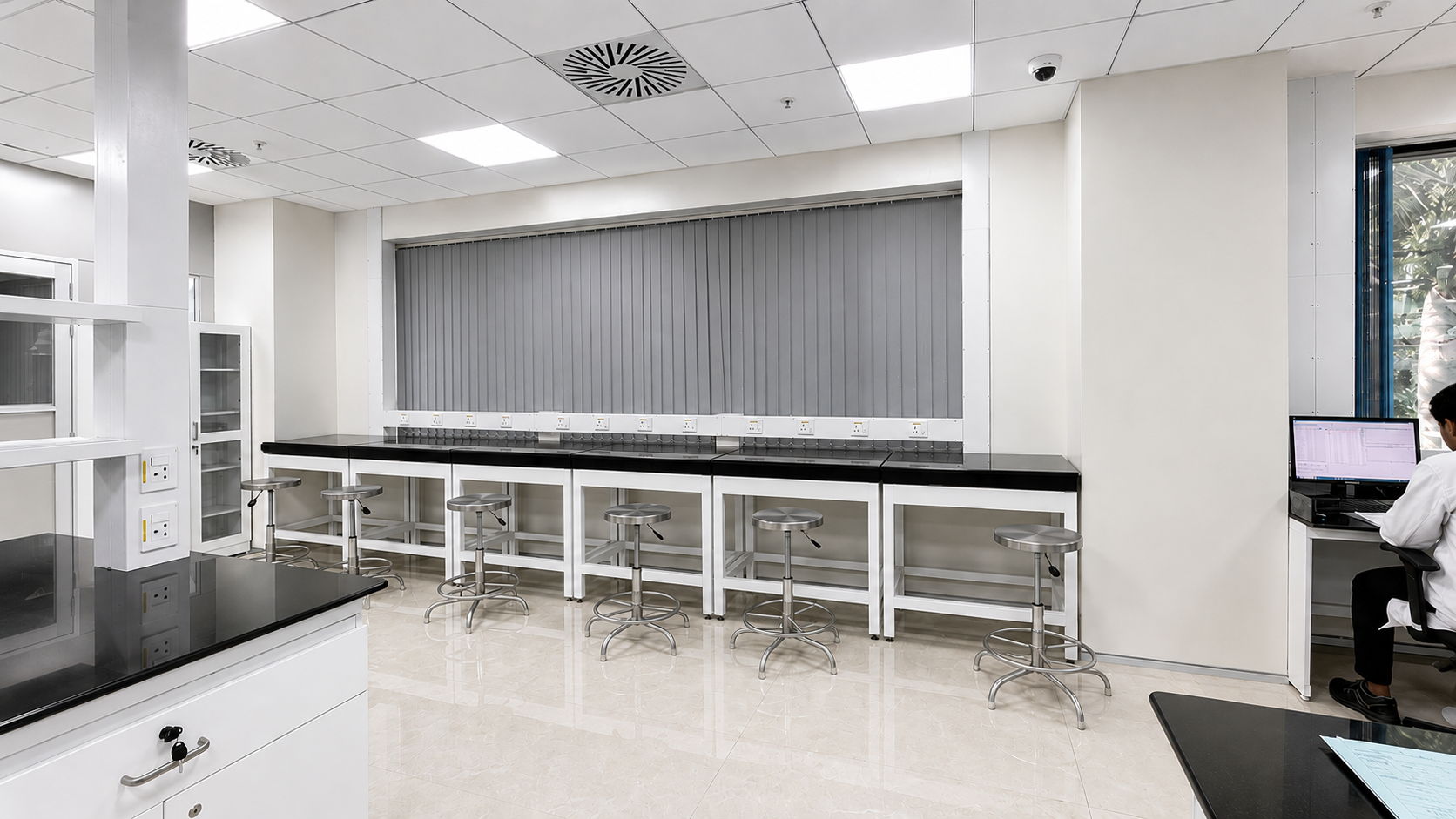
Project : Case Study-1 | Chennai, India | 2024
Project Overview
Executing pharmaceutical laboratory projects inside live operational facilities requires a very different level of engineering discipline and execution control.
Unlike greenfield projects where construction activities operate independently, projects within active R&D environments demand continuous coordination between ongoing scientific operations, safety systems, engineering activities, and project execution timelines.
The Case Study-1, delivered in 2024, was one such highly coordinated brownfield execution project carried out within an operational pharmaceutical research environment.
Case Study-1, part of the Teva Group and one of Densol’s long-standing clients, entrusted the team with developing a new laboratory infrastructure within a facility where active R&D operations were already functioning on other floors of the building.
From the beginning, the project demanded an execution strategy centered around operational continuity, dust control, movement management, and timeline discipline.
The challenge was not only to build the laboratory infrastructure, but to execute the project without disturbing the ongoing research activities within the facility.
Despite these constraints, the project was successfully completed within an aggressive timeline of approximately five months, with the final outcome being highly appreciated by the client.
Details
Client: Case Study-1
Project Type: Pharmaceutical R&D Laboratory Infrastructure
Project Timeline: 2024
Location: Chennai
Project Area: 3,000 Sq. Ft.
Group Association: Teva Pharmaceutical Industries
Key Highlights
- Approximately 3,000 Sq. Ft. pharmaceutical R&D laboratory
- Brownfield execution within active operational facility
- Part of Teva Group operational infrastructure
- Fast-track project delivery within five months
- Controlled dust and movement management strategy
- Live R&D operational coordination during execution
- Organized laboratory and utility integration
- Successful delivery under highly sensitive operational conditions
Densol Perspective
Projects like Case Study-1 highlight one of the most demanding aspects of pharmaceutical infrastructure execution — delivering new engineering environments while science continues uninterrupted around them.
The project reflected Densol’s capability in combining fast-track execution, operational coordination, engineering planning, and controlled site management into one integrated delivery model.
The result was not simply a laboratory setup.
It became a carefully coordinated operational transformation executed with precision, discipline, and minimal disruption to the client’s ongoing R&D ecosystem.
Scope of Work
The planning philosophy focused heavily on controlled execution, operational segregation, and efficient laboratory integration within a live pharmaceutical environment.
The project involved:
- R&D laboratory infrastructure development
- Laboratory utility integration
- Controlled engineering execution within active operational floors
- Workflow and movement segregation planning
- Utility and service coordination
- Clean laboratory infrastructure planning
- Fast-track execution management
Since operational R&D activities were functioning simultaneously within the building, special emphasis was placed on:
- Dust containment strategies
- Noise and vibration control
- Man-material movement segregation
- Controlled access management
- Safe construction sequencing
- Minimal operational disruption
The engineering execution strategy ensured that project activities remained isolated from active research operations while maintaining construction progress within the committed delivery schedule.
The project incorporated:
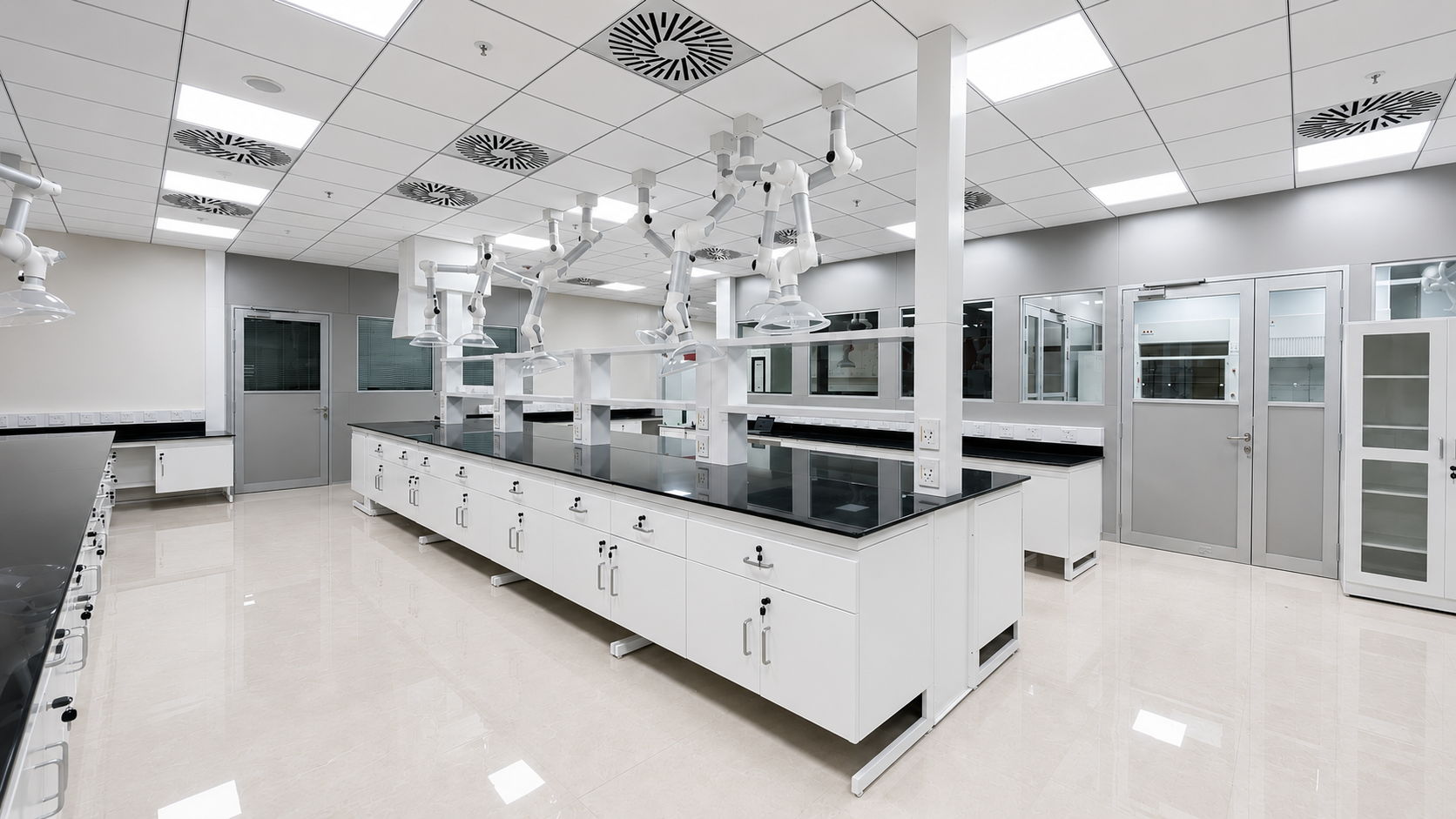
- Modular laboratory infrastructure
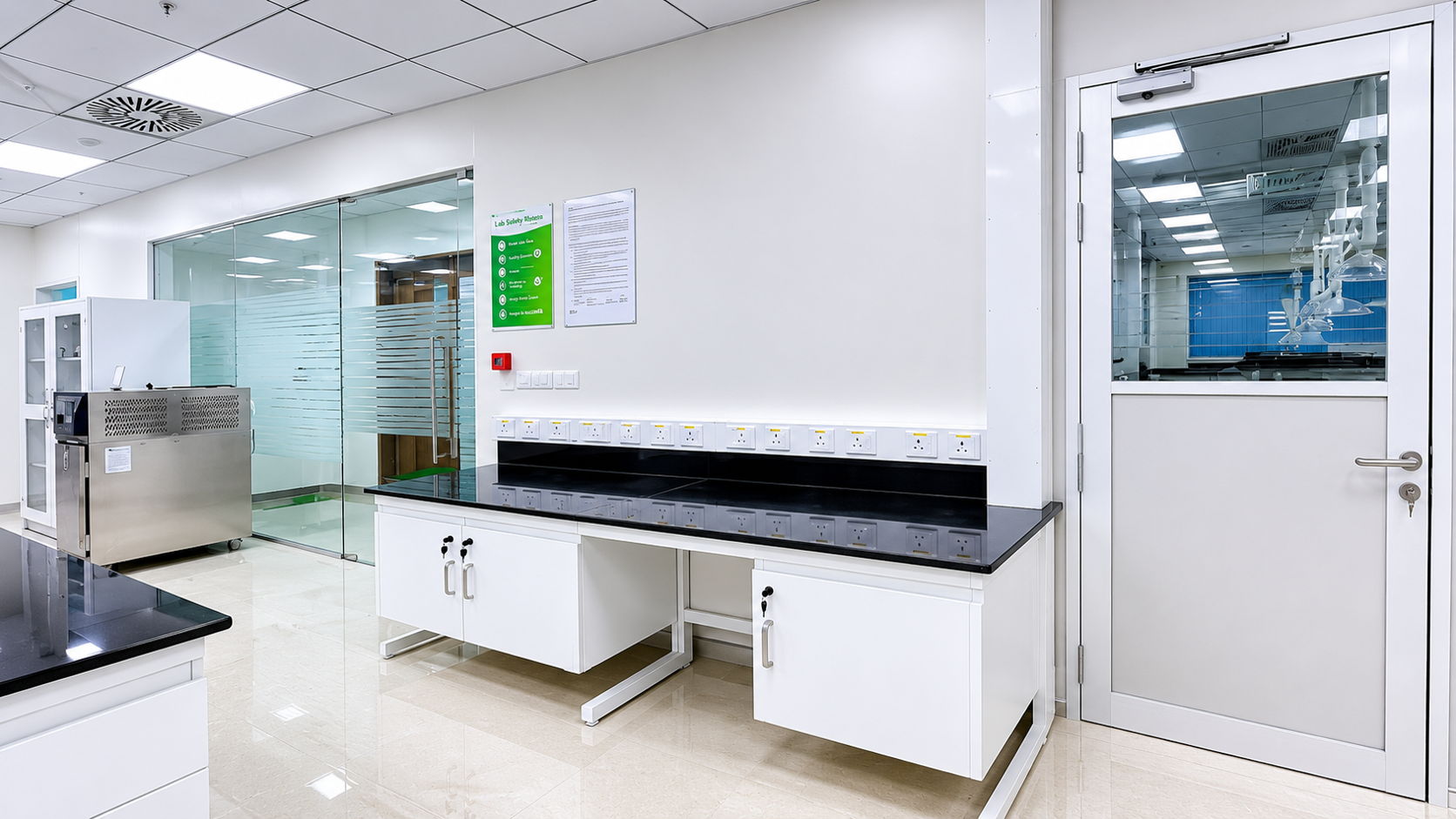
- Utility-integrated laboratory systems
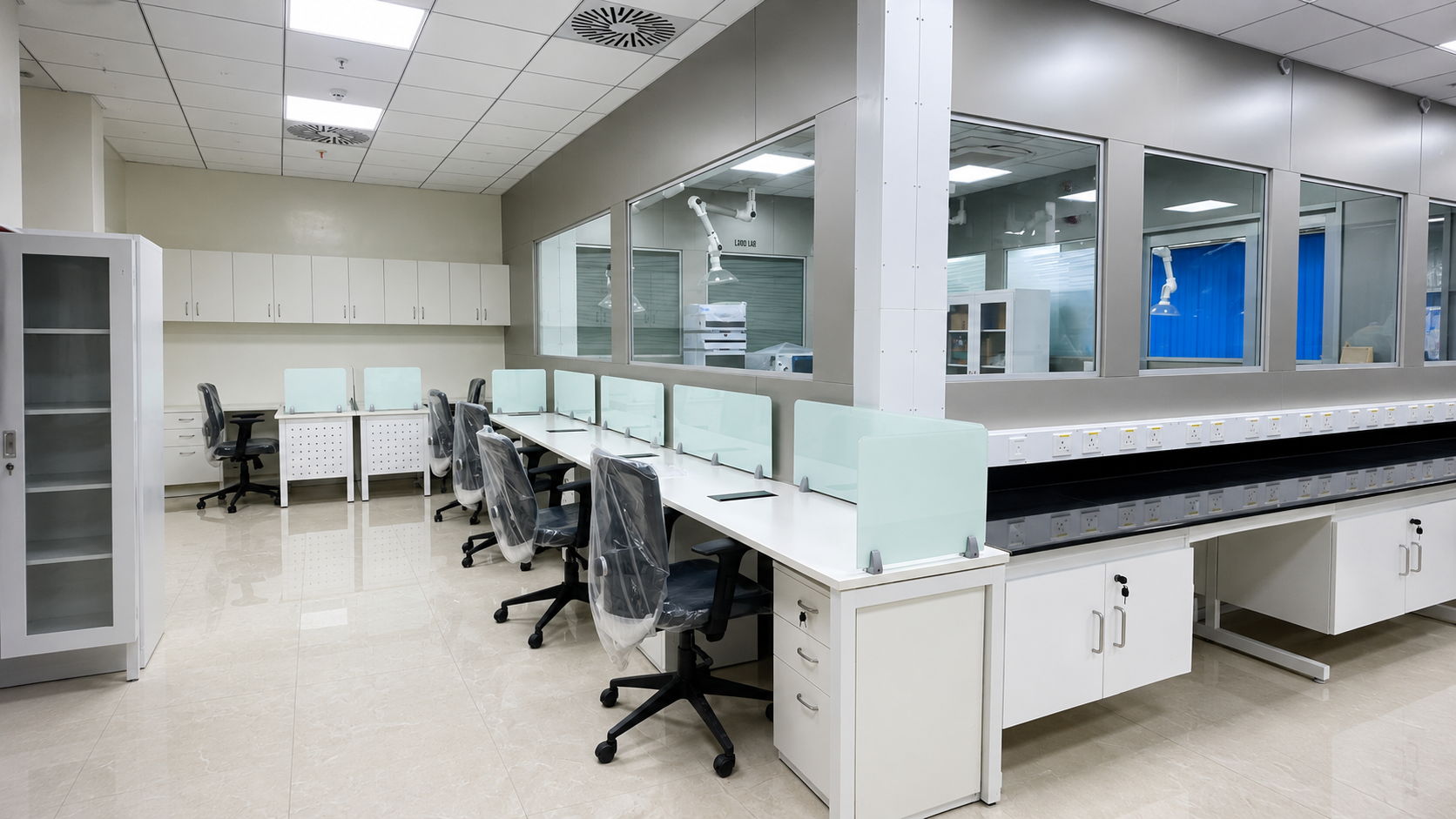
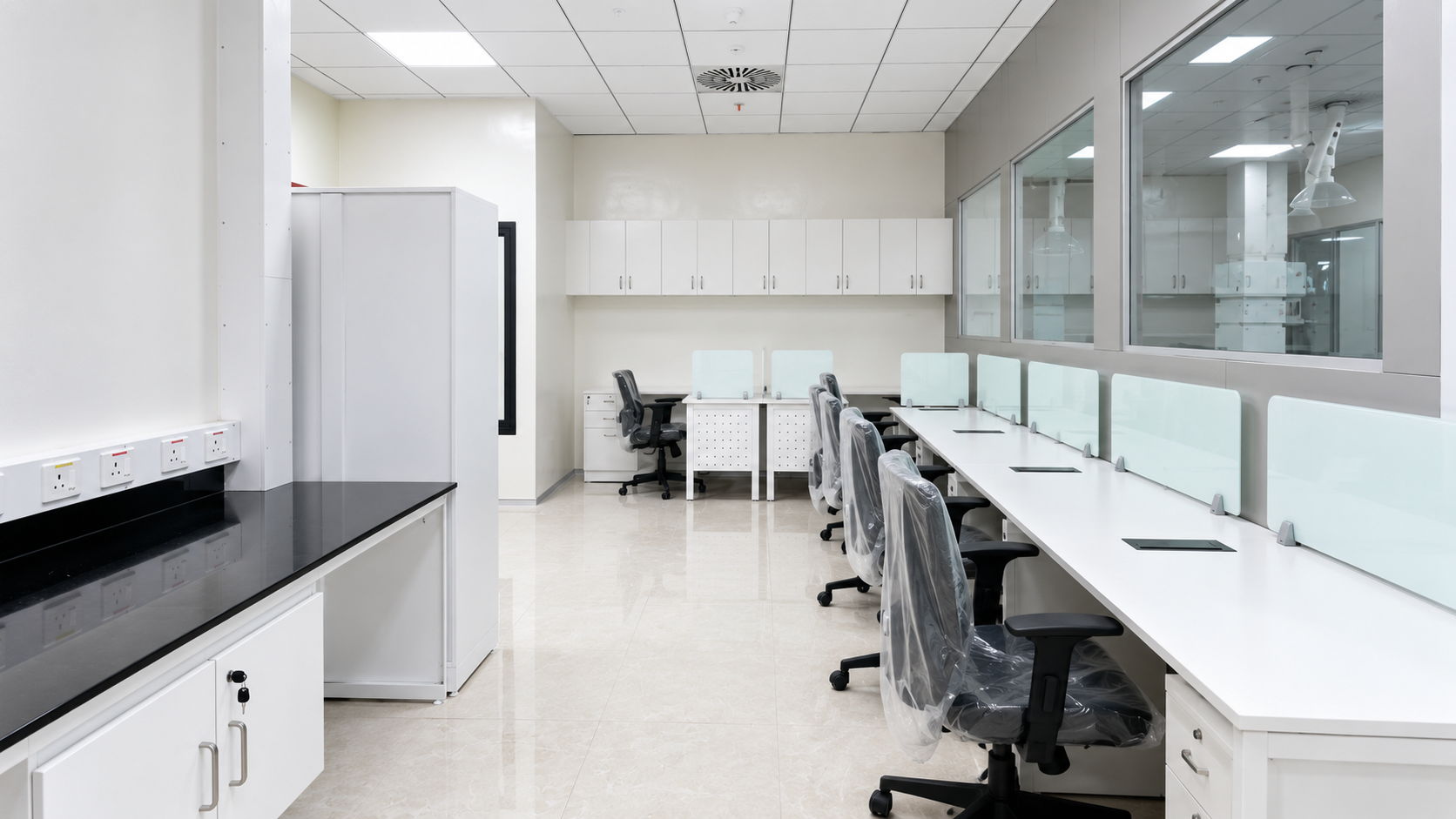
- Organized analytical and R&D workspaces
- Engineering-friendly service coordination
- Clean operational layouts
- Fast-track execution planning
One of the most critical aspects of the project was sequencing the execution activities carefully within a live operational environment.
Every movement of manpower, material, equipment, and services had to be coordinated precisely to ensure uninterrupted functioning of the active R&D operations on adjacent floors.
Densol executed the project including:
- Laboratory planning and infrastructure development
- Interior and laboratory execution
- Utility and engineering coordination
- HVAC and service integration
- Site execution management
- Controlled movement planning
- Dust and operational containment coordination
- Fast-track project execution
- Testing and commissioning support
The project required continuous coordination between client operations teams, engineering personnel, contractors, and execution management teams throughout the project duration.
Although moderate in scale, the project involved highly sensitive execution conditions including:
- Working inside a live pharmaceutical R&D environment
- Maintaining controlled dust levels during construction
- Managing man-material movement without operational disturbance
- Fast-track delivery within a five-month timeline
- Utility integration within active operational infrastructure
- Maintaining safety and operational continuity simultaneously
The project demanded disciplined execution management, strict site coordination protocols, and highly controlled operational planning throughout the implementation phase.
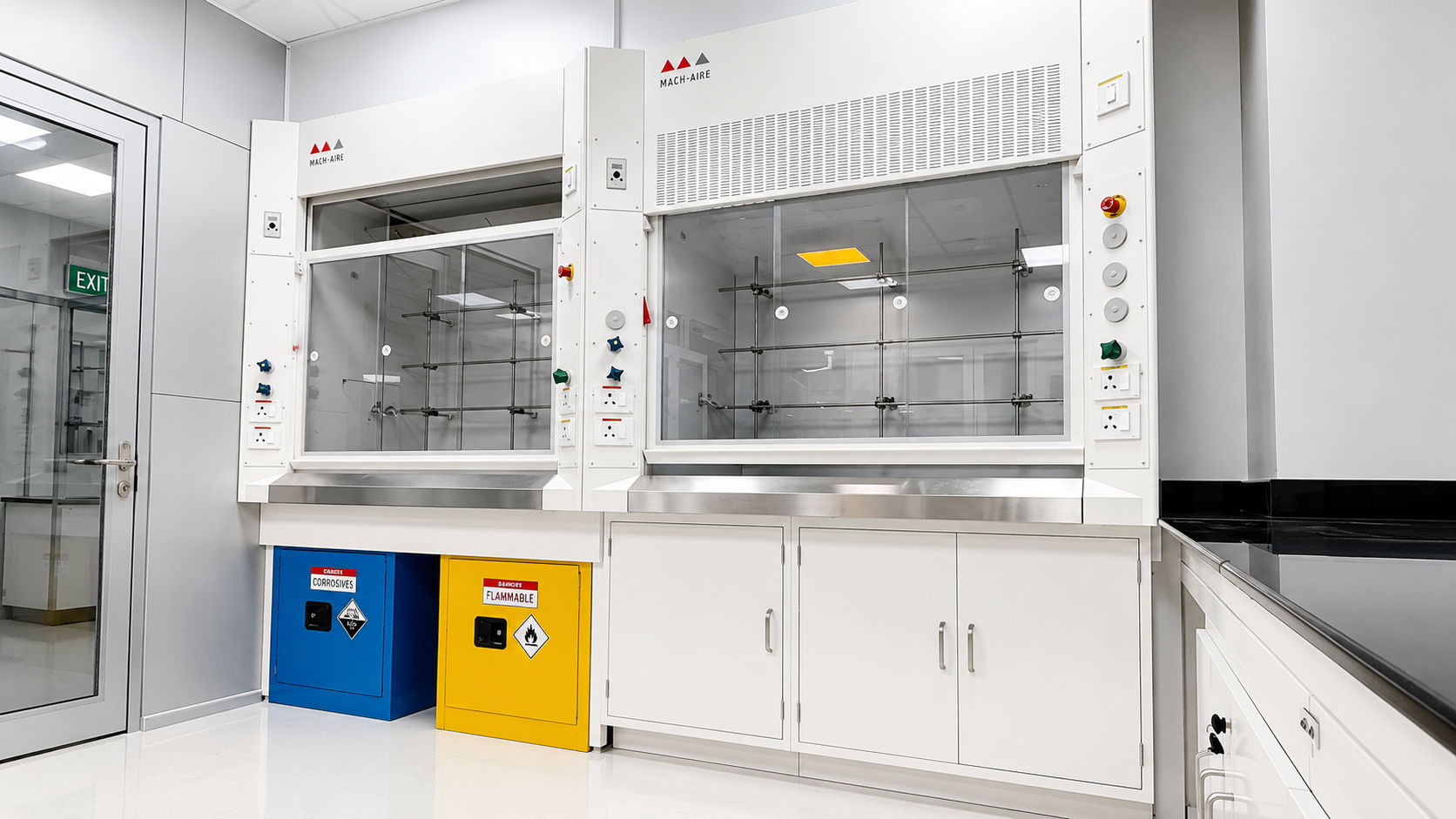
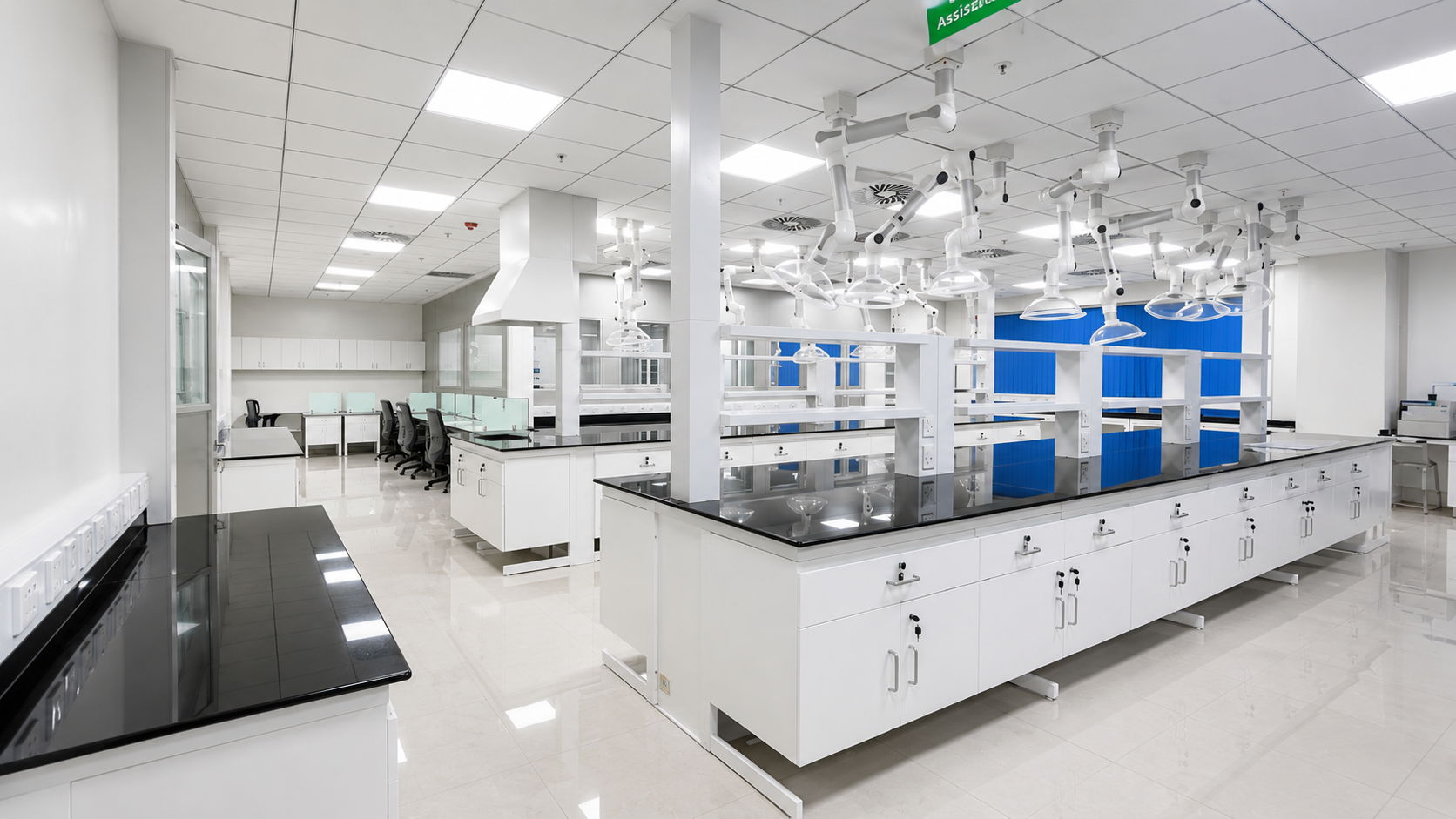
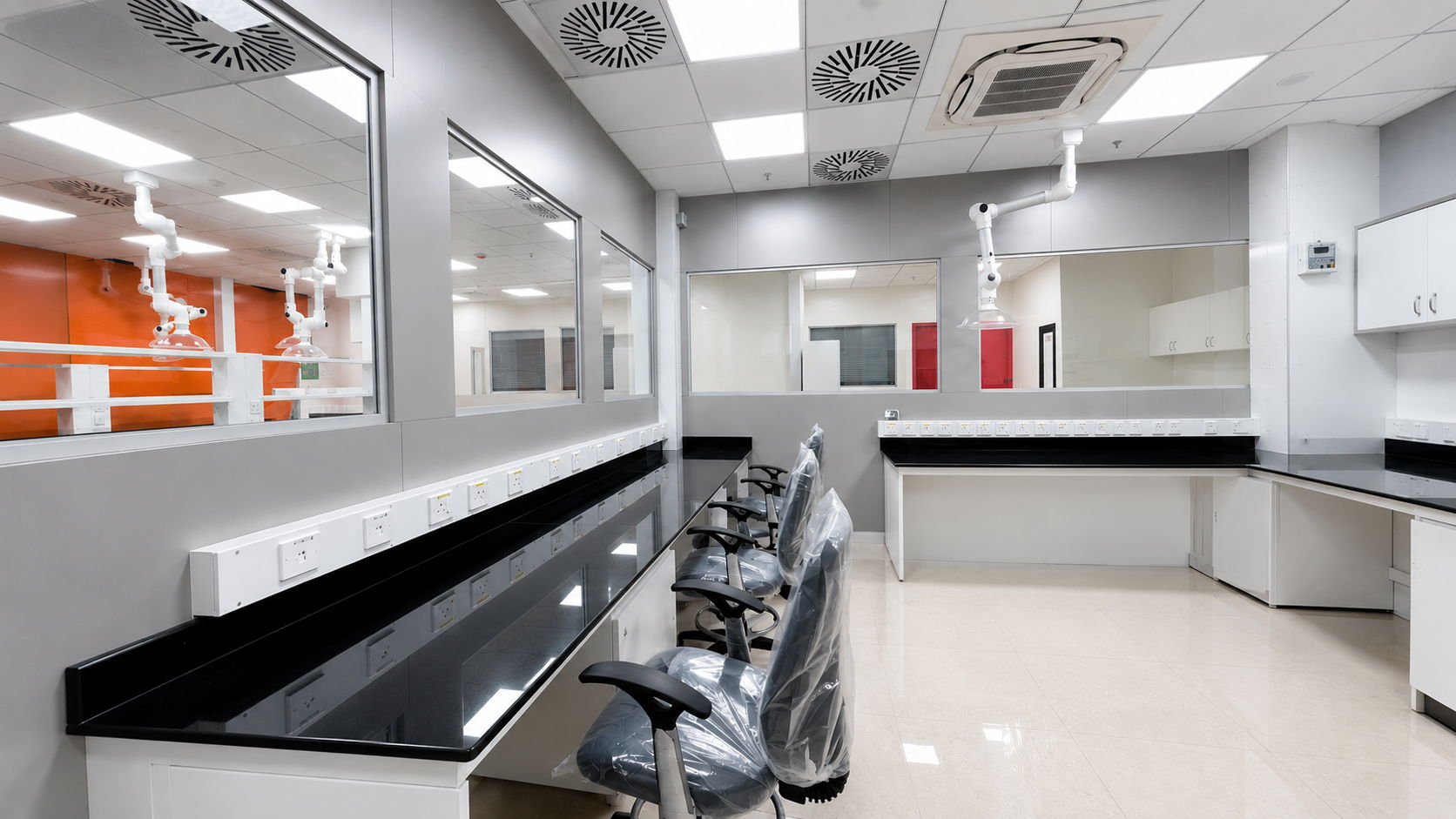
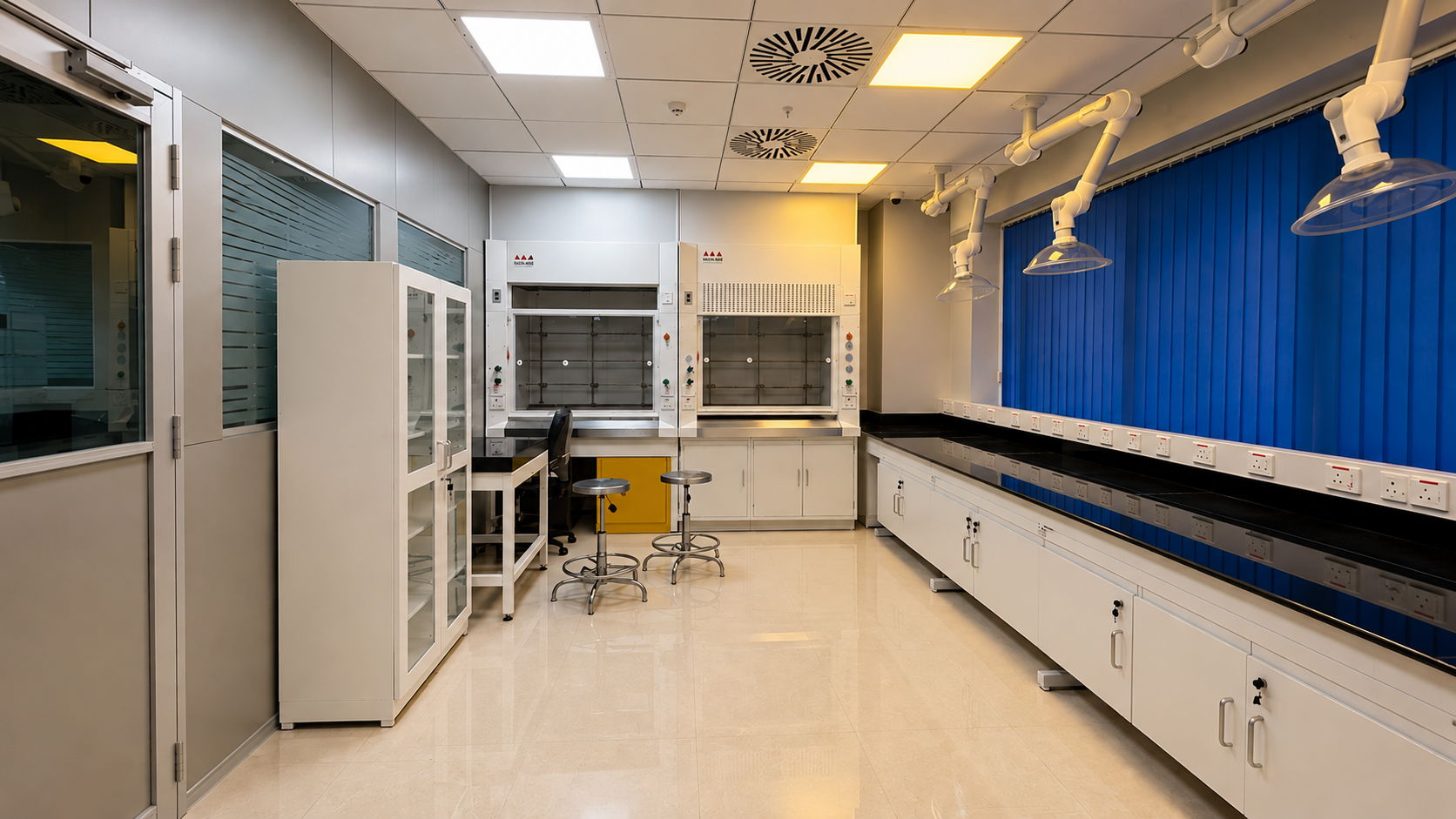
The completed facility emerged as a clean, technically organized, and operationally efficient pharmaceutical laboratory environment delivered successfully within a live R&D ecosystem.
The project demonstrated how careful execution planning, operational coordination, and engineering discipline can enable fast-track laboratory development without interrupting ongoing scientific operations.
More importantly, the appreciation received from the client reinforced the long-standing professional relationship built through consistent execution quality and reliable project delivery over the years.